
When I got my A1 I looked at strobe triggering together with lenses housing and ports as for photography you will be mostly shooting with underwater strobes.
I got in contact with Shane Smith and Cindy Shaw and I asked them what they used and what their experiences were.
Shame has recently been highly commended for UPY and provided me a detailed breakdown of the Turtle TTL trigger. I recommend having a look at his website for great shots with Sony A1 here.
Cindy instead had a Nauticam manual trigger and we exchanged some messages on the burst functionality and the rear curtain sync.
Shane also owns a Nauticam trigger and both confirmed that this trigger only works with mechanical shutter and front curtain.
I use rear curtain on certain shots so I went on the lookout for a trigger that would support it that was not TTL.
I do not want to open a discussion on manual vs TTL however I shoot flash top side and even there I never use TTL unless I have to do a documentary/product shot and I have no time to prepare.
Strobe Trigger Options for Sony
I went on the lookout for options and my research included the following manufacturers:
- Nauticam
- UWTechnics
- TRT Electronics
The following table is a summary of the various units I have directly or inderectly assessed.
| Brand | Model | Price (€) | TTL | Rear Curtain | HSS | Burst | Multishot | Power | Programming required |
| Nauticam | Mini Flash Trigger | 294 | No | No | No | Yes | No | Battery | No |
| UWTechnics | 11075- HSS/TTL Converter | 485 | Yes | Yes | Yes | Yes | No | Battery | No |
| Turtle Manual | Turtle Manual | 299 | No | Yes | Yes | Yes | No | Rechargeable | No |
| Turtle Smart TTL | Turtle Smart | 387 | Yes | Yes | Yes | Yes | Yes | Rechargeable | Yes |
Only Turtle triggers seemed to offer all the features I was looking for so I contacted Pietro Cremone at fotosub shop after a long discussion with Turtle electronics technical team who did some remote tests for me on an A1. The A1 can trigger flash with electronic shutter and this is something I was looking for.
Turtle Manual vs TTL
The turtle TTL trigger has all the feature of the manual in addition it offers TTL of course and a cool feature called multishot.
I personally do not have any interest in TTL but my main issue with this product is that in order to change for example from front to rear curtain you need to reprogram it.
I wanted a solution with no computer where I could control all settings from the camera and is not TTL. This is achieved only by the Manual Turtle Trigger.
Turtle Manual Trigger In detail
The turtle manual trigger is really a joy to use and is extremely well built.
The first consideration is that it is housed with no electronics showing so an occational drop of water is not going to fry it. The second is that the battery is rechargeable. I have experience with Nauticam trigger that suddenly my strobes would stop firing consistently as the battery was low without warning. The fact that you can recharge the trigger each day or whenever you like is a great feature.

The second consideration is that the unit is really small and light.

Finally the version I got had a convenient rubber part to inser in the housing strobe trigger sockets. This is a part from the TTL trigger that will allow to fire with cheaper cables and does not come as standard on the manual trigger, you need to request an upgrade which I warmly recommend.
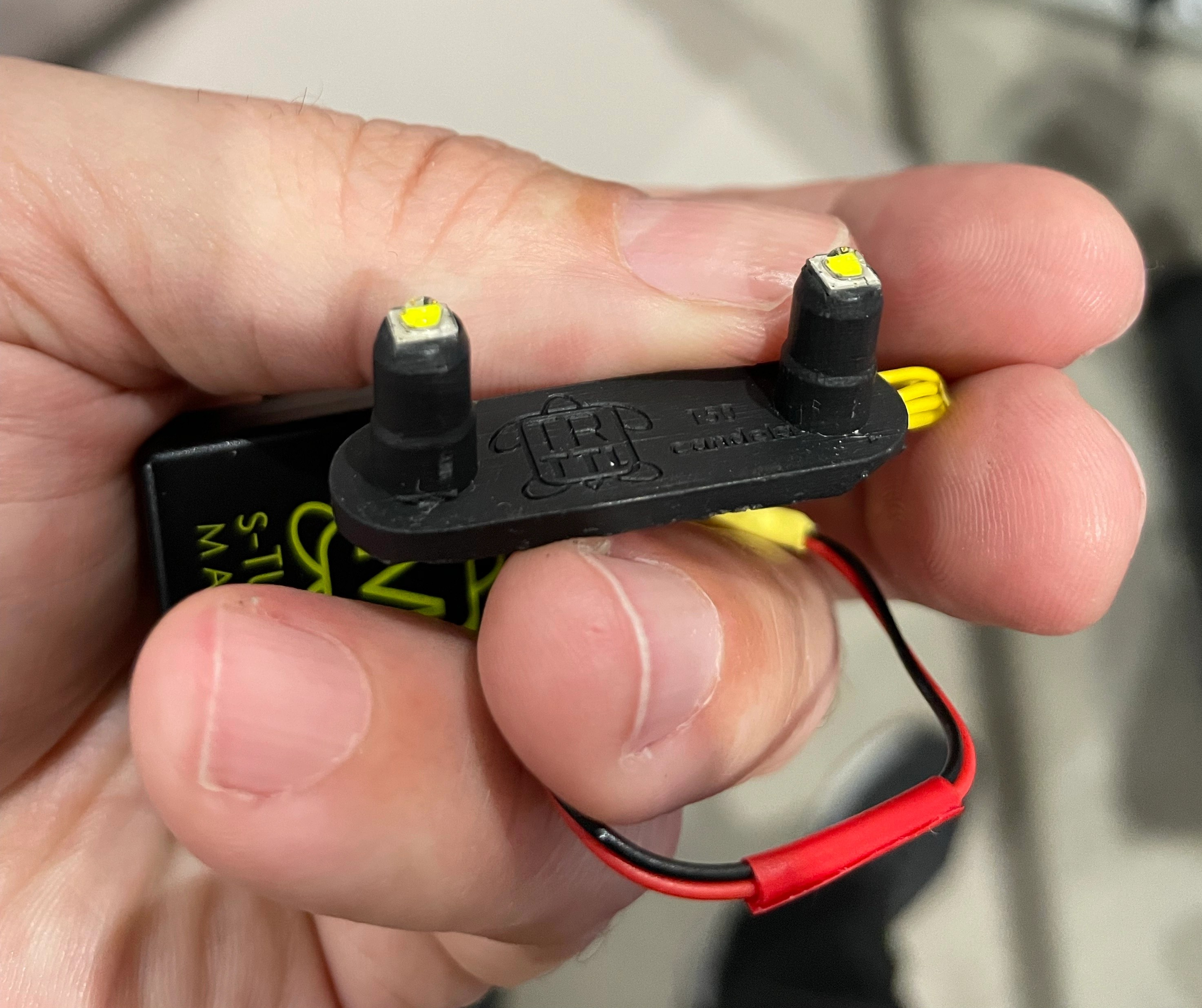
So I set the trigger in my A1 housing and so far after around 1000 shots it has not failed once.

Turtle Manual controls
The good news is that well there are no controls everything is set in the camera menu. Here are the steps for my A1 but all Sony cameras are pretty much the same.
- MENU →
 (Exposure/Color) → [Flash] → [Flash Mode] → desired setting.
Menu item details
 Flash Off:The flash does not operate.
 Fill-flash:The flash works every time you trigger the shutter. (Front Curtain)
 Slow Sync.:The flash works every time you trigger the shutter. Slow sync shooting allows you to shoot a clear image of both the subject and the background by slowing the shutter speed.
 Rear Sync.:The flash works right before the exposure is completed every time you trigger the shutter. Rear sync shooting allows you to shoot a natural image of the trail of a moving subject such as a moving car or a walking person.
This means I can set the flash mode each shot if I want to without changing any settings on the strobe or elsewhere.
In order to access the HSS mode you need to turn wireless mode on
- MENU → (Exposure/Color) → [Flash] → [Wireless Flash] → [On].
This is not wireless mode but the trigger tells the camera HSS is supported and you get a indicator WL HSS. Your shutter speed is not capped anymore.
Unless you have an HSS capable strobe this setting should be left Off otherwise your photos will have the shutter in the image. I do not have HSS strobes but if you own Retra this is very useful.
Other positive points of the Turtle trigger:
- Supports electronic shutter (only applicable to A9/A1 series)
- Supports Speed priority with A1 (1/400 on mechanical shutter)
- It works with SINGLE core and cheap cables when used with the upgraded LED unit
I had sourced two expensive multicore Nauticam fiber cables after my Nauticam trigger refused to shoot consistently and now with the turtle am back at shooting my 15 years old Sea and Sea cables.

It also works with ebay single core fiber home made cables.
Probably the only limitation for me is the burst speed. With electronic shutter the A1 goes at 6 fps the trigger would only fire once probably a limitation of the internal LED recharging circuit.
However in mechanical shutter it would work with the Low speed setting of 3 fps.
Take into account that the strobe will deplete its charge when you shoot continuously and the recharge time that are typical mean that when the capacitor holding the charge is empty the strobe will stop firing or fire at much lower power.
Consider the following Log2(burst speed)->minimal output power reduction required in stops for practical use.
In my case log2(3)=1.58 round up to 2 stops reduction of strobe power.
With Sea and Sea YS-D2 maximum power 32 maximum sustained burst rate 32 – 2 stops = 16 this is the maximum you can fire your strobes at.
Realistically you are not going to be able to shoot smaller aperture than f/11 with a diffuser before the strobe starts loosing power in the following shots unless you increase your ISO. This however is plenty for me and frankly it was more academic.
I want one how do I get it?
If you are UK based please send £285 using this link and one will be shipped to you within two weeks. This will ensure you have two years warranty and no paperwork import duties etc to deal with due to Brexit. The trigger will have the higher power LED as in this article.
If you are in Europe I recommend fotosub shop of the friend Pietro Cremone he deals in larger quantities and can offer great prices. Otherwise order directly from Turtle Electronics.
 Interceptor121 Photography & Video Workshops
Bonjour. Thanks for all the tests and infos you share. I’ve just bought an A7RV and read avidly your comments. I guess the Turtle manual fits also the A7RV. Can you confirm it? Grazie
Yes the sony protocol is the same. You should also find identical menu options as in this article
The major difference between A1 and A7rV (and any other A7) is that A1 can trigger the strobe (here via the Turtle) in both modes : electronic shutter and mechanical shutter, when the A7 series can only in mechanical shutter mode.
Looking for some clarification. Based on your chart, it seems the UW Technics trigger also provides the functionality you were seeking (such as rear curtain sync). From what I read it also has some other interesting features, that includes allowing one to modify the flash exposure in camera. What drove the choice of the manual S-Turtle trigger? Thanks!
The flash exposure compensation feature is only relevant to TTL which I do not use. In fact I don’t use TTL even topside. Where this is useful is when you have a TTL strobe and want to decrease the power of the strobe. However this is not really useful as both strobes are at the same power anyway and there are plenty of situation where this does not work. I would rather have TTL on the strobe with a dial where I can control left and right.
Yes, I understand you don’t have a need for TTL options. I normally shoot manual, as well. What I was curious about is it appears the feature set of the UWTechnics trigger meets all your stated requirements (plus more), but I believe you indicated only the manual S-Turtle trigger seemed to offer all the features you were looking for. That’s where I’m getting confused. I’m trying to decide between S-Turtle and UWTechnics for a new flash trigger. I’ve used the original S-Turtle (for Sony) for many years. However, it doesn’t fully support my new strobes (Retra) and is missing a few features I’d like. Thanks again!
The manual turtle supports HSS. I don’t own retra and I have the A1 that syncs at 1/400 so I didn’t investigate further. Currently am not in the market for strobes however should I do that I will probably check some retra before buying them
Hello Massimo. Thank you very much for this very very informative article.
I am trying to understand why you selected the turtle in manual as opposed to the UW Technics.
As I do not use TTL I did not consider the UWT nor the Turtle TTL. I wanted something to be operated by the camera with no other programming required only the Turtle fits my requirements. If you use TTL the situation changes and so does the cost
@MC8509 the UW Technics is an exponentially better product. It’s not even close. I’ve cycled through 4x Turtle TTL converters (2 under warranty) and I finally gave up and switched to UWT (after having two very expensive trips photo’s ruined due to my turtle ttl issues). The UWT is night and day better. The integration with the camera is much smarter, and there are some really cool features like you were alluding too but I don’t think Massimo understood. They have a bit of a “hack” where you use TTL-Converter in hardwire Manual Mode. You do this by setting WL mode to “On” and set your strobes to TTL. Only it will not shoot in TTL, it shoots in manual mode and you control your flash power by adjusting the flash compensation. This is super convenient as you can easily adjust your strobe output from in camera without dealing with two dials on each flash. As an aside; my original Turtle TTL converter worked pretty good for a few years with my Z330’s. But when I upgraded to the Retra Pro Max and the new Smart 2 TTL Converter (even though I never shoot TTL); I had nothing but problems. Perhaps the “manual” version Massimo has is better; but that’s not the only issue I have. The LED system they use is super janky; I’ve had the plastic crack on one led set, and I’ve had 2 other led sets have 1 or both lights go out on them. I thought maybe I was just unlucky; but then I spoke to a popular US based camera store; and they told me they have an insanely high return rate and prefer not to sell them.
I have no experience with TTL. I use flash topside and underwater always strictly in manual. I imagine this makes the device more prone to issues. As a comment if you put your strobes in TTL and use exposure compensation well you are shooting in TTL not in manual. You can do that also setting the compensation on the strobes which is better than doing it on camera as you can create shadows. This however is way more inefficient than using manual and make certain lighting techniques impossible. Topside is exactly the same. For the record I had an issue myself with the turtle I managed to physically damage it somehow during a trip. Removing the unit all the time and unplugging is risky