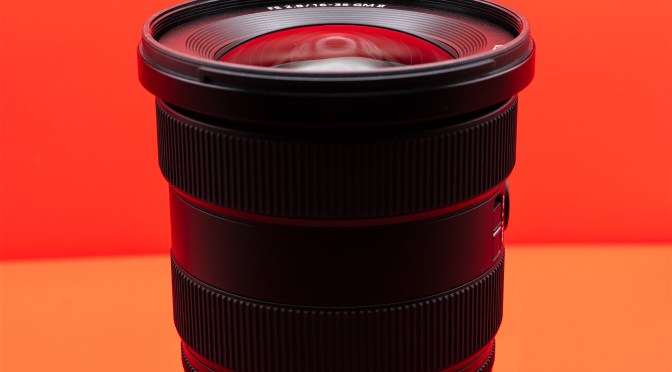
As I wrote in a previous article this lens has several strengths
Close minimum focus distance (19 cm wide – 26 cm tele)
Lens does not extend when zooming
Reasonably compact (99 mm and 420 grams)
Good sharpness at the edges from f/4 onwards
Low cost compared to other Sony lenses.
The lens will cost you $799 vs $2,299 of the Sony 16-35 GMII which is the best lens in this class however the price difference will convince most people especially those only using the lens underwater that the Tamron is the way to go.
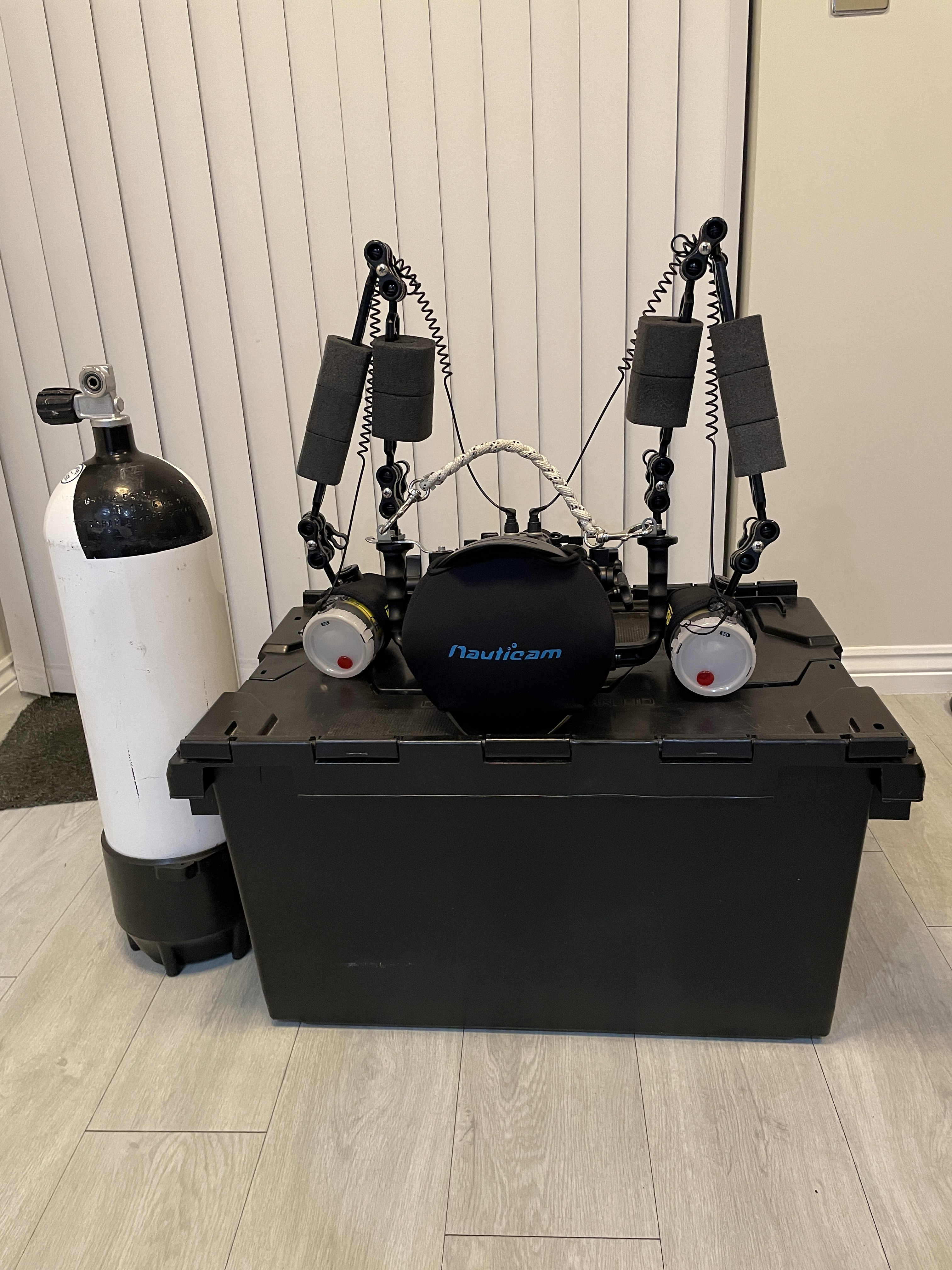
Parts for Nauticam Housings
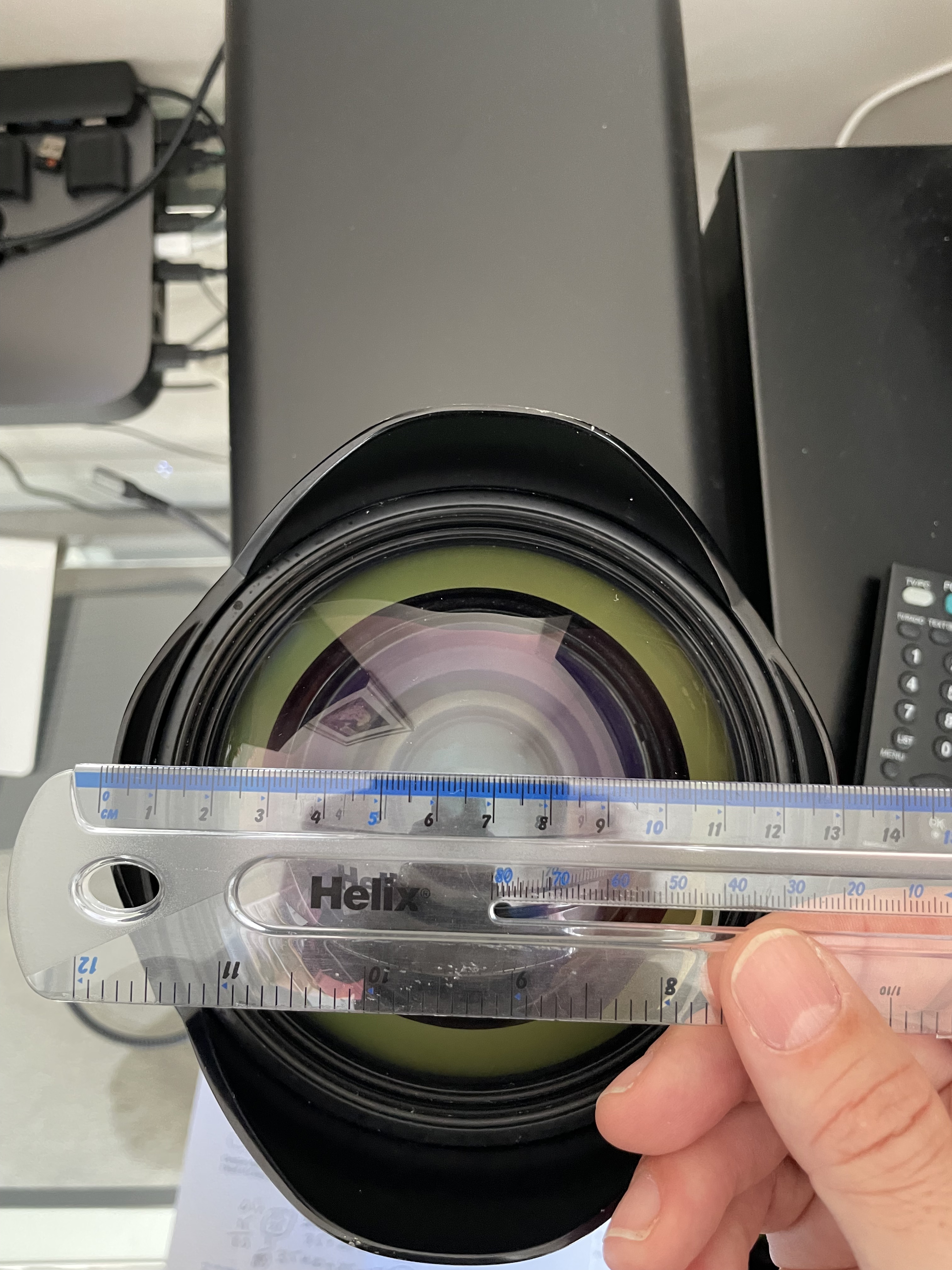
The Nauticam 18809 wide angle dome port is not a classic dome but has design without a flat base. The port has 11cm radius of curvature and is 85mm deep 180mm wide this means the entrance pupil needs to be 25mm behind the extension.
Nauticam 18809 180mm Wide angle dome port
Nauticam recommended extension is 40mm when combined with the 35.5mm N120 to N120 port adapter. Due to the shape of the lens this cannot be used with the N100 port as the zoom is close to the front of the lens.
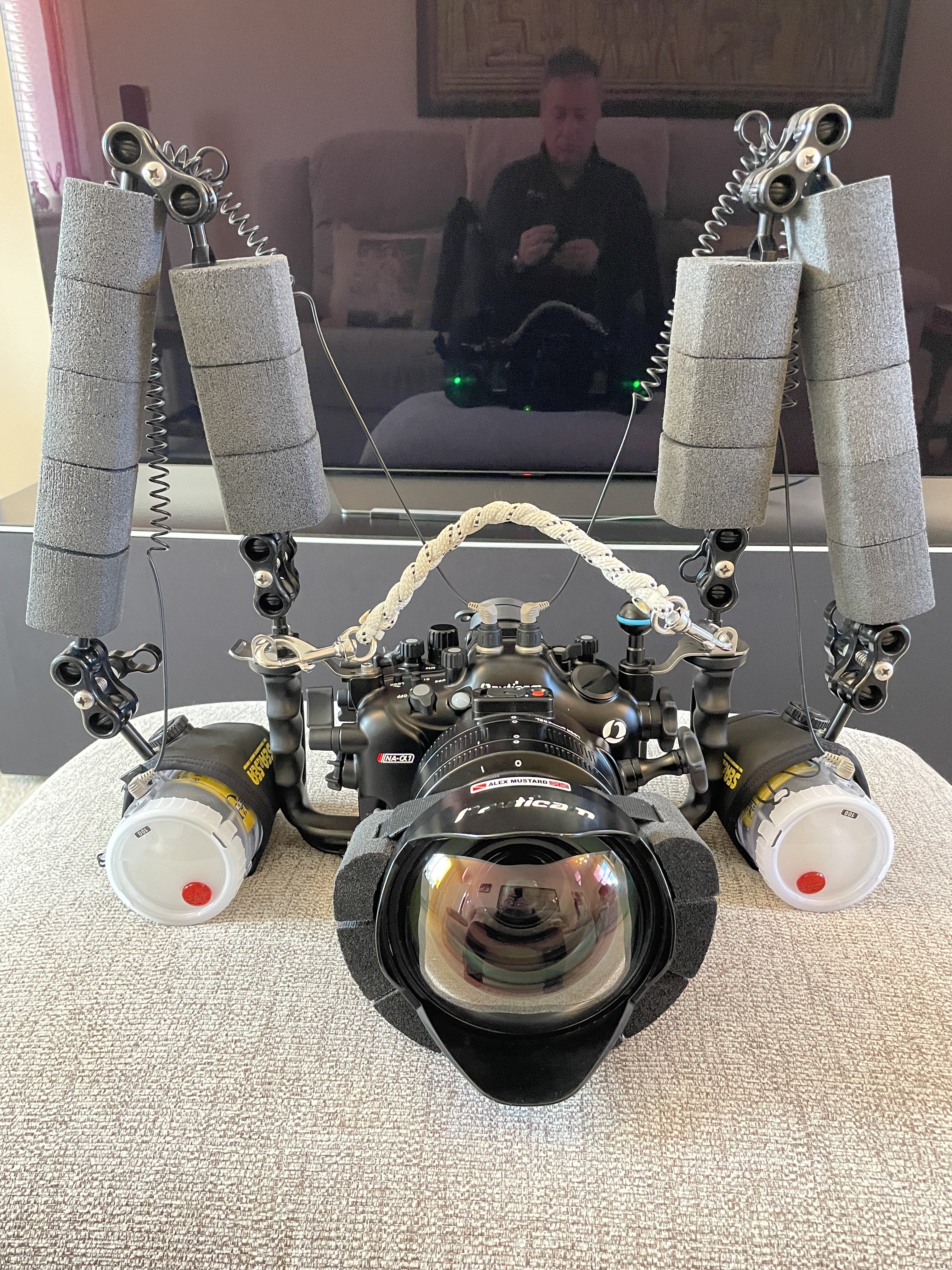
Tamron 17-28mm with Nauticam zoom gear
Underwater housing manufactures unfortunately do not apply any science to the selection of domes and extension for a lens but out of pure coincidence the 40mm extension ring is what this lens requires.
Tamron 17-28mm 35.5 adapter and 40mm extension
With the 40mm extension the glass port will be exactly 11 cm from the entrance pupil and focus right on the surface.
The Nauticam parts will set you at $2,284 for the gear, extension and wide angle port.
Pool Session
I had already shot the Tamron in the murky waters of my local pool so I went to Luton that has a better filtration system and started with my usual shots.
I took shots from f/2.8 to f/22 obviously f/2.8 and f/4 are purely academic but decent results are obtained from f/5.6.
Tamron 17 2.8 Close
At F/2.8 most of the area outside centre is blurred.
Tamron 17 4.0 Close
By f/4 we have a substantial improvement.
Tamron 17 5.6 Close
At f/5.6 the lens is better than most already considering the very close shooting distance. Unfortunately at this stage I picked up a bit of debris on the dome and did not realise…
Tamron 17 8.0 Close
f/8 is very good and this is your default for shots that are not close when edges are not important.
Tamron 17 11 Close
f/11 is probably the best overall compromise between edges and centre.
Tamron 17 16 Close
By f/16 depth of field keeps everything in focus however the lens has dropped in the centre.
Tamon 17 22 Close
f/22 gives you a consistent frame but with evident resolution loss.
All the shots above have distortion correction deactivated.
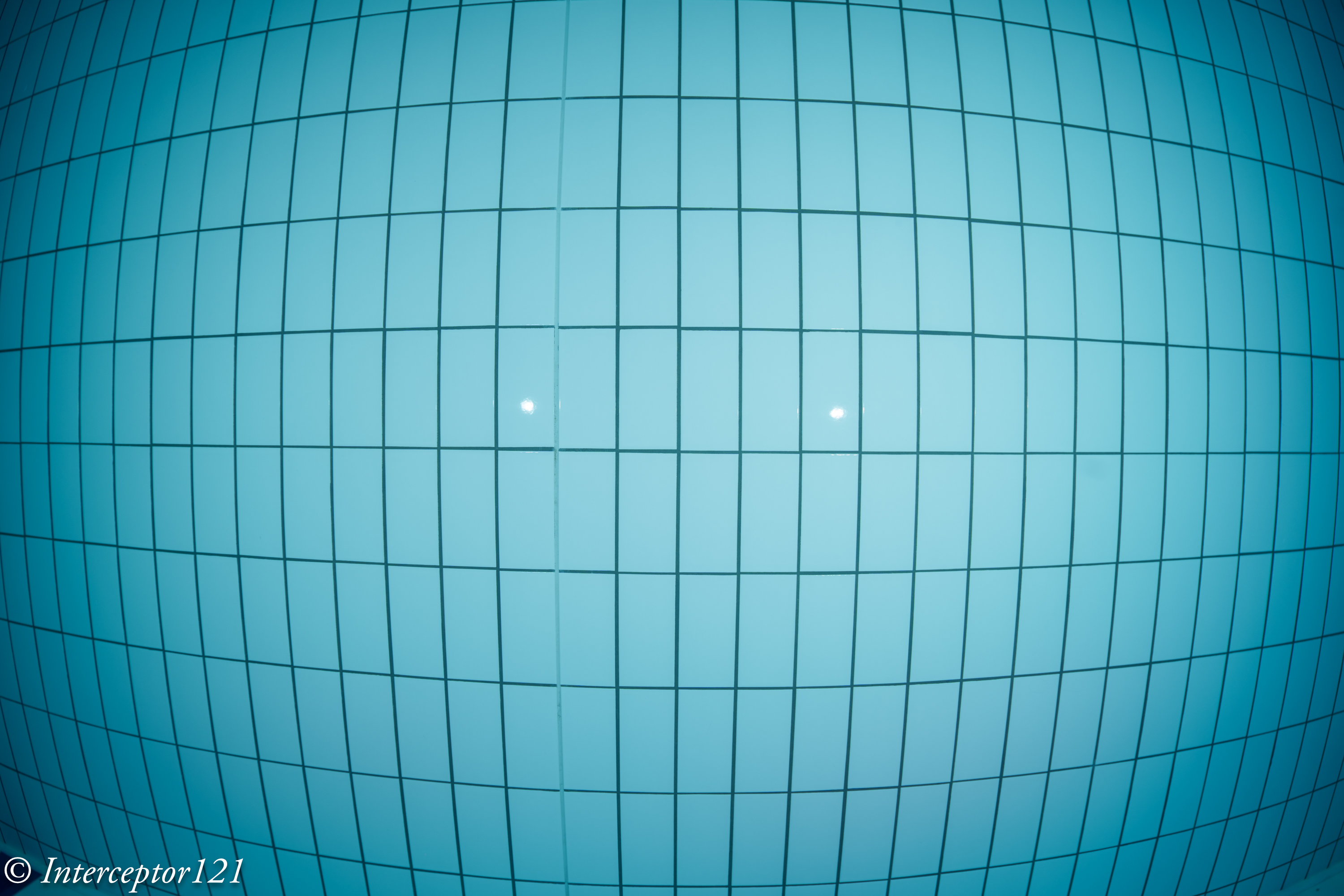
I then went and shoot a tile wall to see how straight is the lens here lens correction is applied.
Tamron 17 5.6 Wall
At f/5.6 shooting from 1.8 meters performance is excellent.
Tamron 17 8.0 Wall
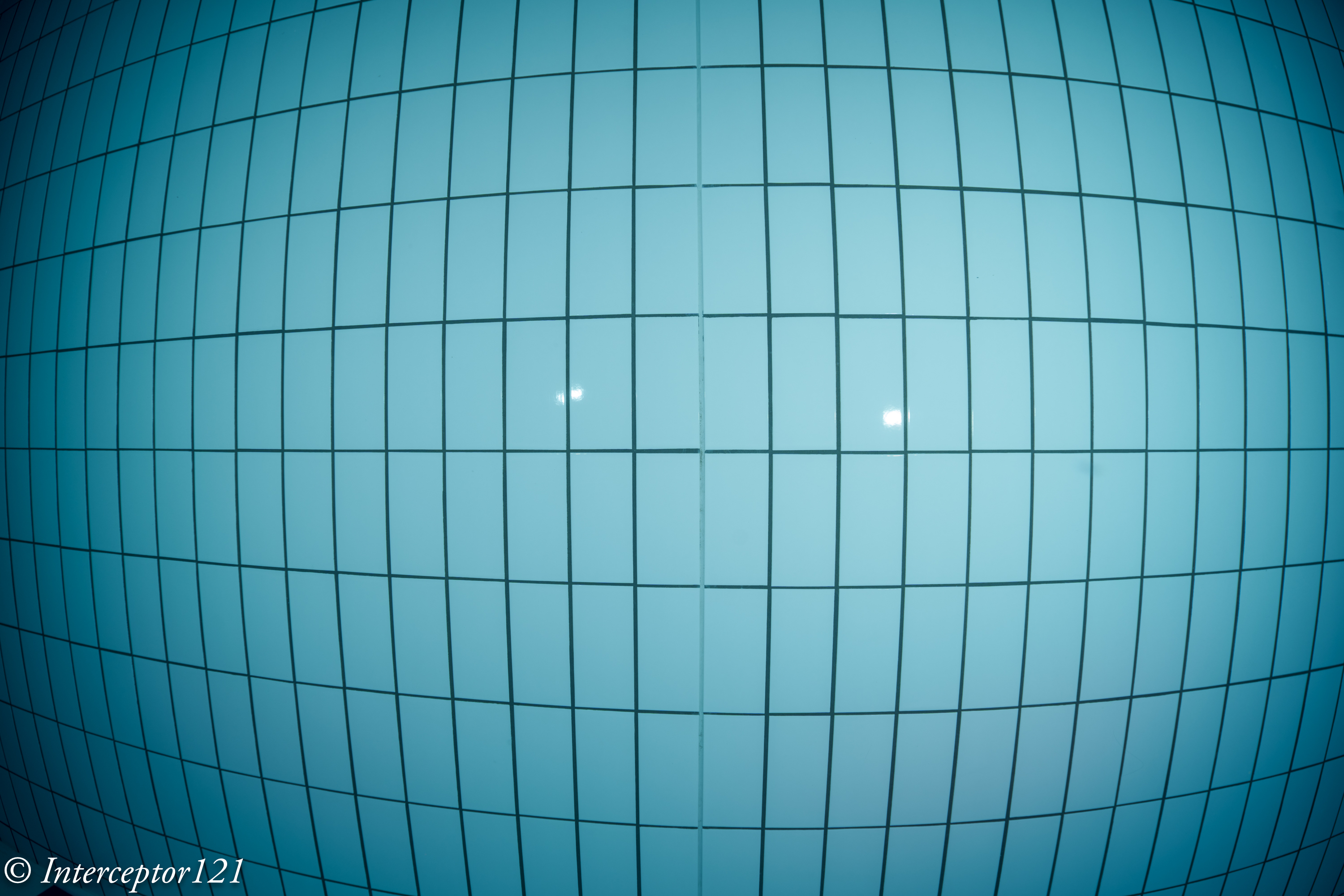
f/8 is even better across the frame and is your default if depth if field is not essential.
Tamron 18 11 Wall
f/11 is great
Tamron 17 16 Wall
f/16 and f/22 give consistent sharpness as expected again those apertures are normally not necessary.
Tamron 17 22 Wall
Shooting people with the Tamron
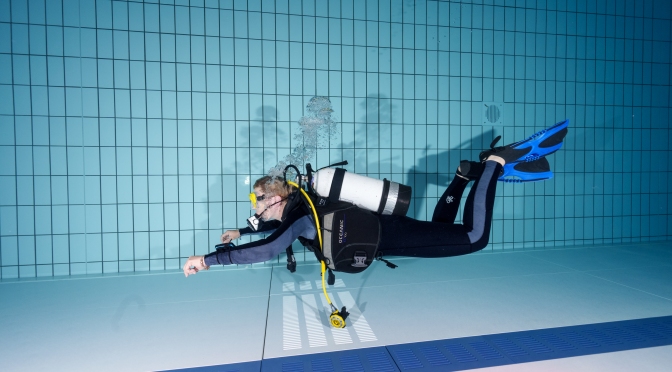
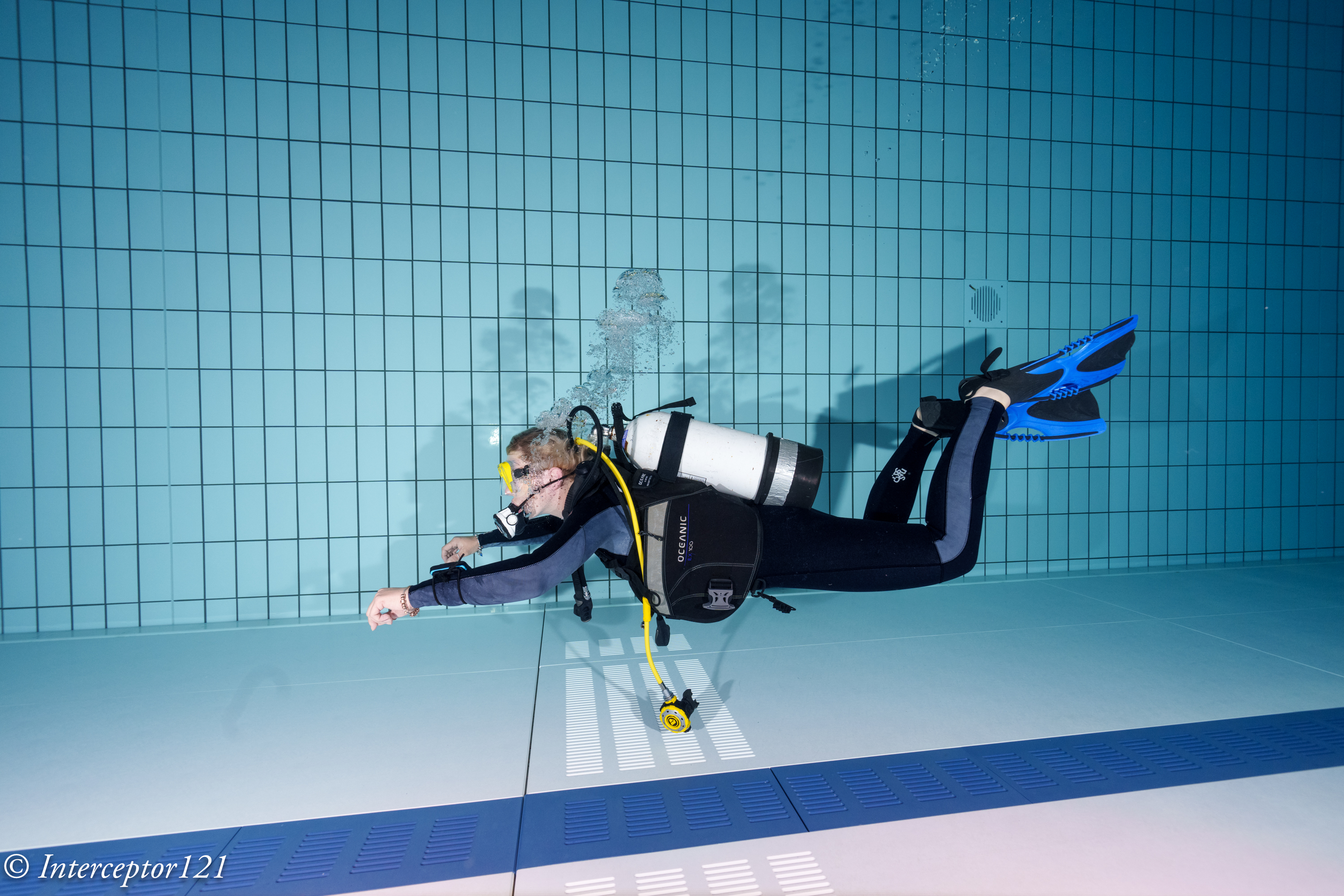
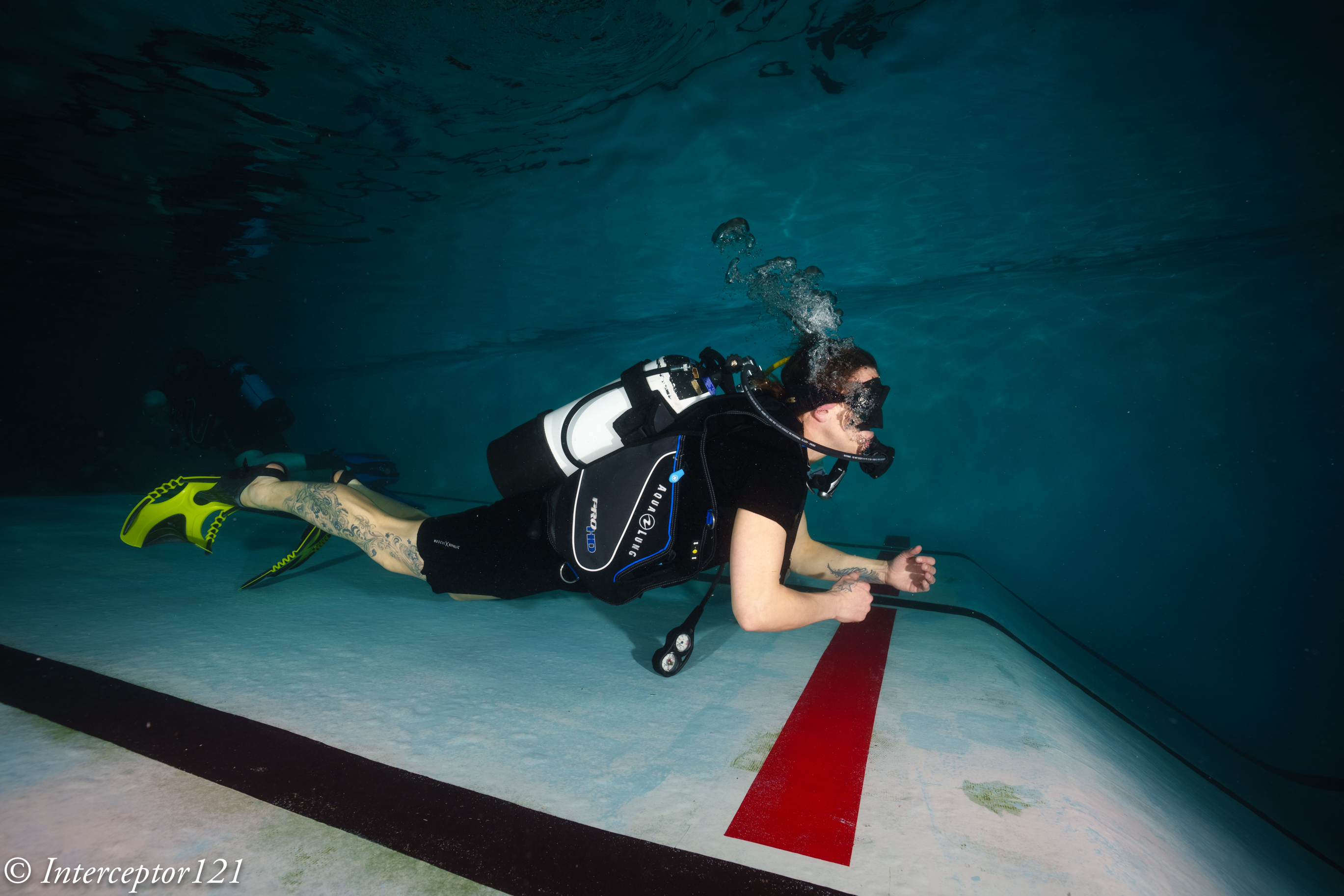
One of the things you do with a rectilinear lens is to shoot straight lines and correct proportion people and wreck interiors for example. The inside of the pool lends itself well to this.
Tamron 17 2 divers 8
With subject not close the lens has a great pop and rendering at f/8
Tamron 17 side 8
Even closer subject with not far background look great.
Tamron 17 diver 8
If you need the background to be sharper you can stop down.
Ascent 11
Again considering that even WWL-1 and WACPs really need f/11 this looks terrific.
Knee down 14
A final example shows that f/14 is enough to give you the depth of field you need when the subject is not too close.
Conclusion
There is no doubt that if you are in the market for a rectilinear wide angle and you are budget conscious this is the lens to get full stop!
The latest addition to the GM family from Sony has been the mark II of the 16-35mm wide zoom lens.
Nauticam has recently released the zoom gear for this lens and has it on the port chart with a 50mm extension for the 180 wide angle port and 60mm for th 230 wide angle port the SKU is 37175.
I have owned this lens since September and has become a favourite for topside landscape trips. It produces very sharp images across the frame with excellent rendition.
The lens is quite big and takes 82mm filters. An interesting characteristic for underwater use is that the lens is longest at wide and and shortest at tele end. It has also a minimum operating distance of 22cm and is 12 cm long leading to small dome port requirements.
My preliminary tests indicate that this lens will perform best with a 55mm extension ring and after aquiring the zoom gear from Underwater Visions I made my way to Luton Inspire last night.
During my hour in the water I was called to take photos of a scuba dive experience nonethless I managed to run a series of test.
The lens is sharpest at f/5.6 and it drops afterwards a trend of all Sony mirrorless. I took tests shots at f/5.6 f/8 f/11 f/16.
The initial test is the demanding MOD test get as close as possible to a target and shoot a wide scene.
F5.6 MODF8 MODF11 MODF16 MOD
In terms of centre performance best results are at f/5.6 decreasing as you stop down.
I then take the same shot putting the target at the bottom edge.
F5.6 MOD EdgesF8 MOD EdgesF11 MOD EdgesF16 MOD Edges
The situation changes with best edges at f/16 however good results are already found at f/11
The wall test gives similar outcomes this is taken at around 1.5 meters.
F5.6 WallF8 WallF11 WallF16 Wall
With a target that is not near f/8 and f/11 do best suggesting those aperture are those to use for general cases, this is a good result.
Time to show some example shots.
F8 ExampleF11 Example
There is no doubt that the lens is very sharp across the frame. You can zoom into the full rez images to see the detail.
Comparison with Tamron 17-28mm
So far the Tamron 17-28 held the prime spot for the best rectilinear lens on the Sony full frame format. I would say that the Sony 16-35mm GM2 is on par with maybe an edge on the overall resolution at f/11.
Consider though that the Sony is almost 3x the price is it a worthy upgrade to the Tamron? My view is that it is not.
If you bought the lens to take it underwater the Tamron is identical you cannot tell them apart, however if you own or like the 16-35GM2 as topside zoom the focal range is much more useful.
Conclusion
Strong performance from Sony and definitely recommended with the 180 wide angle port. I do not own the 230 port that has 1 cm wider radius but would expect marginally better performance.
Few days ago Alex Mustard popped in to drop his WWL-DRY aka WACP-C prototype so that I could conduct some experiments for the enjoyment of the entire underwater community on Sony E-mount.
This lens is not the same of the current WACP-C but it is very similar. It does not have a float collar, a bit like the original WWL-1 dimensionally appears a few mm different from the WACP-C specs.
The lens seems a bit shorter.
140 mm length instead of 145 mm of current production version
The dome diameter is identical somewhere in the region of 130mm.
Dome port perspective masks the real diameter of 130mm
The lens is very heavy in water so I needed some floatation.
Stix float belt carved to fit a dome
I rented a Tamron 28-75mm G2 from lenspimp only to discover it would not fit any of my extensions. Alex Tattersal has sent me an adapter on loan but it did not make it for my pool session.
I therefore decided to use my Tamron 17-28mm although the extension was 5mm too long I got no vignetting at 26mm.
Ready to dive
I exchanged notes with Alex who told me he tried all sorts of optics with his Nikon only to use a 1990 lens now discotinued as all modern fast lenses would refuse to work properly. I was determined to try anyway confident I would get good results.
Pool Tests
Arrived in Luton for a short one hour session last night I took my usual props. The first set of tests show already some interesting results.
I always start as close I can get to the props to fill the frame.
CFWA f/5.6 T28
At f/5.6 the centre is very sharp however I noted the background and were not particularly crisp while the centre was but not in the background. There is an issue of depth of field so I started stopping down the lens.
CFWA f/8 T28
By f/8 results were already very good considering the shooting distance. Consider that a shot like tha requires f/16 on a fisheye or rectilinear to have sufficient depth of field.
By f/11 we are in a really good place.
CFWA f/11 T28
The depth of field is not quite enough for the plant in the back but the edges are sharp.
To show that this is a genuine depth of field issue look at this shot at 17mm in APSC.
17mm APSC f/5.6
It looks very much identical although this is even wider at 25.5mm equivament.
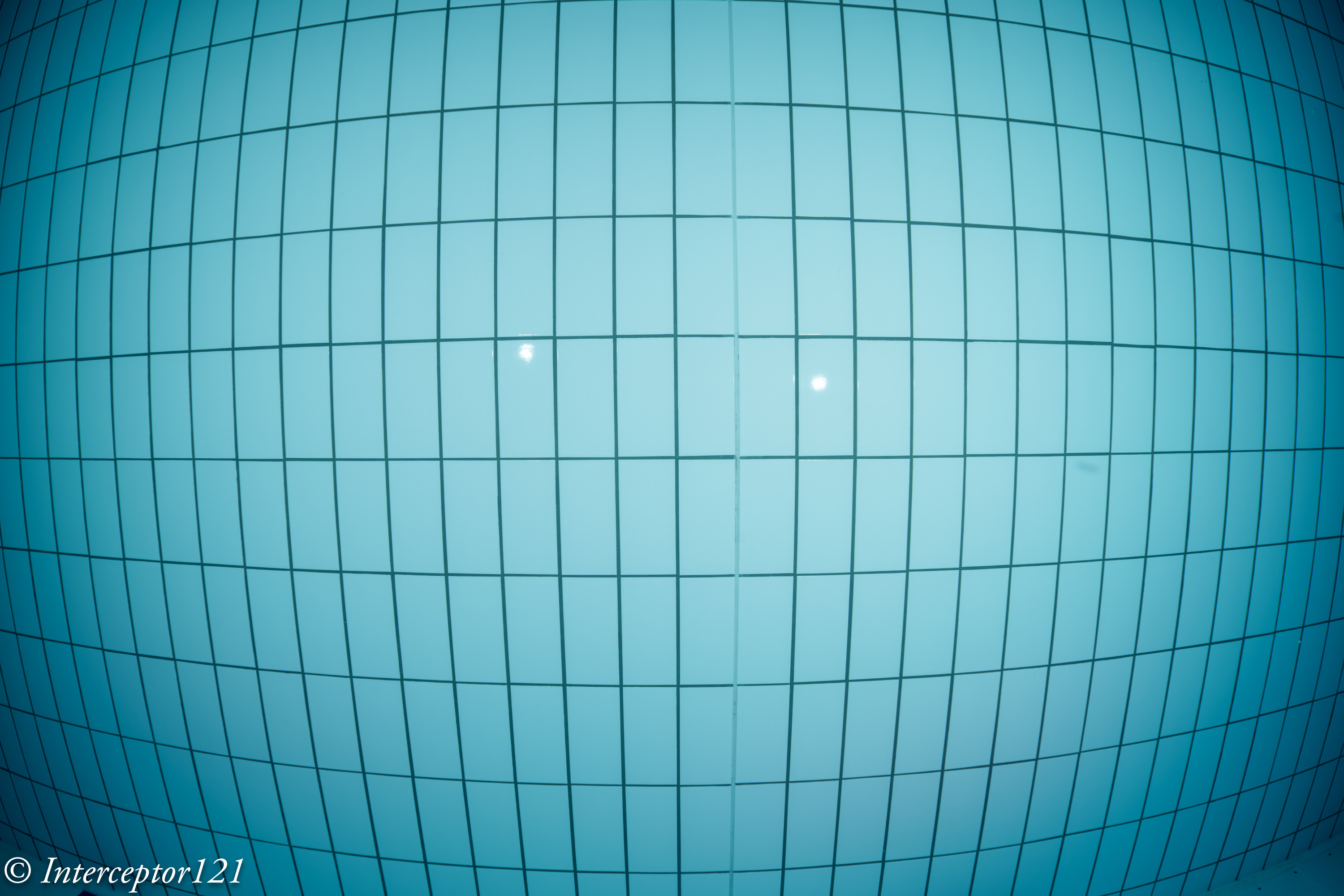
The second step is to look at edge sharpness the pool provides a nice tiled wall for this purpose. Here am shooting at around 1.5 meters.
You can see immediately that the frame is sharp throughout at f/5.6
wall f/5.6
Moving to f/8 improves edges
wall f/8
f/11 brings better edges but in my opinion not the best centre.
wall f/11
This reflects very much the nature of the master lens which is outstanding in the centre at f/5.6 with so so edges but very good on both accounts at f/8. F/11 starts showing an overall resolution loss.
I then moved to test field of curvature.
grid f/5.6
The lens has virtually no field of curvature and the edges are good already at f/5.6.
grid f/8
By f/8 the result is excellent.
grid f/11
At f/11 better edges but slightly worse centre.
Having completed the lab tests it was time to shoot some divers however I was coming to the end of the hour and they had started surfacing!
group f/5.6
Shots at distance with f/5.6 look great.
surface 3 f/5.6
Consider the shutter speed is low as I was trying to get some ambient light and the subject far so there is some motion blur.
surface f/5.6
f/8 is probably the sweet spot for underwater use.
Wide f/8 T28group f/8
F/11 is really not needed unless you have a close up shot.
Self Potrait f/11 T28
Conclusion
There are some obvious strengths to the Tamron 17-28mm which in my view performs at 28mm way better than the Sony 28-60mm even with a too long extension.
Upon reflection I have decided not to invest on the Tamron 28-75mm as I already have thr Sony 24-70mm GM2 and there is an overlap topside.
Edit 8 April: I received today the adapter ring I needed for the 28-75mm G2 and unfortunately there is vignette at 28mm ruling this lens out entirely for the WACP-C.
If you want to use the Tamron 17-28mm with the WACP-C you need an N120 to N100 25mm adaptor ring, in addition to the zoom gear (not necessarily unless you want to shoot also APSC) and the 35.5mm N100 to N120 port adapter.
The Tamron 17-28mm costs $799 on Amazon.com and it is the best rectilinear wide angle for underwater for the e-mount and we now discovered also compatible with WACP-C.
I will try other lenses in due course but the lesson learnt is that if you do your homework you will find something.
Thanks to Alex for the loan and bear with me a little longer!
The subject of rectilinear wide angle lenses and underwater optical performance has been beaten to death.
Most recently some photographers and videographers have done without rectilinear lenses altogether citing the horrible performance at the edge of the frame as the primary reason to shoot lenses with barrel distortion being those fisheye or standard lenses with an added water contact optic.
Is it all justified? Should you stay away from rectilinear lenses altogether?
Of course not. Rectilinear lenses have a place in underwater imaging that is there to stay but…
There are many many buts so let’s dive into some demistification and general considerations.
Topside Performance of Wide angle lenses 17mm use case
The vast majority of underwater shooters do not perform any type of topside imaging being that photo or video and use their set up only underwater with the exception of the odd event or those that like to shoot macro above and below this is where we stand in most cases.
In order to ascertain if the performance of the wide angle lens in water deteriorates it is appropriate to determine the performance of said lens topside. This is something that not many people are in fact able to ascertain. You can read equipment review but it is never the same thing.
I have recently invested in a Sony A1 and underwater housing and I decided to purchase a rectilinear wide angle lens. I always try to buy lenses that are good topside and underwater and my choice has fallen on the Tamron 17-28mm F/2.8 Di III RXD.
Several reasons for buying this lens I will list the most important are:
Close minimum focus distance (19 cm wide – 26 cm tele)
Lens does not extend when zooming
Reasonably compact (99 mm and 420 grams)
Not too wide
Items 1,2 above are important underwater and 3,4 are also important topside when you use the lens on a gimbal or when you shoot interiors or close up and you do not want apparent perspective distortion.
I have been shooting the Tamron topside on trips and I have been very pleased with it. Before taking it underwater I wanted to understand what to expect.
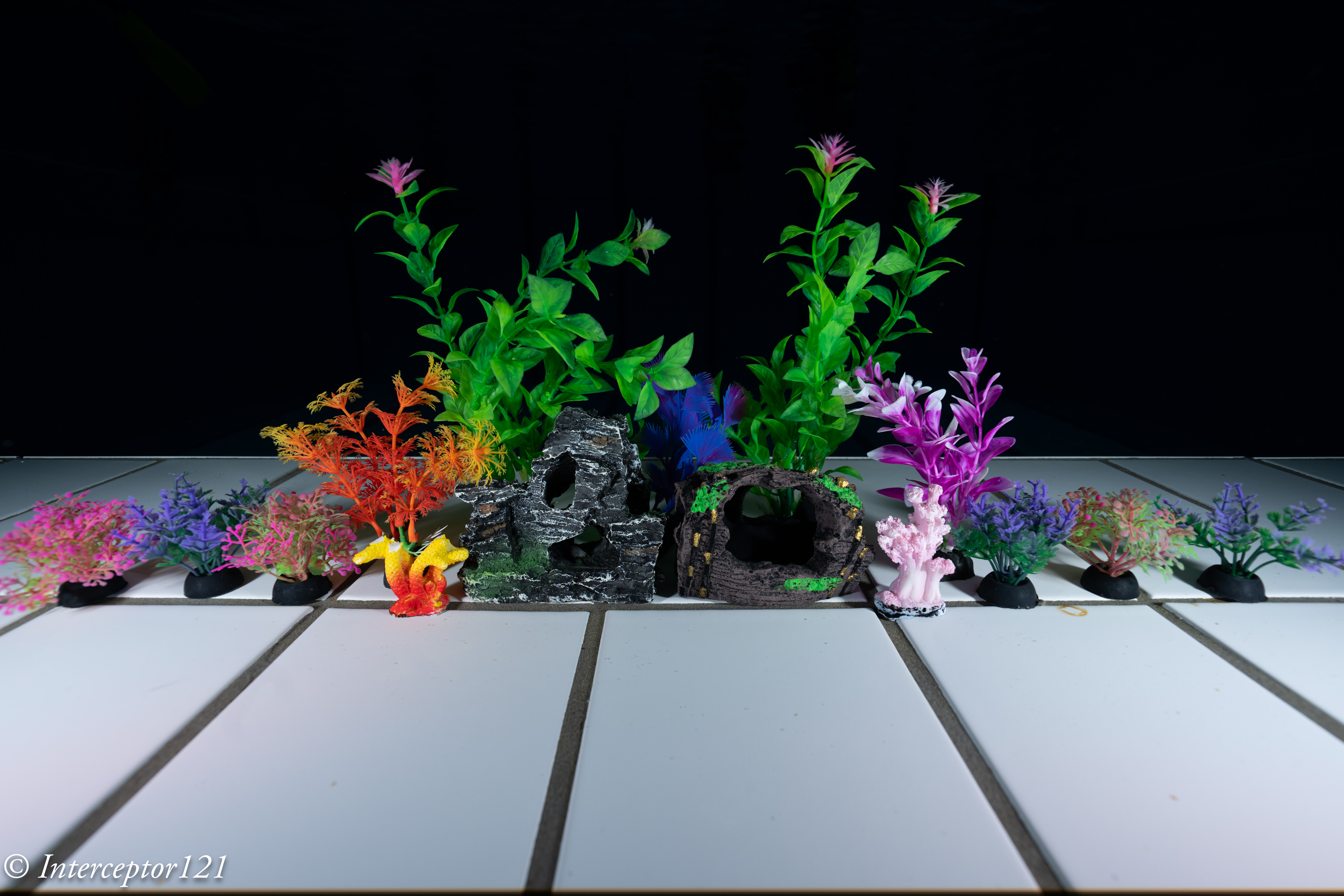
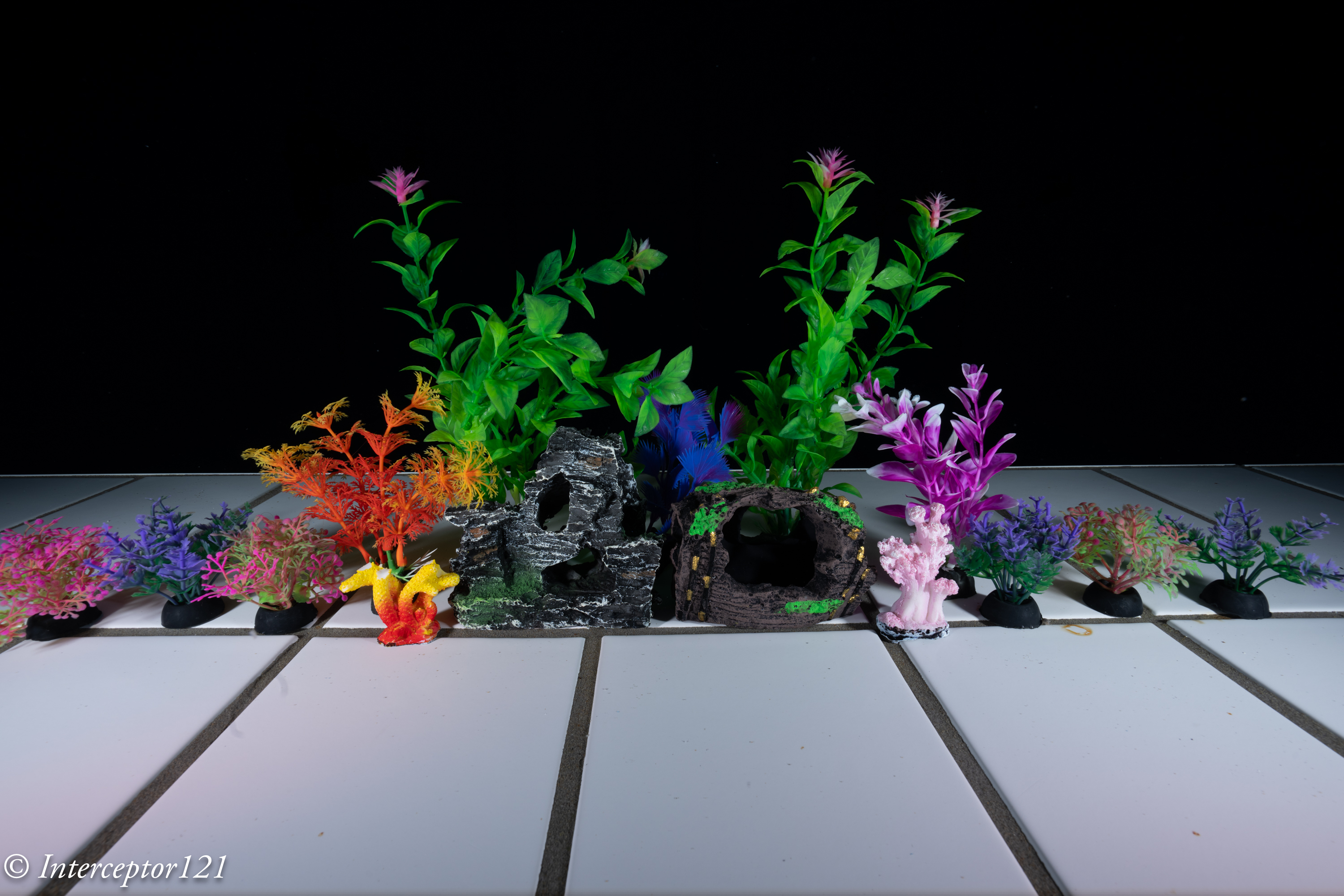
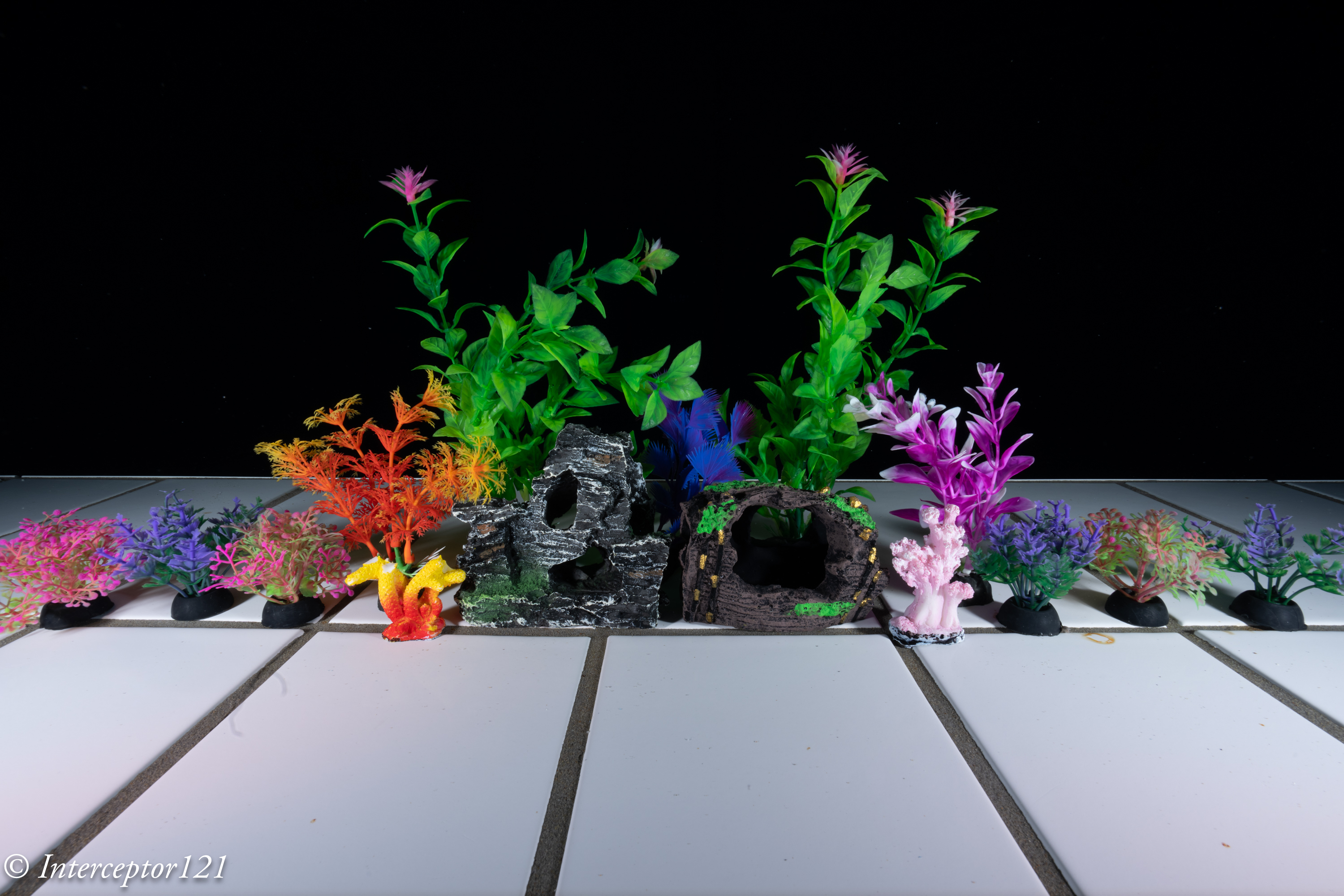
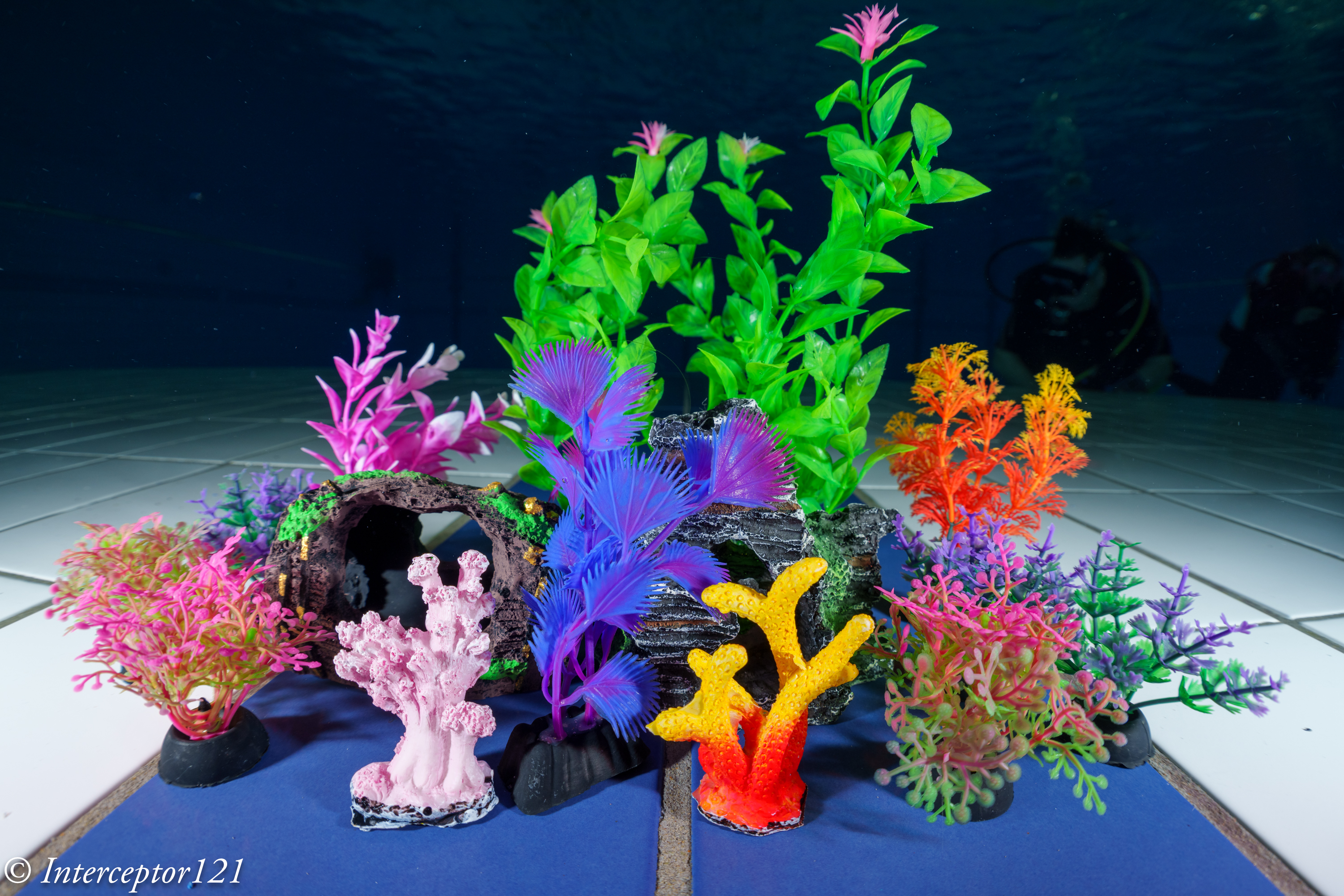
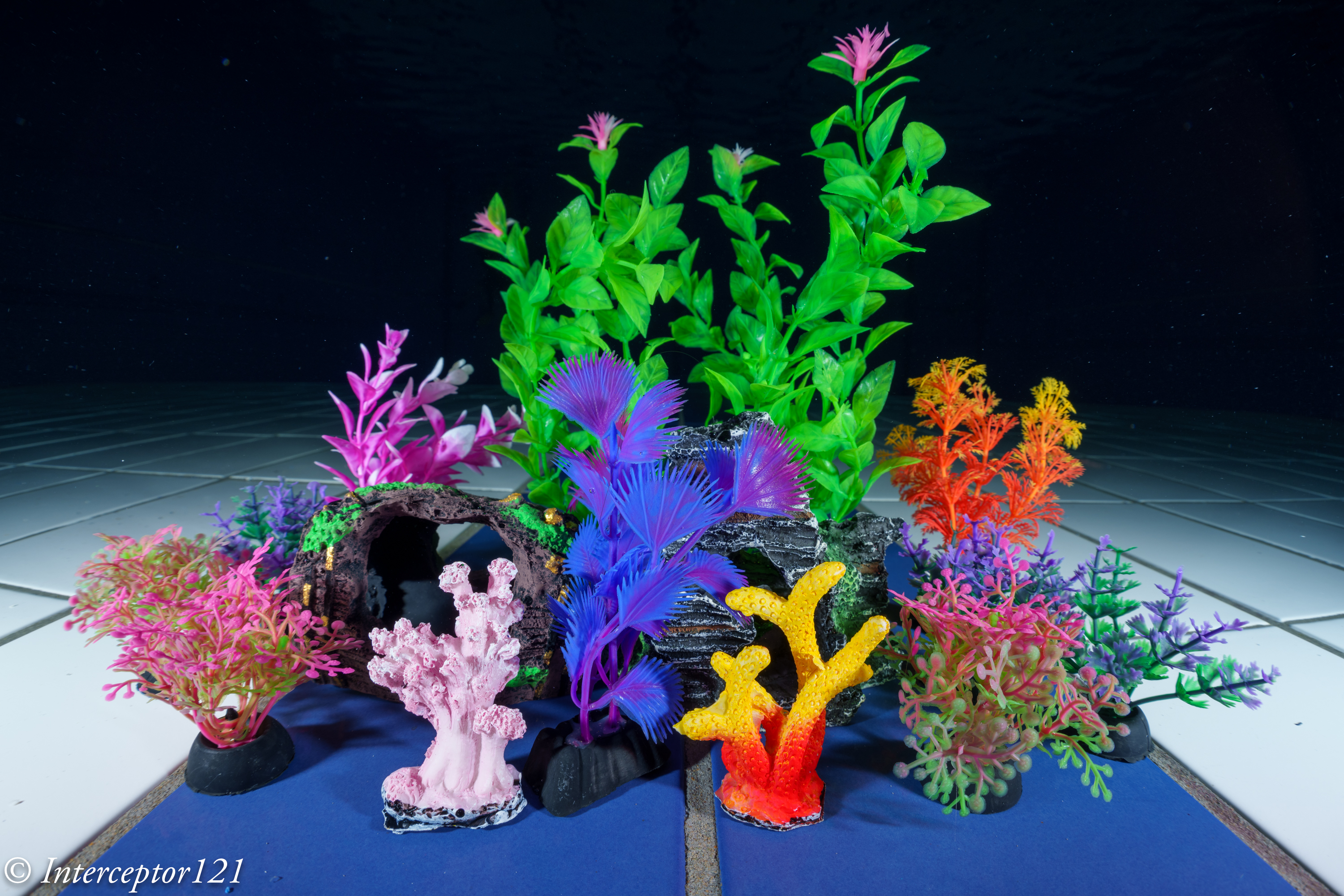
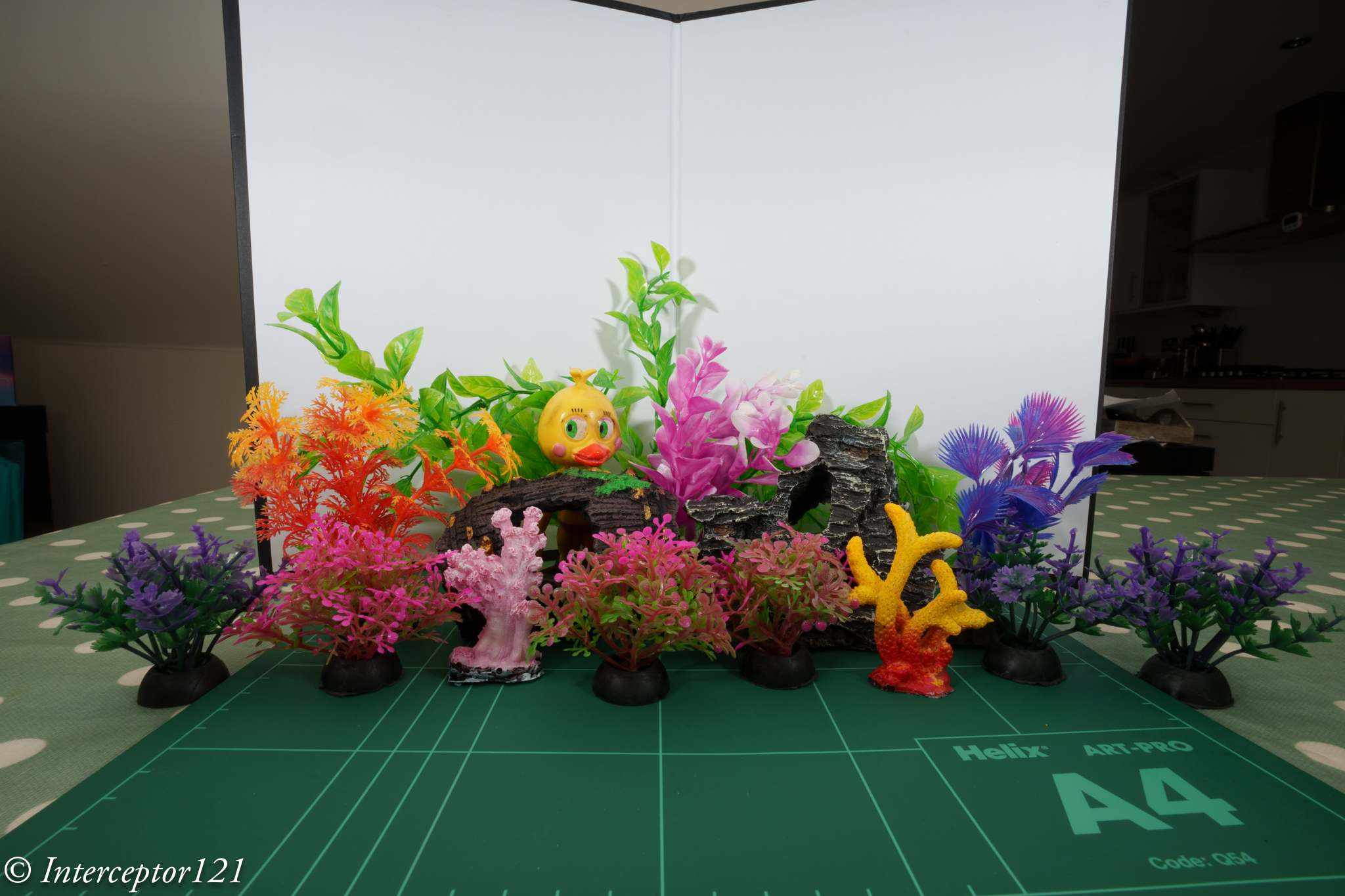
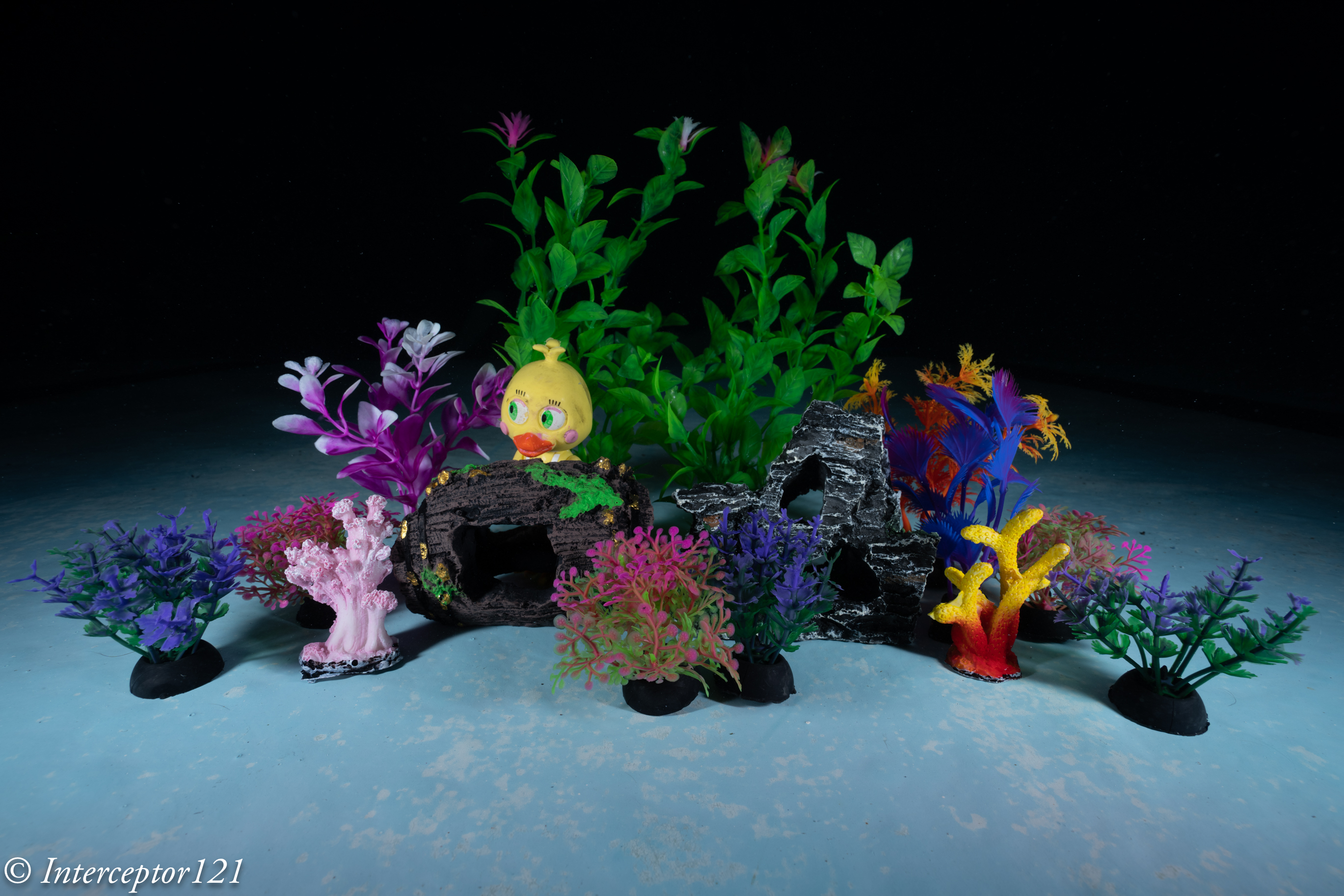
I built my scene using my underwater props on a table top and started taking a series of shots from f/8 to f/22 to see the results. What follows are a set of images taken on land with the focus on the eye of the chick.
Topside f/8 subject
At f/8 the first row of props is blurry and also the leaves behind are not sharp. The edges are soft.
This is due to lack of depth of field not to the bad performance of the lens.
Topside f/11 subject
At f/11 we have more depth of field however the props at the edges and the nearest part is still soft.
Topside f/16 subject
By f/16 all the props are in focus, the edges of the math are a tad soft but overall this is the right place to be.
Topside f/22 subject
By f/22 pretty much everything is in focus but the image quality has dropped considerably.
In conclusion topside we need to close down to f/16 to have all the props in focus on this scene.
Just so we are clear there is not an issue of edges or else there is simply lack of depth of field as we are shooting a close up.
Underwater Performance of Wide angle lenses 17mm use case
After rigging my camera and lens with the Nauticam 180mm dome it was time to hit the pool and try underwater.
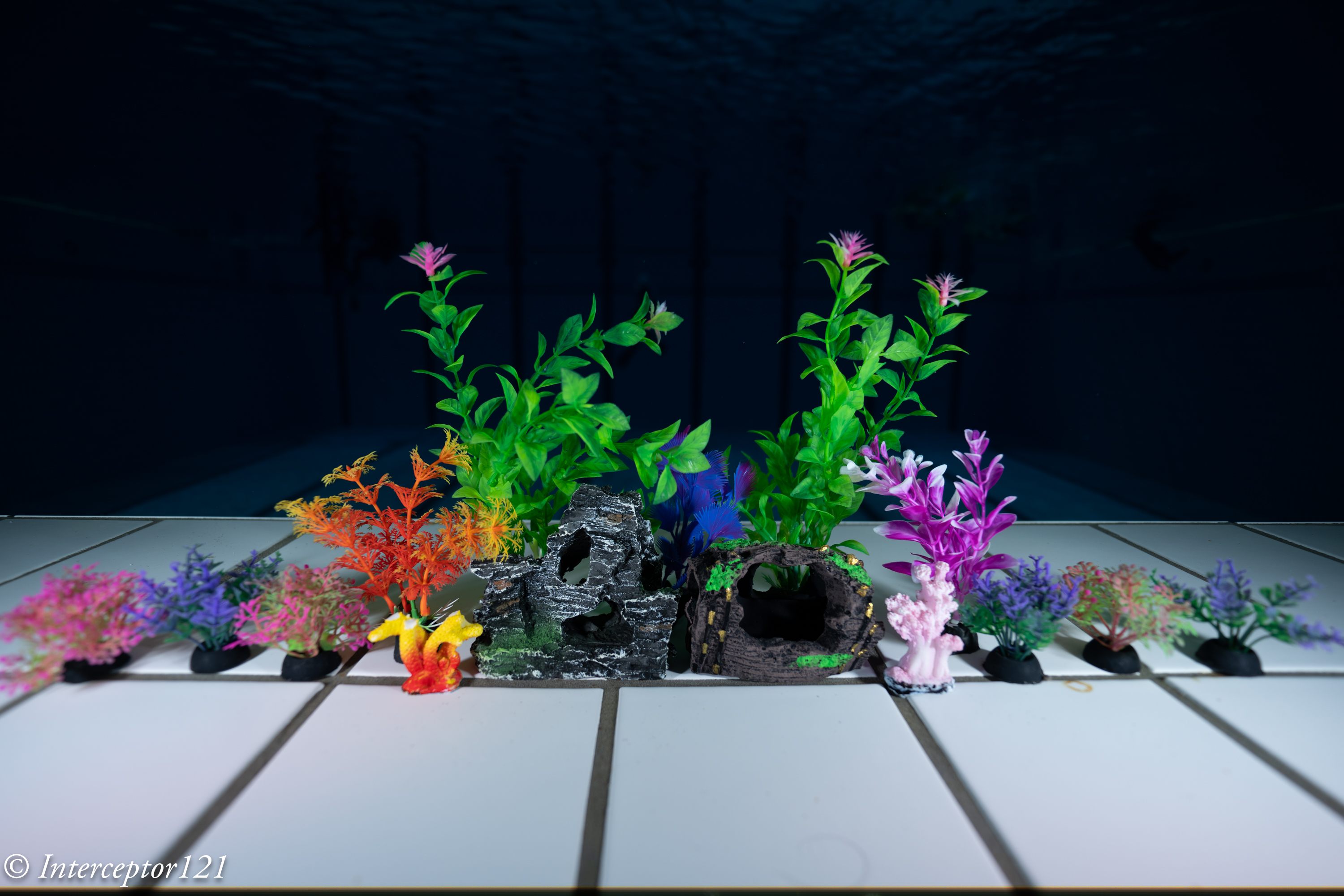
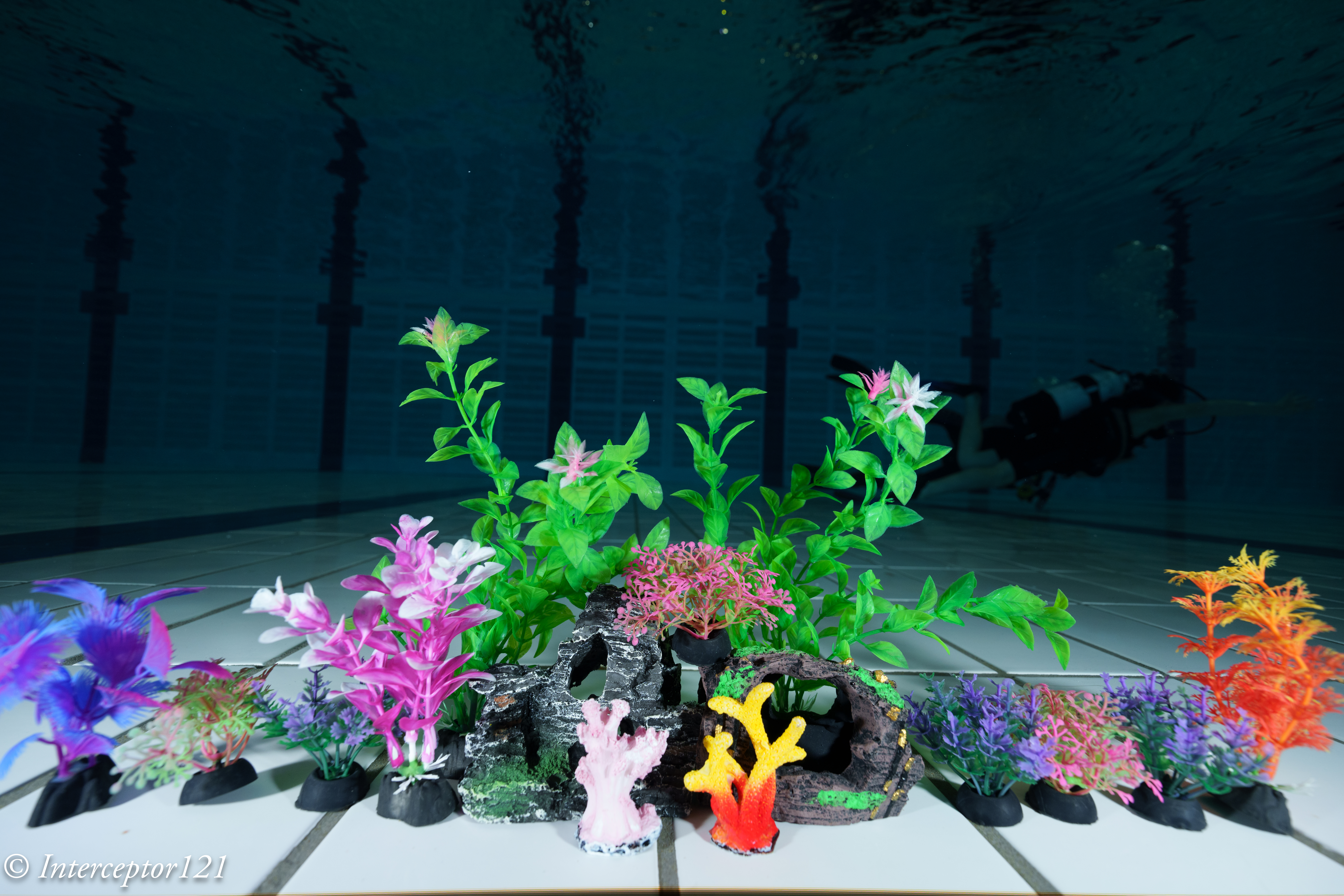
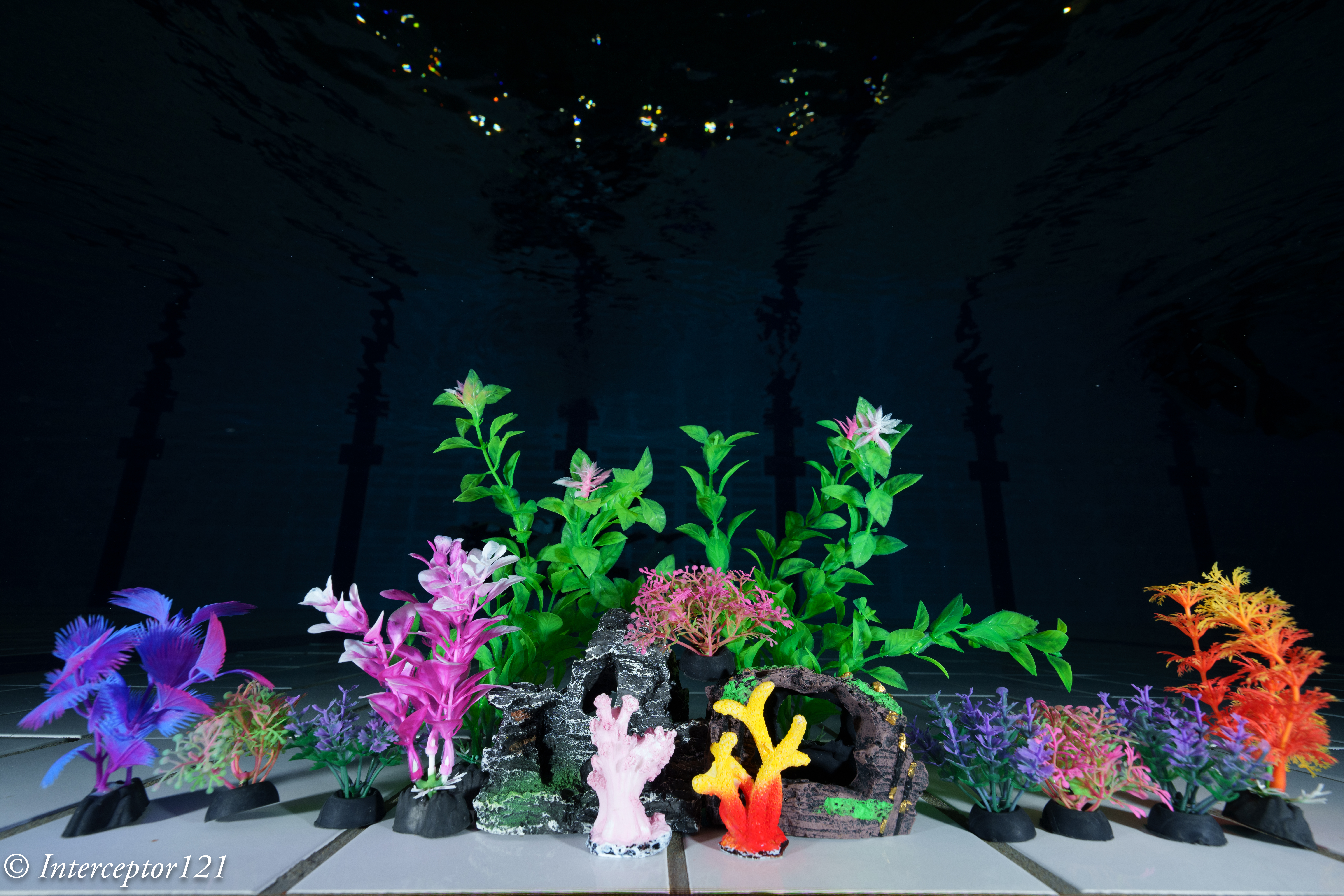
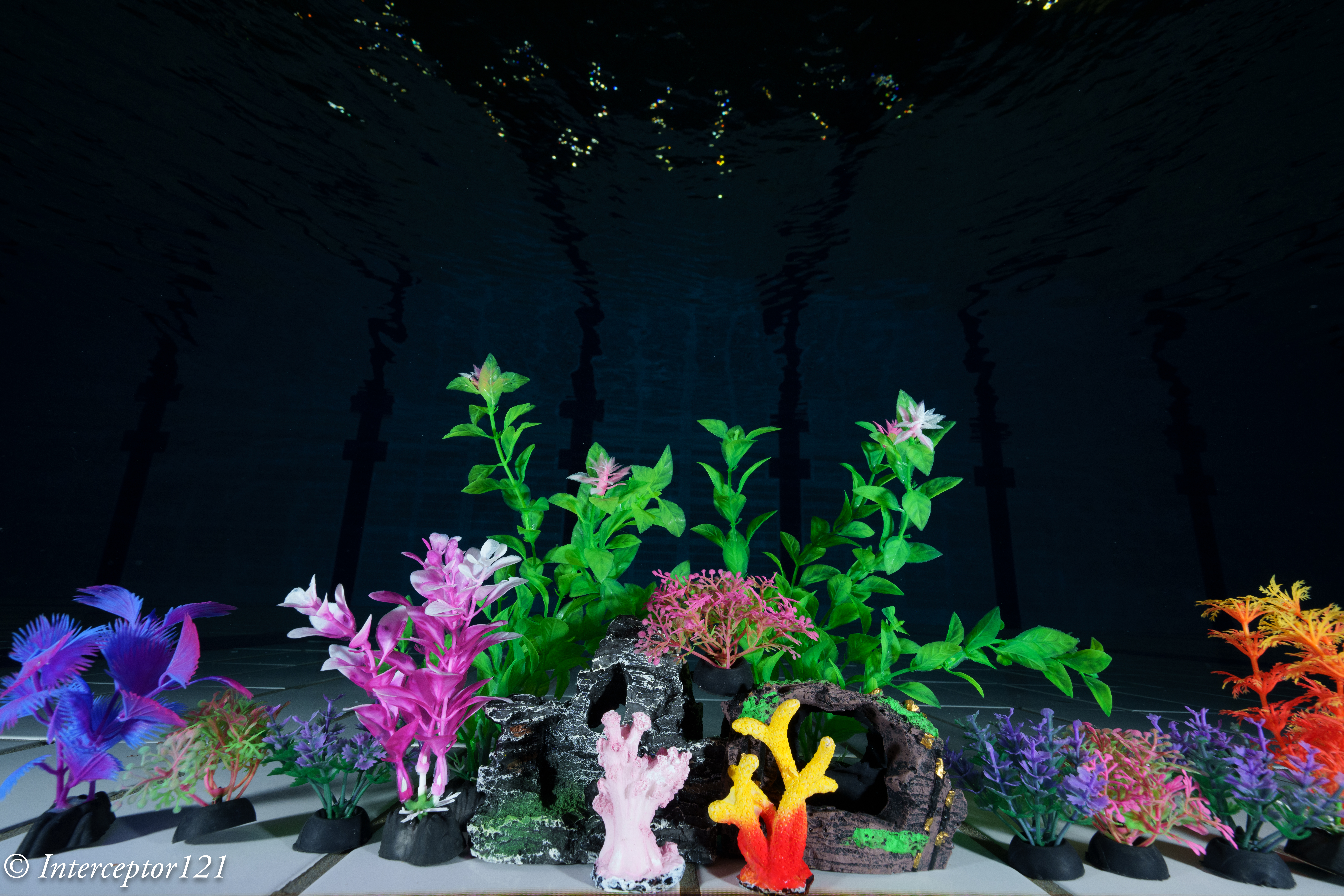
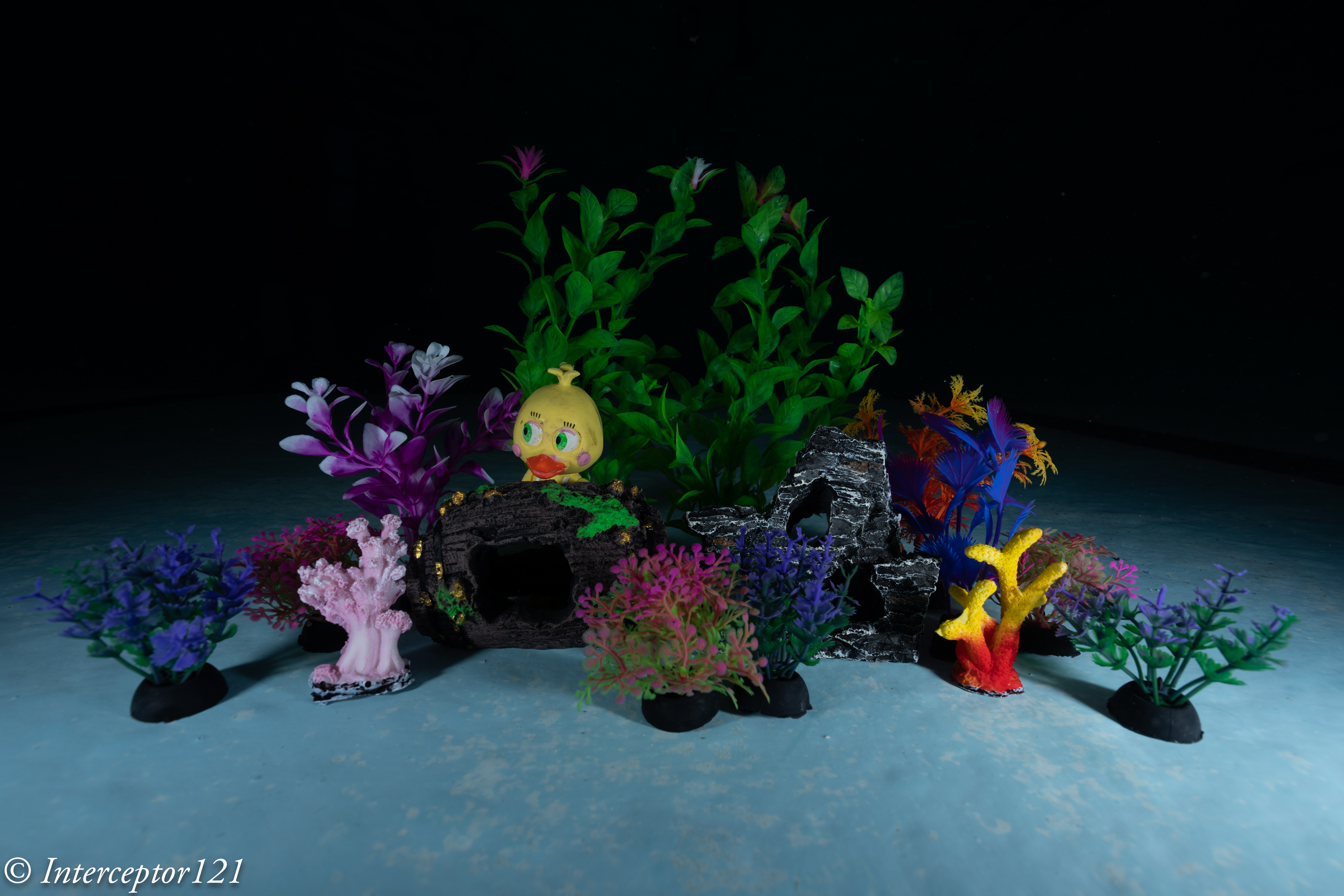
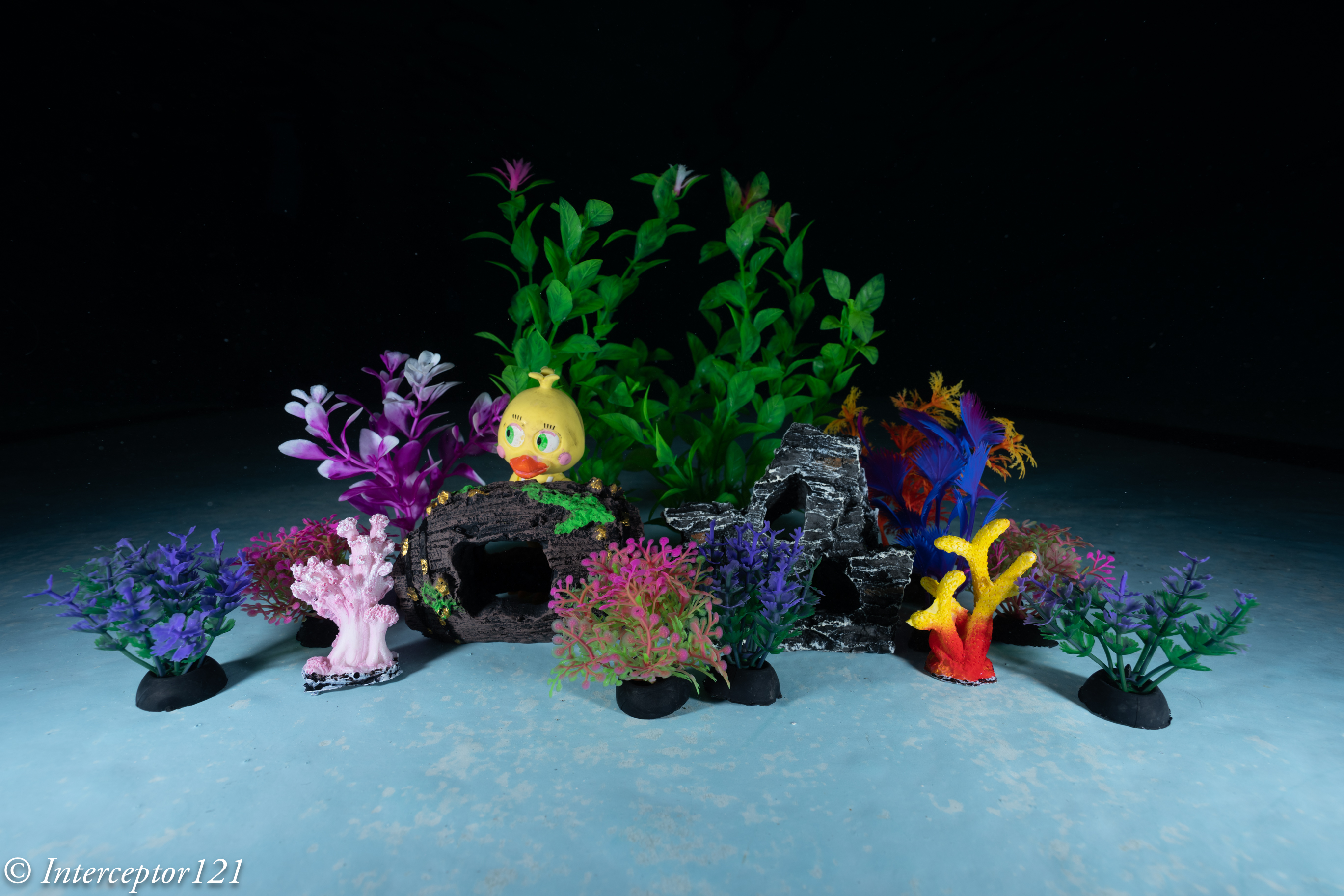
What follows are a series of shots from f/8 to f/16 with focus on the chick as the topside shot.
Tamron 17mm f/8 Focus Mid
The image at f/8 looks very much like topside and lacks depth of field, however interestingly the bush behind the chick is relatively sharper to the topside scene. The dome port is increasing the depth of field behind the subject.
Tamron 17mm f/11 Focus Mid
By f/11 there is a considerable improvement all across the frame the items at the edges are still soft pretty much like the topside image.
Tamron 17mm f/16 FocusMid
By f/16 we are where we should be. Note how the entire set of props is in focus exactly like the topside image and only a slight deterioration on the very left of the frame prop.
Move your focus…
Dome ports increase the depth of field of the lens as infinity becomes nearer however they also shift the depth of field of the lens because the virtual image is closer and most of the depth of field shifts behind.
With that in mind I focussed on the first prop to see what happens.
Tamron 17mm f/8 Focus Near
At f/8 the first line is sharper even the props at the edges are substantially better and I would say acceptable however the leaves behind are out of focus.
Tamron 17mm f/11 Focus Near
At f/11 the edges are good and so are the props behind the chick with the exception of those really further back where we are running out of depth of field.
Tamron 17mm f/16 FocusNear
By f/16 focussing on the near prop we have pretty much everything in focus.
As final example this is a shot at f/11 with focus just behind the fake coral red and yellow on the right.
Tamron 17mm f/8 FocusSide
With the exception of the very very edge of the right frame which is bordering the dome edge the image is sharp throughout.
Why are the images not blurry?!?
You are now starting to ask why some images you see on the web look horrible and mine don’t? This is a legitimate question to which there are at least five answers.
Lens working distance
The Tamron 17-18mm has a working distance of 19 cm and is 9.9 cm long. From my calculation the entrance pupil is around 26mm from the front of the lens. This means that a dome radius of 10cm is sufficient to be able to focus right on the port. All other lenses for the Sony E-mount have working distance of 25 to 28 cm and would need extremely large radius to be able to focus on the glass.
Wrong Extension Ring
The Nauticam 18809 wide angle dome port is not a classic dome but has design without a flat base. The port has 11cm radius of curvature and is 83mm deep 180mm wide this means the entrance pupil needs to be 27mm behind the extension.
Nauticam 18809 180mm Wide angle dome port
Nauticam recommended extension is 40mm when combined with the 35.5mm N120 to N120 port adapter. Due to the shape of the lens this cannot be used with the N100 port as the zoom is close to the front of the lens.
Tamron 17-28mm with Nauticam zoom gear
Underwater housing manufactures unfortunately do not apply any science to the selection of domes and extension for a lens but out of pure coincidence the 40mm extension ring is what this lens requires.
Tamron 17-28mm 35.5 adapter and 40mm extension
Nauticam criteria for the 180mm port seems to be the lens needs to be more or less flush with the extension ring. In our case the entrance pupil is 26mm behind and the extension ring is a few mm over so we are more or less spot on. THIS IS ENTIRELY A COINCIDENCE!
With the 40mm extension the glass port will be exactly 11 cm from the entrance pupil and focus right on the surface.
Unfortunately the principles applied by manufacturers which are either to be flush with the ring or the dome mount or to extend until it vignettes generate loss of angle of view and distortion.
One of the worst offender is the Nauticam 230mm glass dome, where the rule of extend until you can generates pincushion distortion (edge pulling) effect.
Software Correction of Distortion
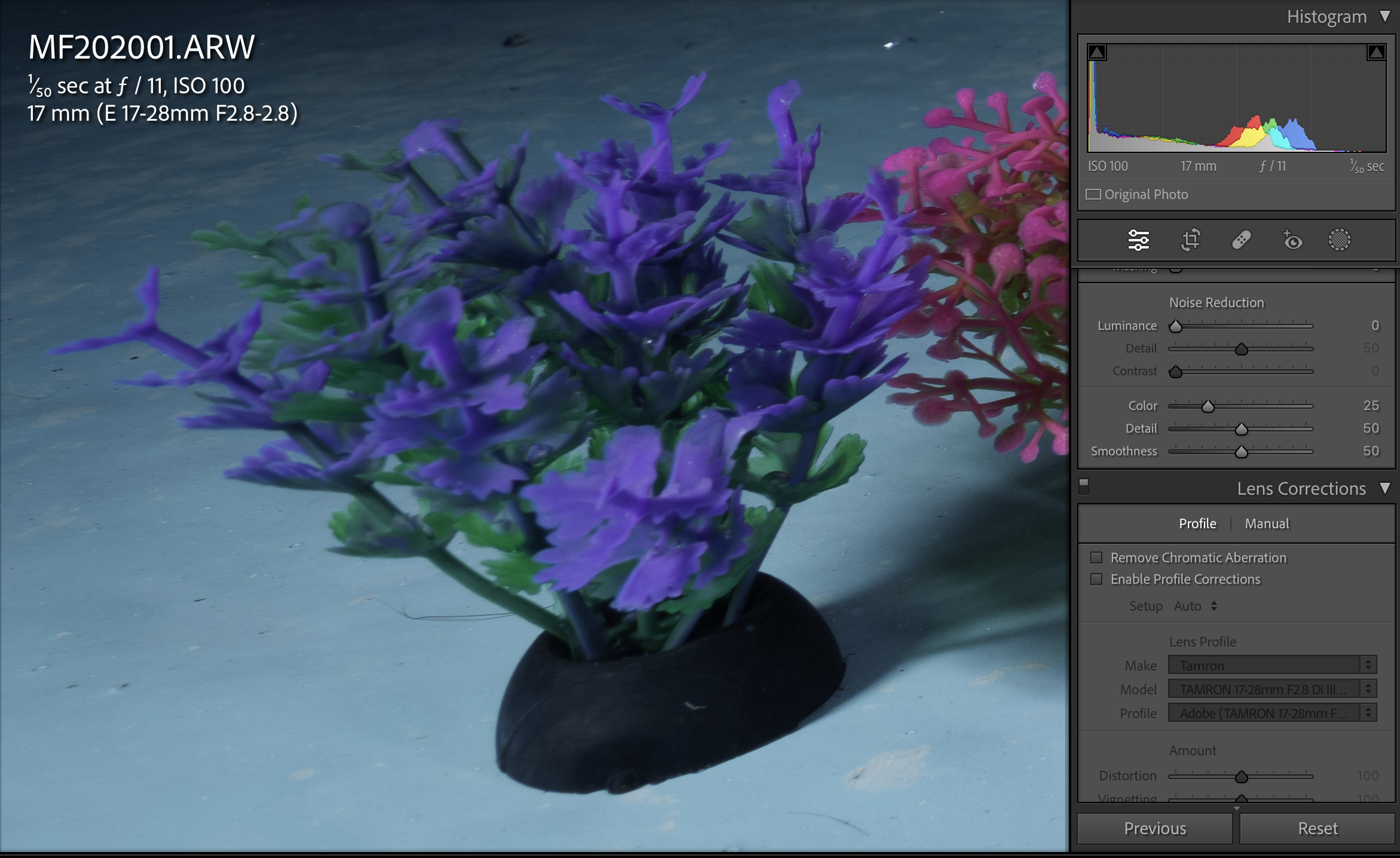
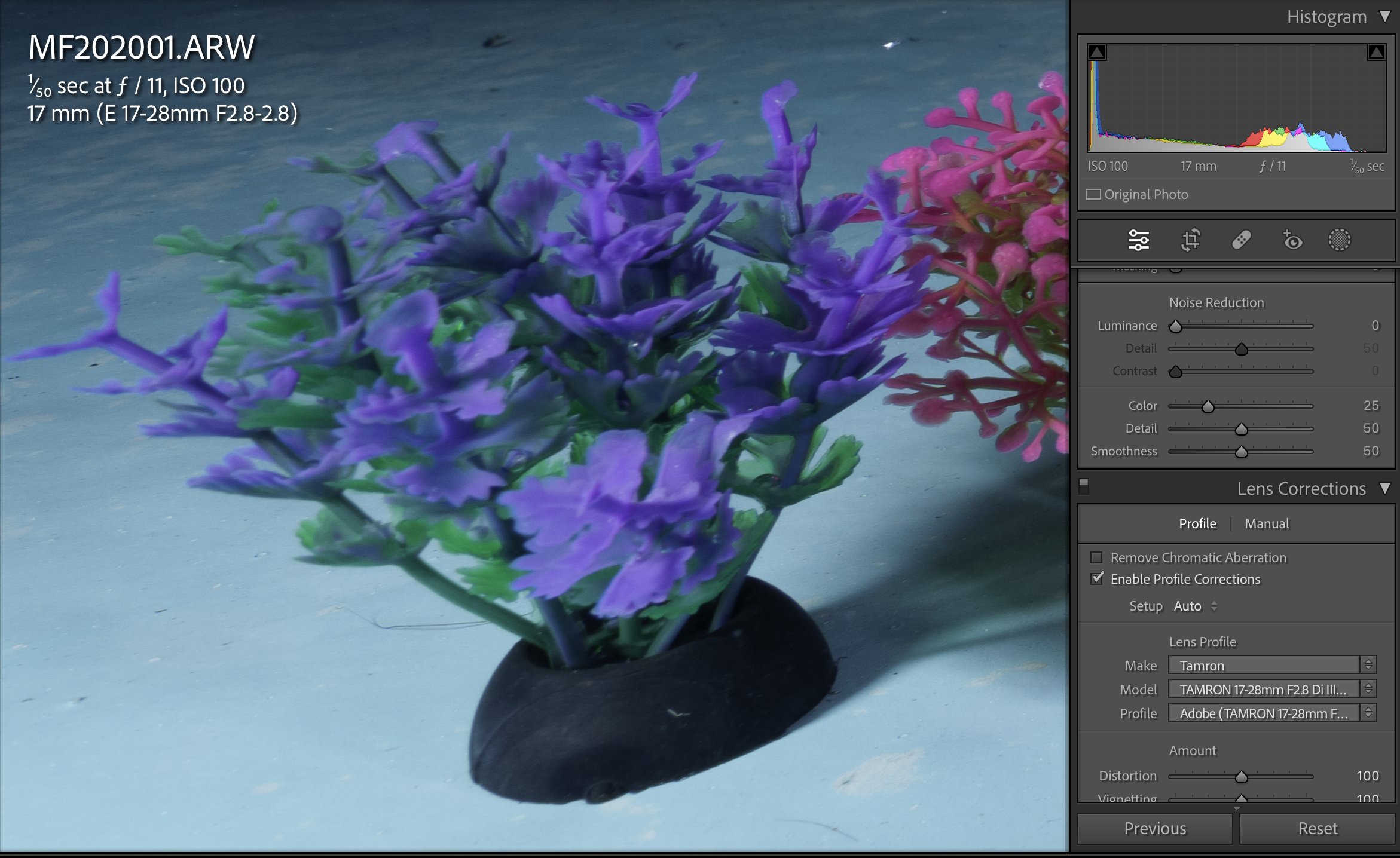
The lens correction has a warping effect on the edges even when the dome is correctly placed.
Exteme edge at f/11 with distortion correction offExtreme edge at f/11 with distortion correction on
If you have a full frame camera or a camera where you can disable the correction make sure this is set that way.
For systems where lens correction is baked in the lens profile (micro four thirds) ensure to use a program that can disable the correction such as DxO Photolab for best results.
Constant Autofocus with subject tracking
As we have seen in most cases it is better not to focus bang on the subject but to focus closer or even at the side of the frame and work out the depth of field.
Many users use subject tracking that may seem a wonderful idea and works very well with a flat port however underwater results in blurred edges due to the depth of field distribution of the dome port unless you close the aperture until you can care less.
If you want to ensure the edges of your rectilinear wide angle shots are sharper use single autofocus and position the focus strategically in the frame the dome compression will do the rest.
Superwide lenses (<16mm)
When your lens is superwide you may have all effects on top of each other: pincushion distortion because your extension is calculated with the ‘go until vignette’ method, distortion correction in software, subject tracking, lens with long working distance and to make it worse perspective distortion and spherical aberration which occur when the lens is very very wide.
Choosing your rectilinear wide angle lens
I have computed all lenses avaialble for my A1 and calculated the ideal radius of a dome in this table. Unfortunately while the 230 port has a wider angle of view it has a radius of 12 cm which is only 1 cm more than the 180mm port. The choice of port is therefore driven by angle of view and not radius as 1 cm does not change much. Most lenses would need 15 or 16 cm radius to be able to focus close to the glass.
Brand
Model
Working Distance
Field of View
Radius Required
Port
Sony
SEL1224GM
280
122
152
230
Sony
SEL1224G
280
122
152
230
Sony
FE14 1.8 GM
250
114
157
230
Sony
SEL1635GM
280
107
169
180
Sony
SEL1635Z
280
107
169
180
Sony
PZ1635G
280
107
169
180
Sigma
1424DGDN
280
114
164
230
Tamron
1728RXDIII
190
104
99
180
Zeiss
18mm
250
100
177
250
Sony e-mount rectilinear lenses and ports
You can easily see that the Tamron 17-28mm has much better design characteristics to go into a dome port and this is the lens to buy.
From my tests there is no need of any field flatteners and correction lenses it works fine out of the box as the lens has minimal field of curvature and zero spherical aberrations.
Pool Session
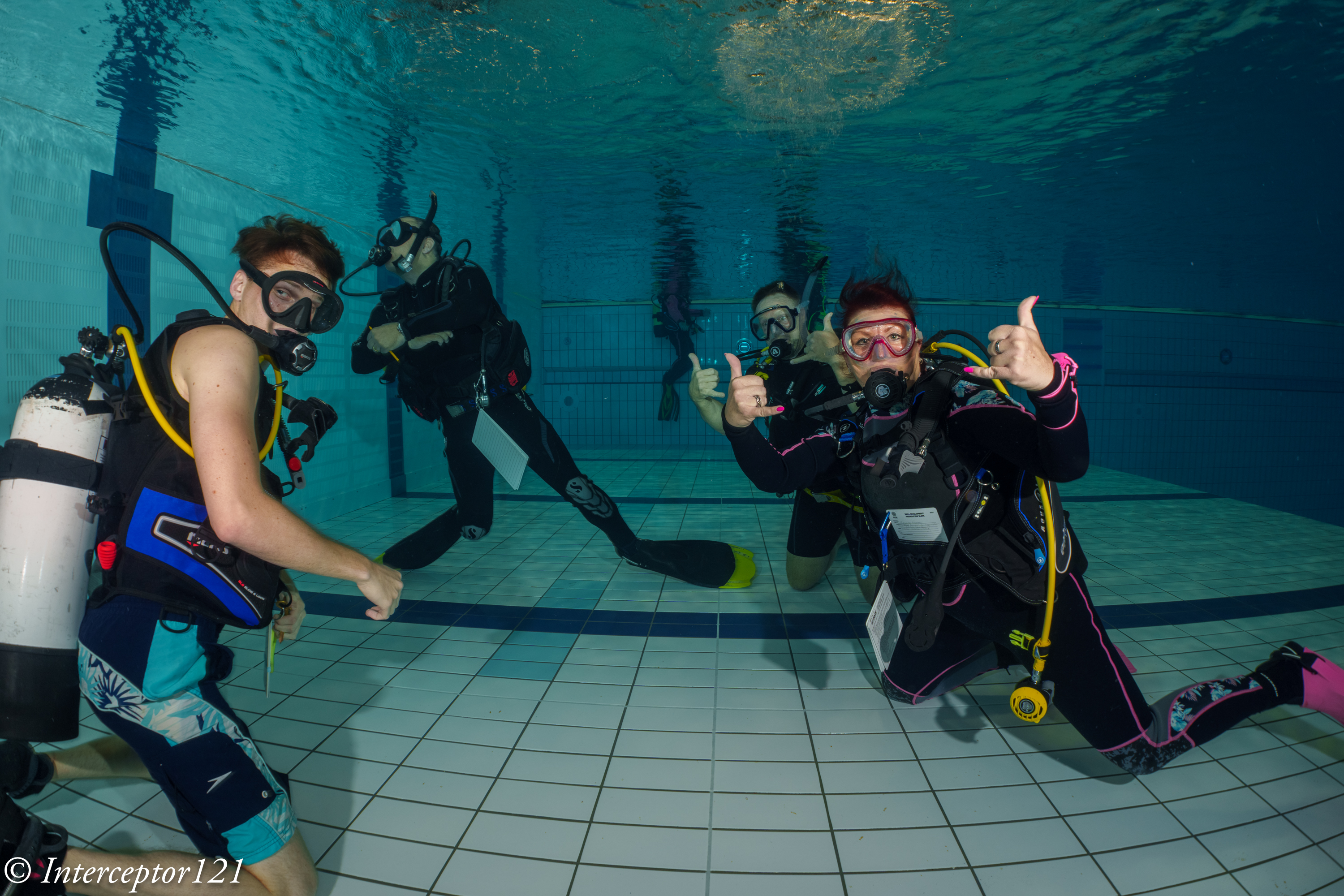
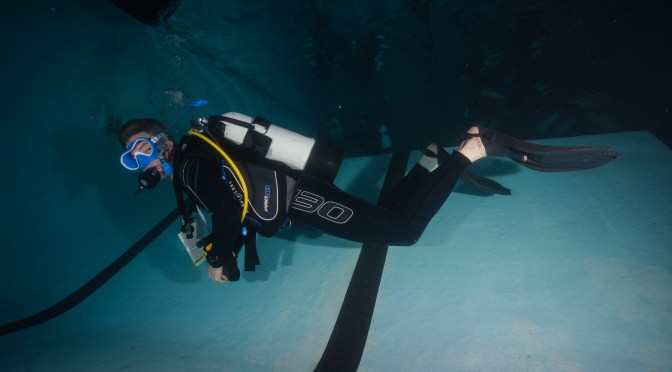
If you are not happy with the CFWA studio scene here are some images from a recent pool session. Many f/8 and f/11 images no need to close the aperture more if you don’t have anything close and shot in single autofocus.
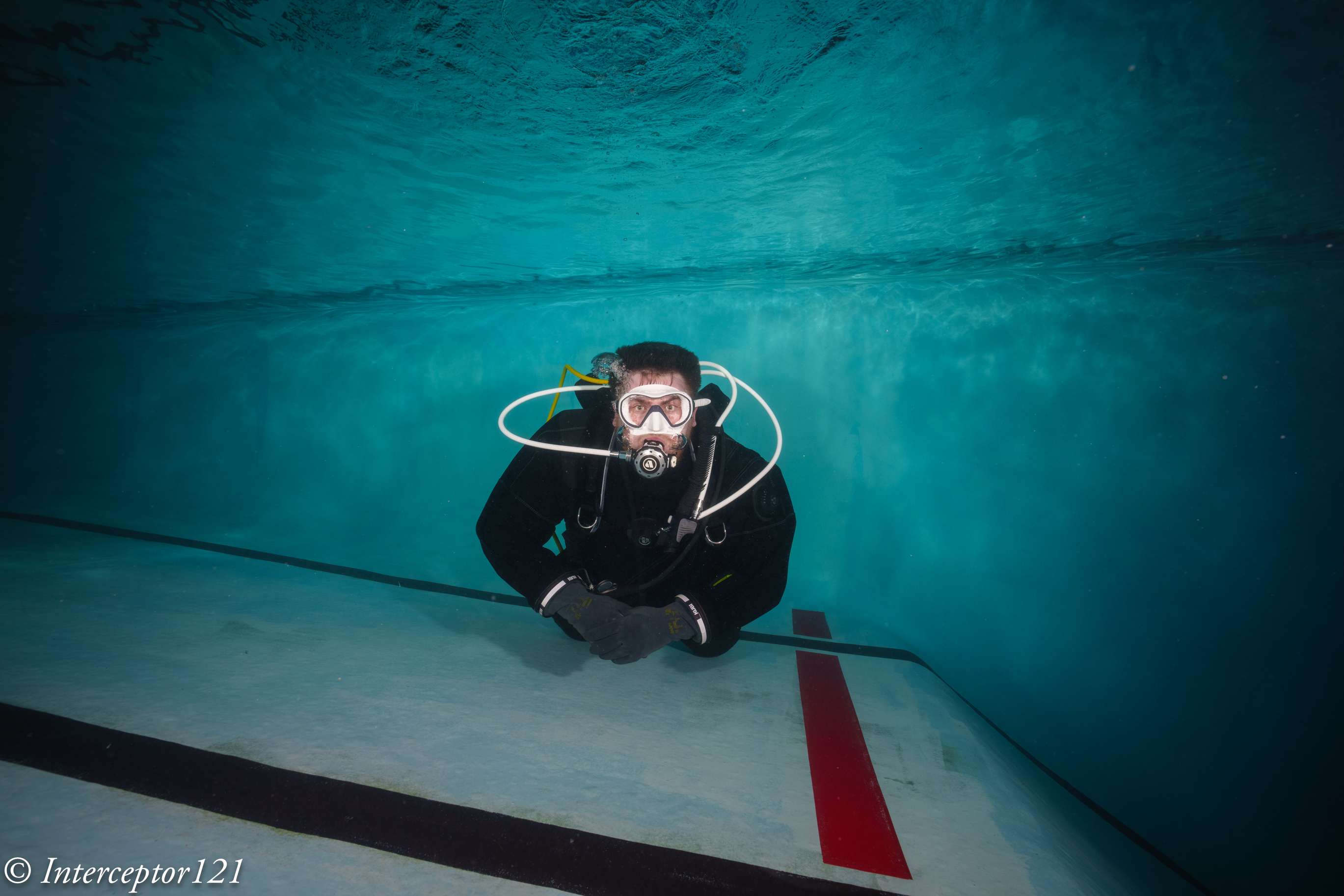
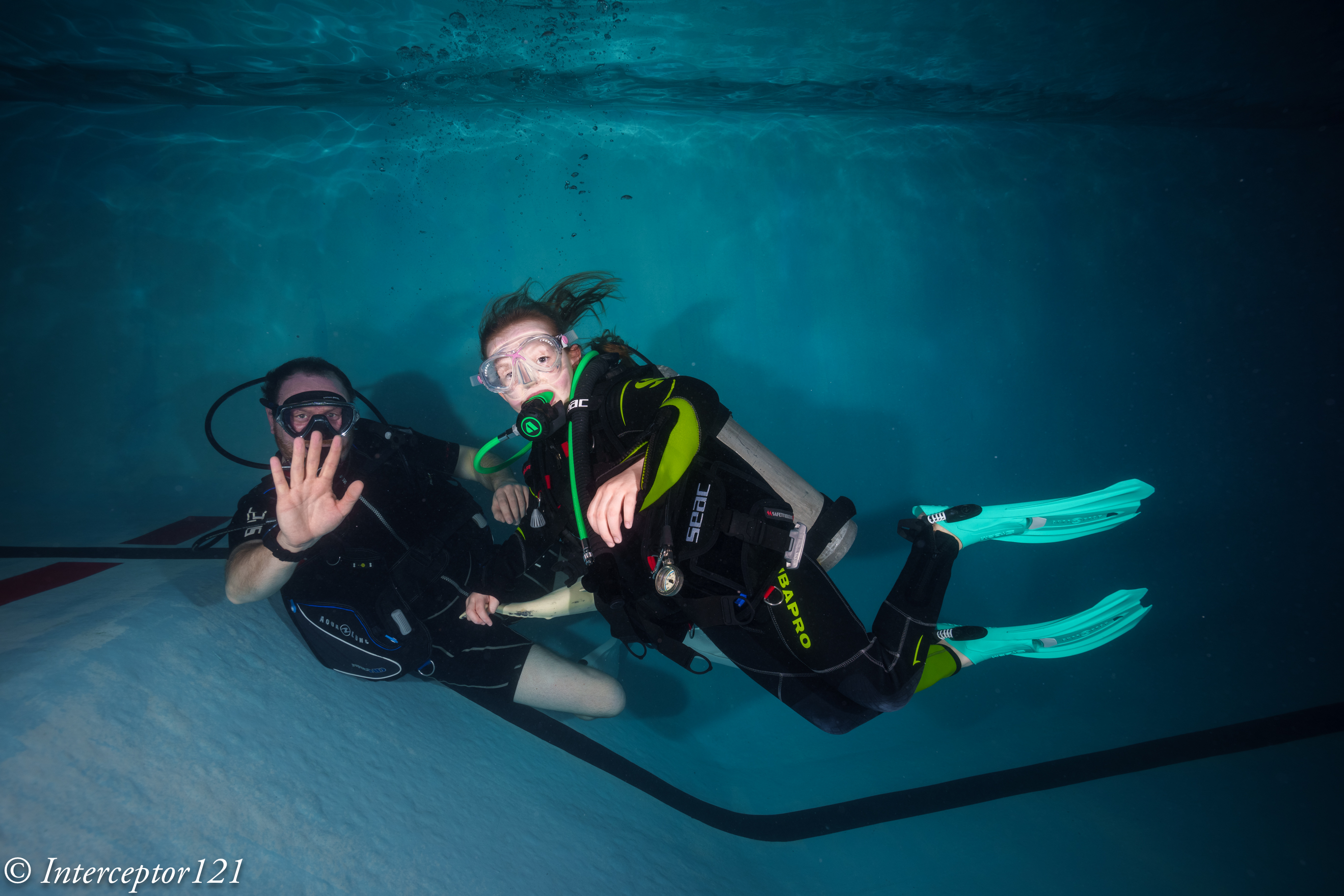
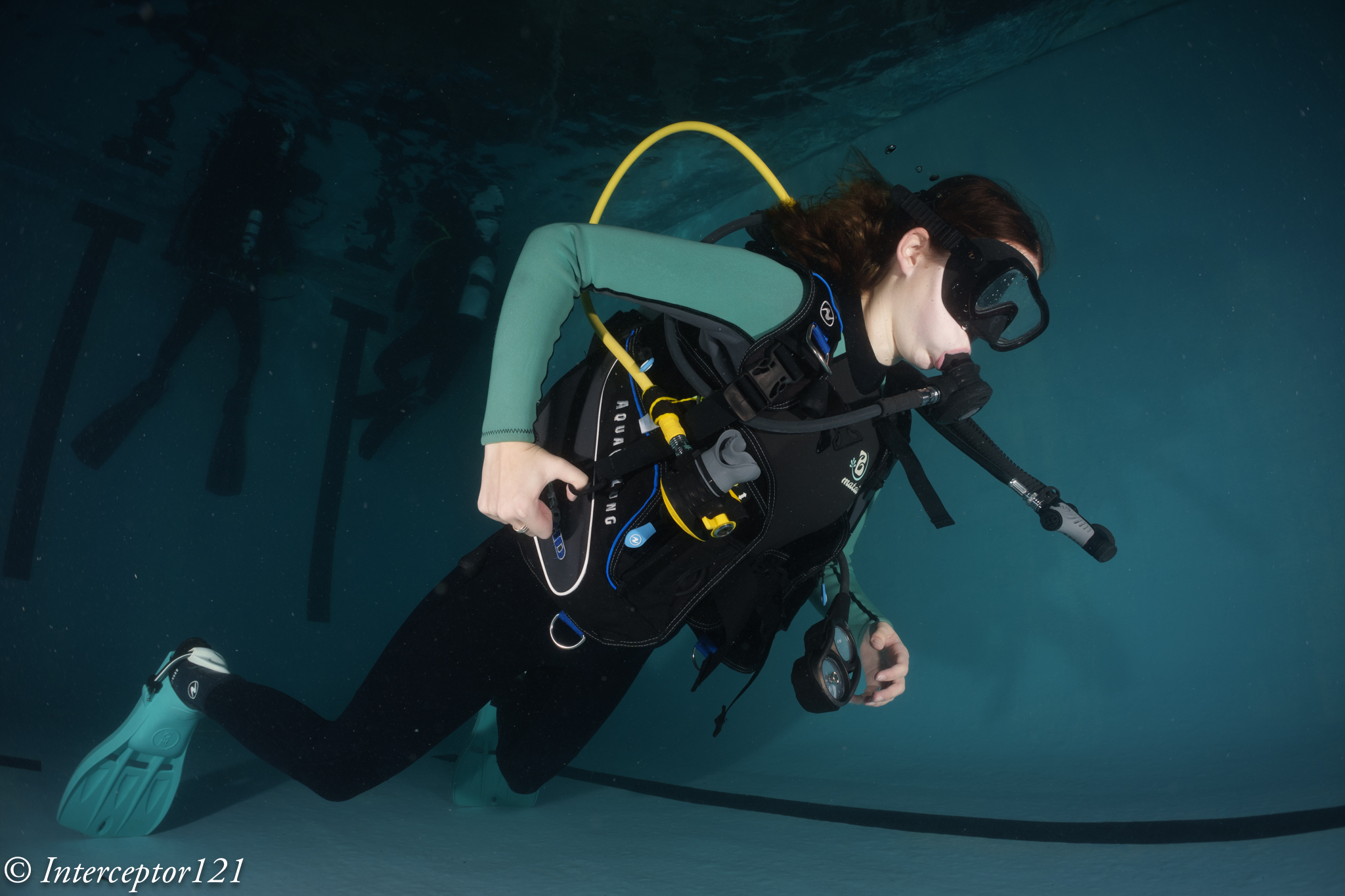
Skill training 17/8Dave Side 17/8Female Diver Side 17/8Drysuit Diver Front 17/11Maddy Portrait 17/11Rush Diver Side 17/11Manu Side 17/11Dad Daughter 17/8
Quite interesting to see the fins at the edges of the f/8 shots.
If there is one challenge of rectilinear lenses is that you need strobe power. The narrower field of view compared to a fisheye means that you are standing further back that in turn means more strobe power and more particles between you and the subject.
Should I buy a rectilinear wide angle lens for underwater use?
My answer is definitely yes but each system will have the special lens, the one that focuses close, does not require a large radius and is not too wide and not too narrow (16-18 is ideal) however examine carefully images of others and check the lens construction as your suggested extension may be wrong.
But when your lens is fit for purpose using the correct size dome and the proper extension you will get high quality images that match or beat fisheye like lenses and water contact optics.
As example here an image shot with a canon 8-15mm at close range f/11. Does it have much better edges?
VideoDiver
And here a WWL-1 image at f/8
WWL-1 f/8
I cannot see any advantages of the fisheye like lenses at the edges at the same aperture in fact in both cases but judge for yourself.
Unfortunately Phil used the Sea and Sea correction lens an expensive accessory that this lens does not require but as soon as I am in open water I will post images myself.


































 Interceptor121 Photography & Video Workshops