I have been watching and reading lots of content about the new Sony A1 II.
I own two A1 and I have been evaluating if an upgrade was worth it. My interest as an hybrid shooter taking photos and video is to have the most versatile camera on the market however I have so far decided not to move forward.
There is a very interesting video from Marc Galer
Look at timestamp 11:17 or for your convenience this the table of the features that according to Marc are worth the upgrade. I have then analysed if they are relevant to underwater shooters.
Feature
Underwater Relevant
Comment
Improved Subject Recognition
No
Insect can see a nudibranch but it is not better than just tracking
Precapture, Speedboost
No
Burst rate required are low
Improved steadyshot
No
No long exposures, flash freezes motion
Multi angle monitor
No
housing does not allow movement
Still movie dial
No
Irrelevant
Ability to change drive mode from dial or menu
No
Improved AWB and High ISO noise reduction
No
Dynamic active steady shot for movies
Yes
Video only
As you can see there is really no benefit in the upgrade from this point of view.
Additional considerations
the A1 II has the same identical sensor of the original A1 there is no image quality improvement
Sony has a tendency to boast on their stabilisation rating a test of the A9III conducted by optyczne reveals an improvement of 1 stop over the A1.
The body shape is the same of the A9III and you need a new housing.
Let’s talk about money I will refer to USD prices differences in other countries will be higher due to sales tax.
Sony A1 Camera
5498
Sony A1 II Camera
6498
Difference
1000
The arrival of the new mkII has meant a price drop for the A1 and there are also some trade in bonus options making it more attractive.
Housing A1
4657
Housing A1 II
4920
Delta
263
The new housing is more expensive than the previous unclear for which motivation but here we are.
In summary to get a new A1 II you need $1,263 more compared to an A1.
Here are some ideas of what to do with that money
Total Difference
1263
Sony 90mm Macro
1098
Sony 28-60mm
498
Sony 16-25
1198
Canon 8-15
1249
I suppose there are many other ways to spend the difference,
If I was a sport photographer I would definitely be tempted by precapture however I am not. I do have two bodies that I bought for resilience and backup so perhaps I would swap one for the mark II but I need some proper review to see if the steadyshot has already improved as that is the reason why I kept a Panasonic GH7. Telelens video without a tripod is not a possibility with the original A1.
Hope you found this useful if you decided to save $1,263 and want to buy me a drink click the donate button.
At present I own 4 cameras: 2 Sony A1, 1 Sony A7CM2 and 1 Panasonic GH7.
With the exception of Fuji Xtrans I have practically shot any mirrorless and DSLR from MFT to Full Frame.
The race to more megapixels continue and right now you can get 25 Megapixels even from a Micro Four Thirds. My 3 models have 25, 32.7 and 50 Megapixels.
The thing with resolution tests is that they are based on flat charts while an image has 3 dimensions and depth is as important as horizontal and vertical resolution.
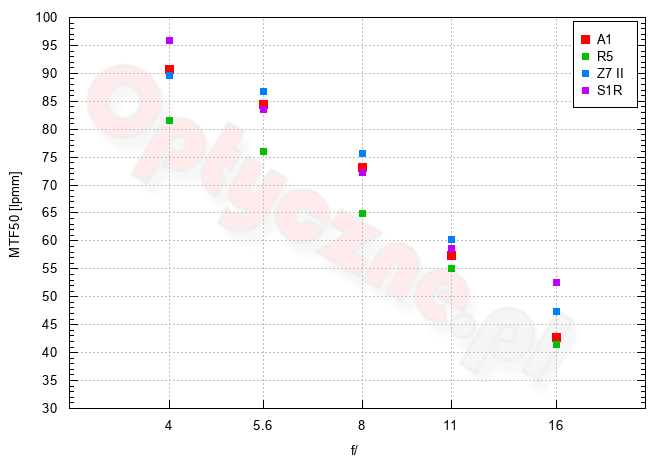
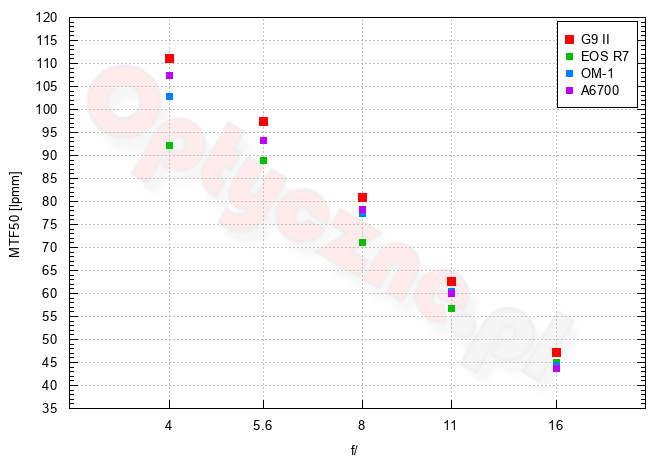
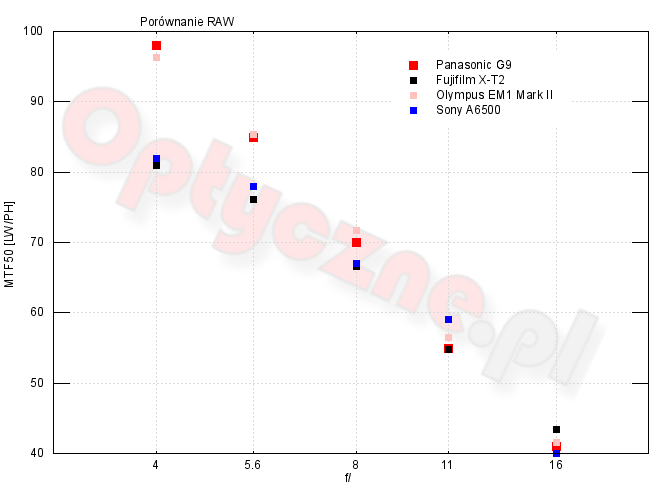
When you look at camera tests you get very excited because you see some really high values for spatial resolution on two axis. Some websites like Optyczne still test matrix resolution, here some charts for the 3 cameras I own or their closest proxy.
Sony A1Sony A7CM2 (A7 IV)Panasonic GH7 (G9M2)Panasonic GH5M2 (G9)
Those graph are expressed in line pair per mm so in terms of resolution at f/4 this means in Line Pairs per Picture height
A1 4368 LP/PH
A7CM2 3456 LP/PH
GH7 2886 LP/PH
GH5M2 2548 LP/PH
The A1 has 1.71x the resolution of the GH5M2, 1.51x the resolution of the GH7 and 1.27x the A7CM2. The GH7 has 1.13x more than the GH5M2 we are however omitting the third important dimension which is depth.
When we look at the shallow depth and compare f/8 on full frame to f/4 on MFT the benefit still holds for the A1 but it disappears for the A7CM2
A1 3504 LP/PH (f/8)
A7CM2 2880 LP/PH (f/8)
GH7 2886 LP/PH (f/4)
GH5M2 2548 LP/PH
In practical terms if we are interested in shallow depth of field more pixels and larger sensor matter. There is no benefit having less pixels on any sensor.
Let’s have a look at the landscape Sunny 16 scenarios
A1 2064 LP/PH (f/16)
A7CM2 1920 LP/PH (f/16)
GH7 2106 LP/PH (f/8)
GH5M2 1820 LP/PH (f/8)
We observe two things the benefit of more pixels on the full frame sensor has dropped to 10% practically halved. The benefit to MFT has reduced or even reversed.
Some example shots to prove the point all scaled to A1 resolution with lightroom standard jpeg export
What does all of this tell us? Essentially two things
At same sensor size more pixels increase resolution however the benefit drops at smaller apertures. There is no reason to get a camera with less pixels in any format. This of course does not take into account the fact that at identical sensor technology less pixels read faster.
With different sensor size and equal depth of field large sensor have an edge at wide apertures or shallow depth of field but the benefit drops at small apertures.
Certain type of photography have a clear requirement for shallow depth of field for example people and portrait photography.
Othere have a clear requirement for high depth of field for example macro (not flat surfaces) or underwater photography.
Smaller cropped sensor with lots of pixels can be very useful because they can read reasonably fast and provide lots of depth of field with acceptable image quality.
I have the housing for the GH7 and will be taking it in water in the next two weeks. I expect performance to be superb with rectilinear wide angle lenses as well as fisheye zoom. Macro is not my specialty there the most important consideration is autofocus first tests on land show that the focus speed is heavily dependant on the lens.
Recently many DSLR user have been moving to Mirrorless, while some are still waiting. The entire world of photography has practically abandoned DSLR but underwater photography is traditionally lagging and this is due to a combination of factors one of the most important being availability of appropriate lenses to fit specific use cases.
Unfortunately underwater use cases do not form part of the design criteria of lens manufacturers due to the tiny size of the market, so you need to hope something comes up that can fit that shooting situation you are trying to master. To date there is no native OEM fisheye lens for mirrorless for full frame. There are of course plenty of lenses for micro four thirds but this is only mirrorless so it does not form part of this evaluation because if you are on that format you have moved on already.
Full disclosure I am a Sony Mirrorless shooter but have owned and used Panasonic, Nikon, Canon and Fuji and I keep myself up to date with the latest innovations. This piece is based on data as you can see it not on opinions which I have little interest in.
Brand Loyalty?
One thing that is very important when making this step is to ignore entirely brand loyalty. This is somewhat difficult for the user that is accustomed to a certain menu system and look and feel or even color rendition of the camera but it is an imporant factor.
Let’s have a look at few examples considering the two main DSLR brands Canon and Nikon starting from the latter.
Nikon
Probably the market leader in underwater DSLR shooter has been delaying the transition to mirrorless and only recently catching up.
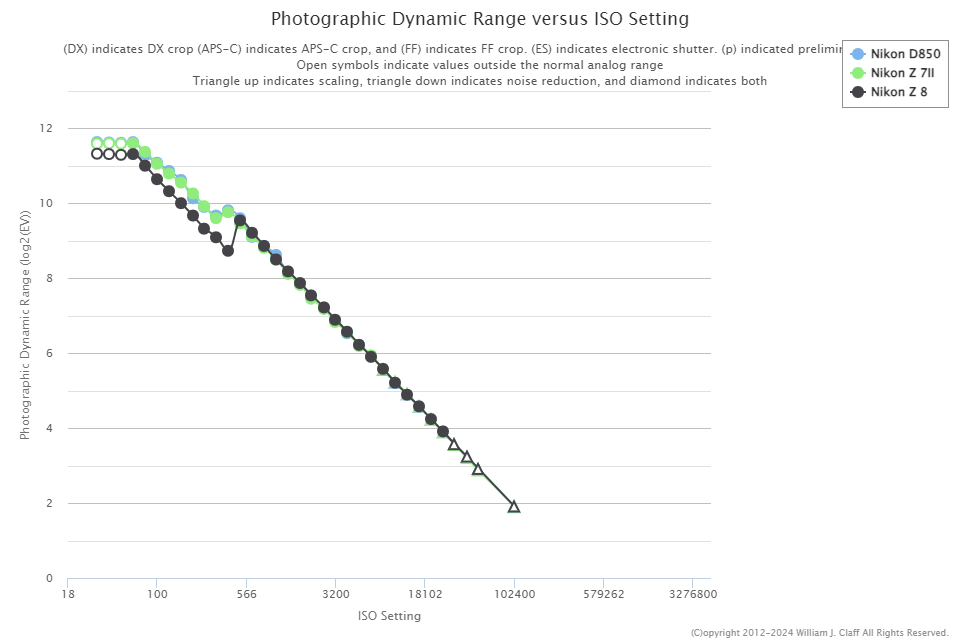
Nikon D850 vs Z8 vs Z7II
The D850 and Z7II have the same sensor and therefore identical performance, the Z8 has a new stacked sensor however according to a variety of sources the additional speed that is no doubt very useful to topside bird or sports shooters comes at price.
This is corroborated by DxOMark results
The Z8 has indeed less dynamic range and therefore scores less. Obviously this is only taking into account purely image quality however other factors are important namely the autofocus, ergonomics and the availbility of lenses.
The Z series has a limited amount of native lenses compared to the armory of FX lenses however you could say you can get by.
The autofocus has really improved in the latest Z8 while it is fair to say it was not as exciting in the Z7II.
In conclusion looking at Nikon full frame the transition from DSLR to Mirrorless looking purely at underwater use cases will not move your image quality forward and probably be on par on autofocus.
Nikon D500 vs Z50
When we look at Nikon DX format considering a transition from D500 to say Z50 the image quality is identical but here the lens assortment is even less therefore many users go full frame instead of staying on crop.
In conclusion I would say Nikon FX/DX to Z is not a really strong case and is penalised by Nikon being a total laggard in the transition to Mirrorless. Perhaps Nikon users should consider changing brand if they are keen to move forward due to topside use cases, or wait a bit longer.
Canon
Canon has been more decisive in moving to Mirrorless and it shows.
The RF series has an excellent display of macro and rectilinear lenses while it lacks a native fisheye overall the comparison is fair while certain niche lenses like the Nikkor 60 macro
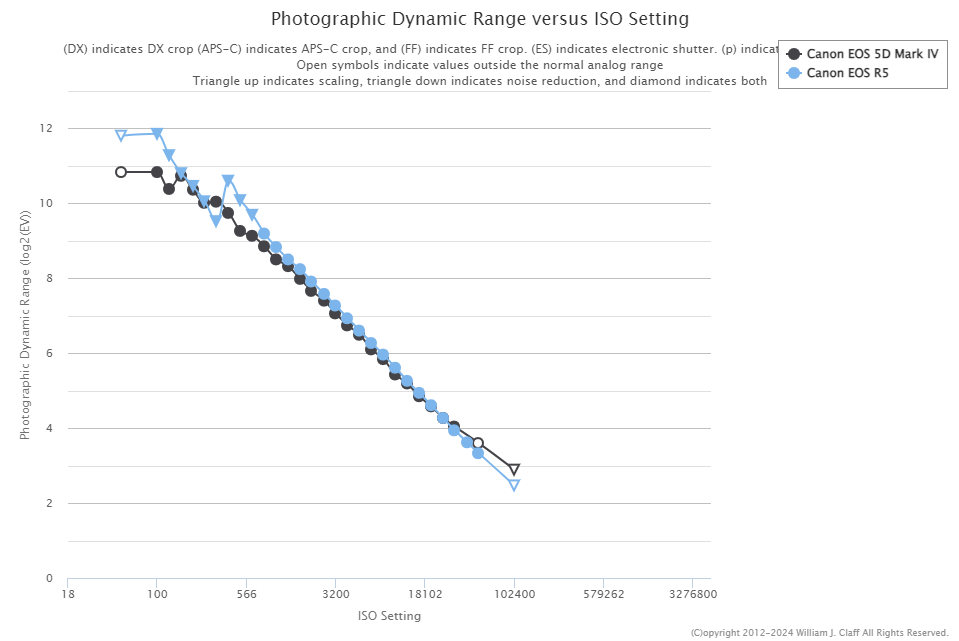
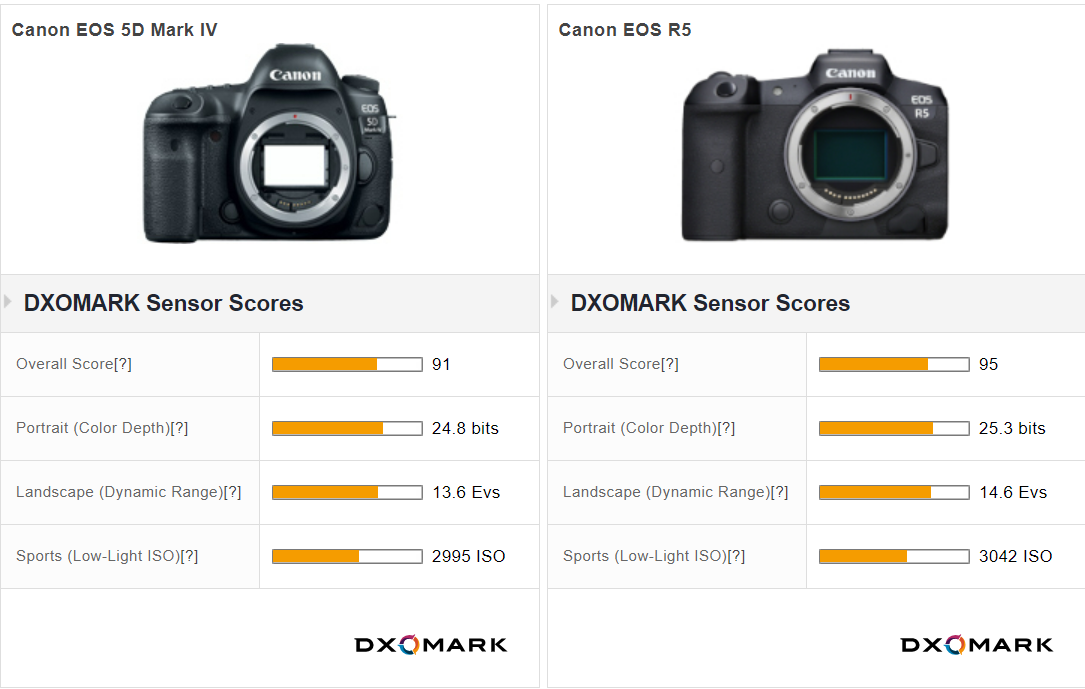
Looking at sensor performance the situation is also more favourable.
Here the improvement is across the field. When we look at the cropped format the EOS90D and R7 there is a smaller improvement, however a no regret situation.
Taking as thermomether the Nauticam port chart for RF system we can see that the selection is pretty decent for full frame, the same cannot be said for APSC where the number of supported lens is small but so is the topside selection.
In summary a Canon user wanting to be loyal to the current brand will find an improvement in full frame but not in APSC having to resort to older DSLR lenses for a small improvement in image quality.
Sony
Sony is the leader in mirrorless camera having been the first brand to embrace it for full frame. At present Sony Semiconductors Corporation provides image sensors to Nikon and Panasonic amongst other and only offers the most advanced solution to Sony Consumer Cameras unless the customer pays for a custom project.
Looking at full frame sensor performance of the fast models those preferred by topside wildlife shooters we can see that the A1 and Z8 are indeed very similar with the A1 having more megapixels and offering an edge on dynamic range and high ISO performance and the Z8 edging on color depth.
Those cameras make sense if you have a variety of topside use cases and also like to do some video or if you are really needing the last bit of strength from the superior autofocus.
When you compare the Z8 to the A7R V which is a ‘slower’ camera you see that the latter has an edge this is also true if you look at the A1 of course. An underwater shooter that does not need the speed of the A1 or Z8 should stick to a model like the A7R V and benefit from additional megapixels and sensor performance with a loss of speed that underwater does not mean much. This camera has a very slow burst rate and topside will be easily affected by rolling shutter and it is not a favourite for topside wildlife shooter but more a camera for landscape, architecture and portraits.
The selection of lenses for E-Mount is vastly larger than Z mount at present and there are adapters for both Canon EF and Nikon FX formats.
Sony full frame cameras tend to be smaller and the housing cheaper so you can see why some previous Nikon DSLR users have moved to Sony Mirrorless.
Canon users instead are not migrating to Sony because of lens selection and backwards compatibility and more importantly are also gaining on image quality and features moving to Canon mirrorless.
Micro Four Thirds
Some users have done differently and gone to a smaller mirrorless format. Micro Four Thirds is where mirrorless started long time ago and offers plenty of lens choices. Contrary to what people think Micro Four Thirds cameras can closely match the performance of APSC cameras the gap is more or less half stop and operating at equivalent depth of field can match both ASPC and Full Frame cameras.
While the increased depth of field has been a strenght of this format underwater the autofocus has been historically the biggest let down.
As of today there is not a single MFT camera that can match the simple tracking without subject detection that old Canon and Nikon DSLR and current Sony Mirrorless can do. Brands have been focussed on shooting people or birds and animals but this did not include fish and so far the simplest use case which is to shoot a fish portrait with a macro lens has been where this format has lagged.
Unless you are interested in the video features or you only shoot wide angle and don’t care about the autofocus issues Micro Four Thirds is typically not a path of choice for an existing DSLR user.
Panasonic
With a strong tradition in video, Panasonic has recently mastered autofocus and released the S5II with PDAF that is a very interesting camera at reasonable price point. L-Mount has started to offer a good selection and using the sigma adapter you have access to Canon EF lenses. The Nauticam lens chart for L-Mount shows a good selection.
While cost effective the S5II has only 24 megapixels and more importantly does not offer a solid tracking autofocus as Nikon, Canon and Sony do and therefore is a risky path to take unless you are also moving to the S5II for other reasons.
Conclusion
When I write pieces like this there is always someone that comes but at the end we took amazing pictures with film camera or with Camera X that had 8 megapixels. Well that is fine but at that time this is all you had.Or even better let’s look at some open water images to have a view, which of course can’t be done as conditions can never be replicated.
Today there are many options and choices and while having options is a good thing it does make decision making more complicated. While there are many factors that make the image at the end the photo needs to be in focus and have the appropriate quality.
This short write up covers both this factors and hopefully you will find it useful. If you are regularly on underwater photography trips you will also be able to compare this article with real life scenarios. While few years ago it was rare to see a full frame sony user on a trip today the numbers have largely increased as consequence of the migration of users to mirrorless cameras.
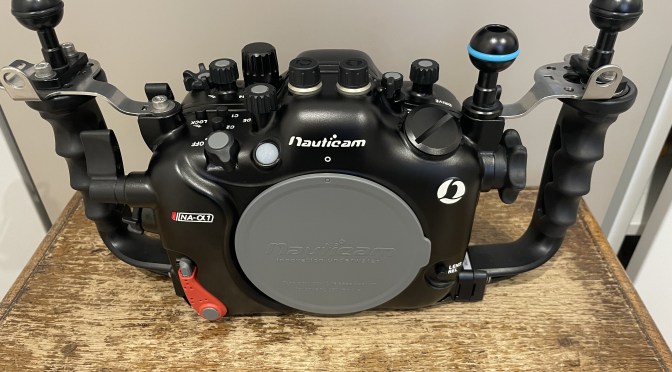
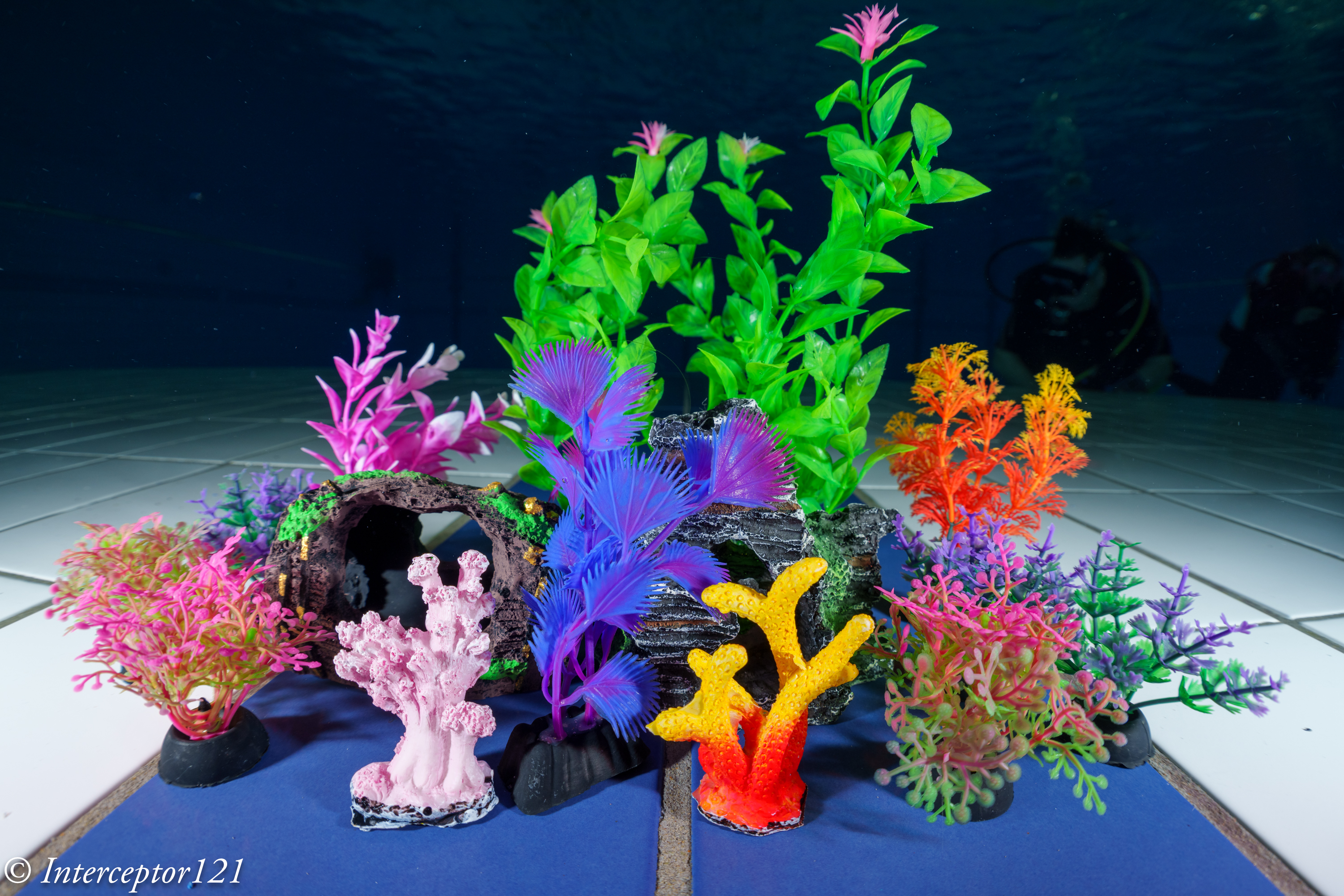
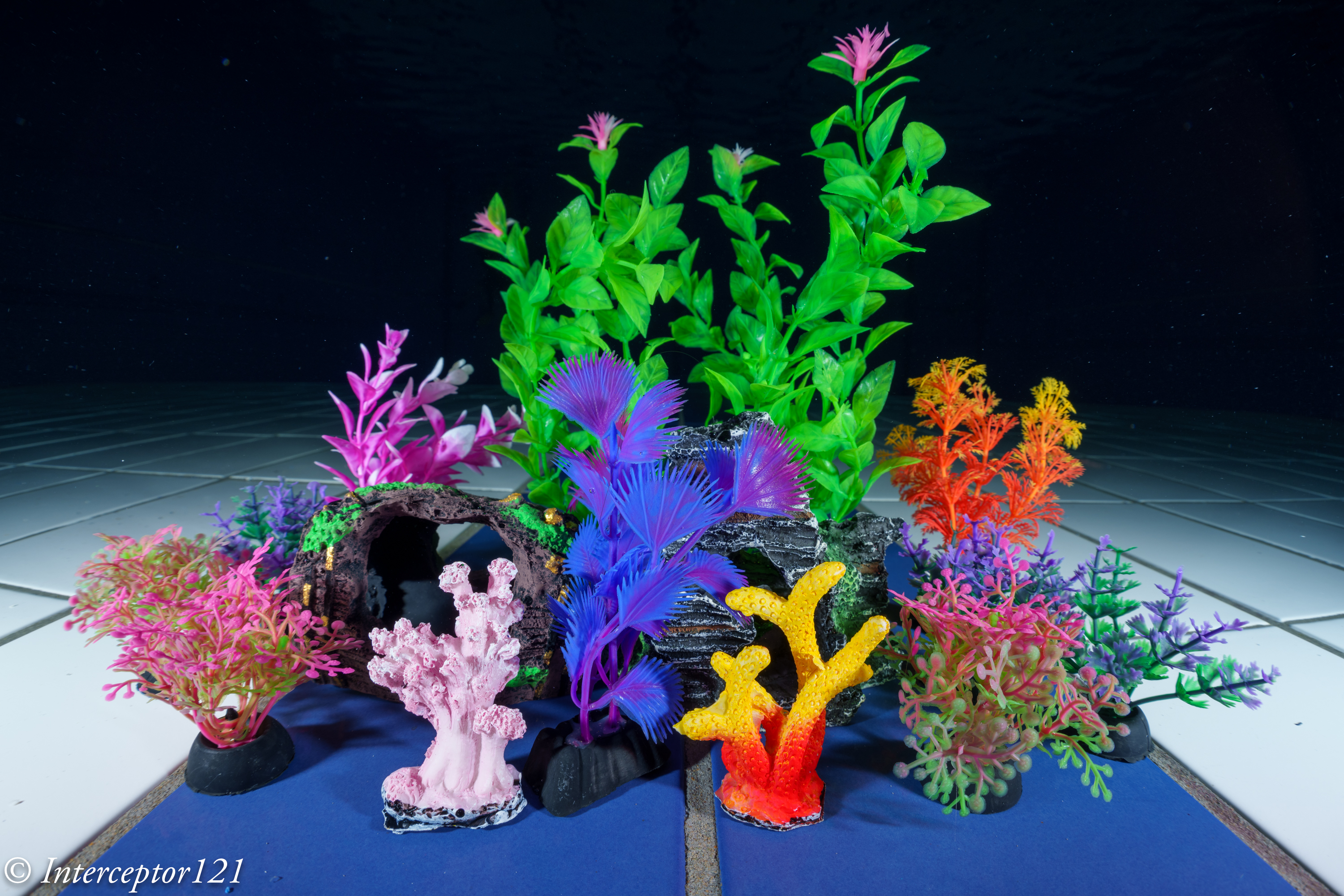
I guess lookig at the title image you may spot two small differences.
Those parts are installed.
Required Parts
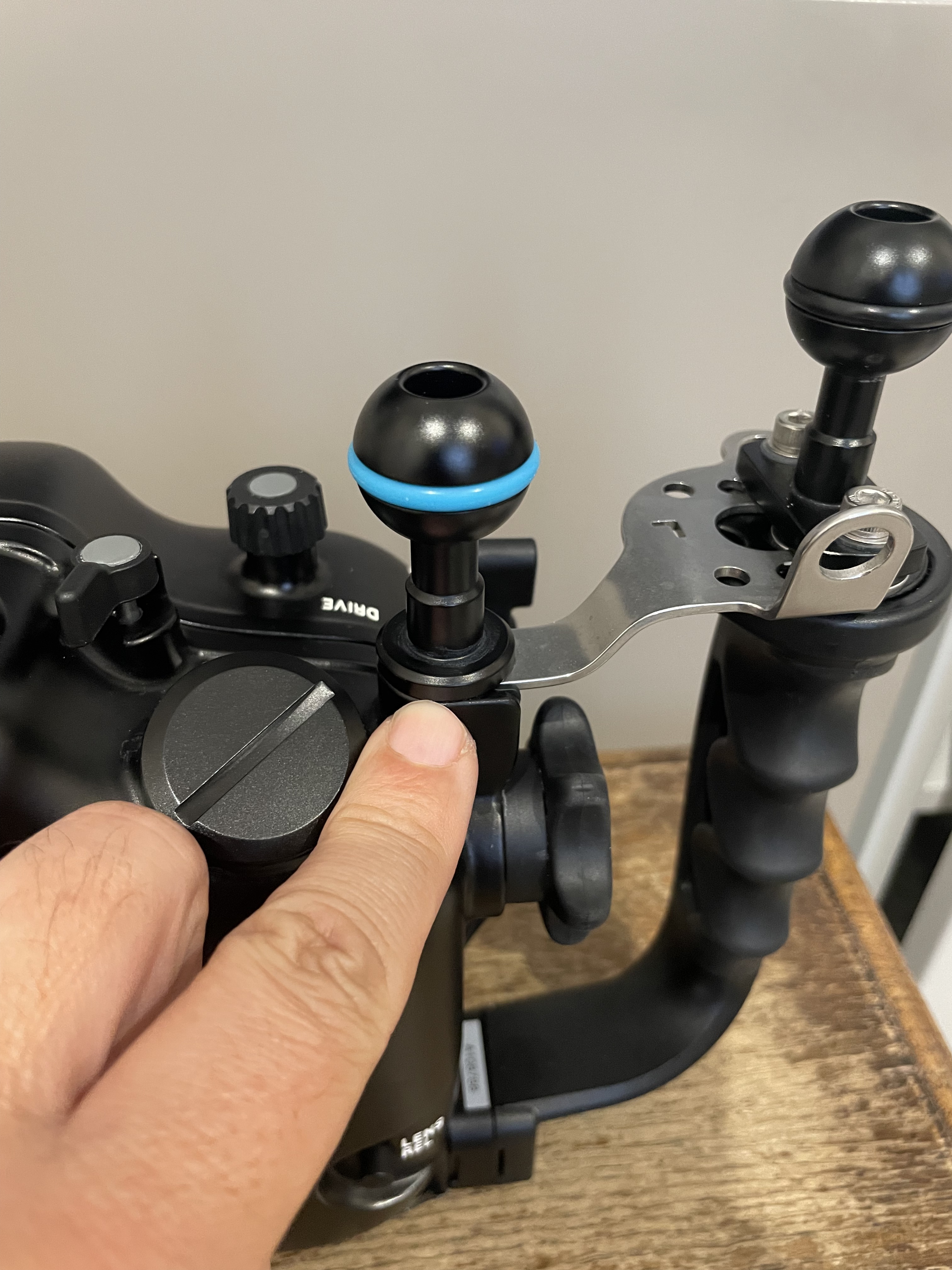
You will have noticed that your housing does not have a screw hole to mount a ball to put your monitor or focus light.
What you need to do is to remove one of those from the handle plates.
Allen bolt to be removed
You can then install the M5 ball so that you can use it to put the accessory you need.
M5 Ball installed
I am left eye dominant so I want to have free space in front of my right eye while my left is on the viewfinder so I put my ball on the left however you can do as you see fit.
You can also take the rubber assembly out of the socket and put an M10 ball mount which is more sturdy however you will be screwing metal on metal and I do not recommend that.
The other thing that you have noticed is that my housing has almost equal distance between the handle ball mounts and the centre.
Overview
However the housing as it comes out of the factory has a shorter distance between the left handle and the center than the right handle as consequence of the camera lens mount being on the left.
This is ok for topside but for underwater as soon as you are taking very close images with two strobes you will realise you have lights uneven and more shadow on your side.
Installing a single spacer into the handles give you this.
Spacer installed
Now your strobes or lights are simmetric however the housing fits a bit more snug into the travel case if you use that. You may need to remove it for travel if you pack case in case as I do.
Hopefully this was useful subscribe to my channels on for more tips and/or to this blog to get updates. And feel free to donate using the button on the left hand of the menu.
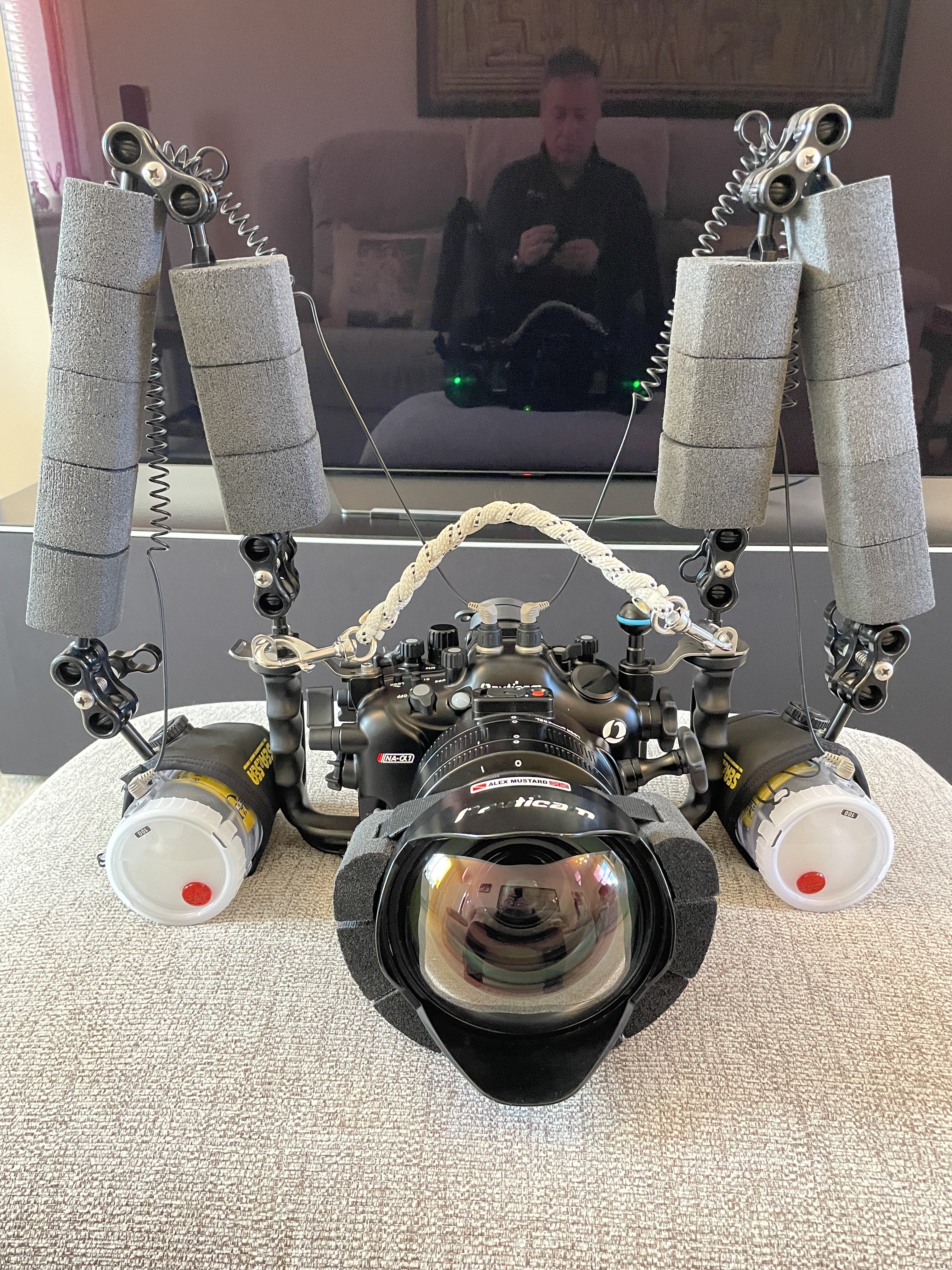
Few days ago Alex Mustard popped in to drop his WWL-DRY aka WACP-C prototype so that I could conduct some experiments for the enjoyment of the entire underwater community on Sony E-mount.
This lens is not the same of the current WACP-C but it is very similar. It does not have a float collar, a bit like the original WWL-1 dimensionally appears a few mm different from the WACP-C specs.
The lens seems a bit shorter.
140 mm length instead of 145 mm of current production version
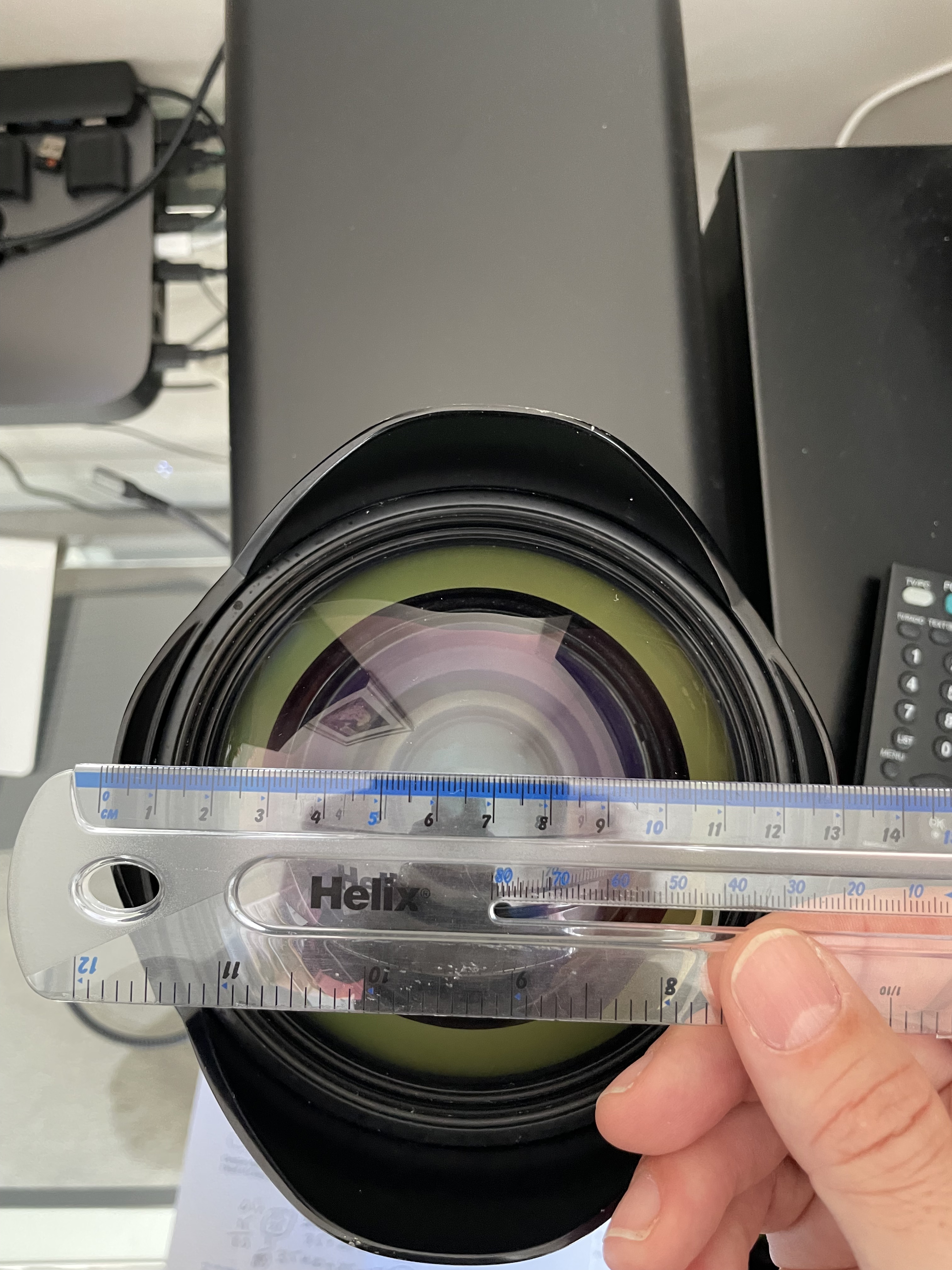
The dome diameter is identical somewhere in the region of 130mm.
Dome port perspective masks the real diameter of 130mm
The lens is very heavy in water so I needed some floatation.
Stix float belt carved to fit a dome
I rented a Tamron 28-75mm G2 from lenspimp only to discover it would not fit any of my extensions. Alex Tattersal has sent me an adapter on loan but it did not make it for my pool session.
I therefore decided to use my Tamron 17-28mm although the extension was 5mm too long I got no vignetting at 26mm.
Ready to dive
I exchanged notes with Alex who told me he tried all sorts of optics with his Nikon only to use a 1990 lens now discotinued as all modern fast lenses would refuse to work properly. I was determined to try anyway confident I would get good results.
Pool Tests
Arrived in Luton for a short one hour session last night I took my usual props. The first set of tests show already some interesting results.
I always start as close I can get to the props to fill the frame.
CFWA f/5.6 T28
At f/5.6 the centre is very sharp however I noted the background and were not particularly crisp while the centre was but not in the background. There is an issue of depth of field so I started stopping down the lens.
CFWA f/8 T28
By f/8 results were already very good considering the shooting distance. Consider that a shot like tha requires f/16 on a fisheye or rectilinear to have sufficient depth of field.
By f/11 we are in a really good place.
CFWA f/11 T28
The depth of field is not quite enough for the plant in the back but the edges are sharp.
To show that this is a genuine depth of field issue look at this shot at 17mm in APSC.
17mm APSC f/5.6
It looks very much identical although this is even wider at 25.5mm equivament.
The second step is to look at edge sharpness the pool provides a nice tiled wall for this purpose. Here am shooting at around 1.5 meters.
You can see immediately that the frame is sharp throughout at f/5.6
wall f/5.6
Moving to f/8 improves edges
wall f/8
f/11 brings better edges but in my opinion not the best centre.
wall f/11
This reflects very much the nature of the master lens which is outstanding in the centre at f/5.6 with so so edges but very good on both accounts at f/8. F/11 starts showing an overall resolution loss.
I then moved to test field of curvature.
grid f/5.6
The lens has virtually no field of curvature and the edges are good already at f/5.6.
grid f/8
By f/8 the result is excellent.
grid f/11
At f/11 better edges but slightly worse centre.
Having completed the lab tests it was time to shoot some divers however I was coming to the end of the hour and they had started surfacing!
group f/5.6
Shots at distance with f/5.6 look great.
surface 3 f/5.6
Consider the shutter speed is low as I was trying to get some ambient light and the subject far so there is some motion blur.
surface f/5.6
f/8 is probably the sweet spot for underwater use.
Wide f/8 T28group f/8
F/11 is really not needed unless you have a close up shot.
Self Potrait f/11 T28
Conclusion
There are some obvious strengths to the Tamron 17-28mm which in my view performs at 28mm way better than the Sony 28-60mm even with a too long extension.
Upon reflection I have decided not to invest on the Tamron 28-75mm as I already have thr Sony 24-70mm GM2 and there is an overlap topside.
Edit 8 April: I received today the adapter ring I needed for the 28-75mm G2 and unfortunately there is vignette at 28mm ruling this lens out entirely for the WACP-C.
If you want to use the Tamron 17-28mm with the WACP-C you need an N120 to N100 25mm adaptor ring, in addition to the zoom gear (not necessarily unless you want to shoot also APSC) and the 35.5mm N100 to N120 port adapter.
The Tamron 17-28mm costs $799 on Amazon.com and it is the best rectilinear wide angle for underwater for the e-mount and we now discovered also compatible with WACP-C.
I will try other lenses in due course but the lesson learnt is that if you do your homework you will find something.
Thanks to Alex for the loan and bear with me a little longer!
Nauticam makes some really interesting adapters and ports for Sony cameras, one of them allows you to use vintage Nikkor lenses on full frame mirrorless cameras.
I decided to source the UW15 as I am planning to use it for video after seeing the results on the movie Avatar.
The challenge of the Nikkor lenses is that they are entirely manual with aperture and focus knobs. This is generally not an issue for videography which is my intended use but I wanted to check how does this lens work for photography as many people still rave about it.
Lenses compatible with the adapter are UW 15, UW 20 and UW 85 full manual. Later autofocus lenses are not supported.
The Rig
My rig is a classic derivation from wide angle with 8″ and 12″ arm segments and my trusty (!) Sea and Sea YS-D2.
Nikkor 15mm rig
The Nikkor weights around 600 grams and gives almost zero lift so this rig was over 300 grams negative in fresh water.
Before using it you need to assemble the lens on the adapter.
Nauticam Nikonos Adapter
You have two parts that can be removed to allow the lens to mount depending on your preference. I set the lens with the display upright so I could try and see it while shooting.
Nauticam Nikkor adapter top side
The controls are located on the left side side and bottom which is where I normally have my levers.
Nauticam Nikkor adapter controls
On the right you will see the display scales.
Nikkor UW15 Aperture and Focus Display
I have to say I was a bit nervous setting this on my A1 considering that this is a lens that is 25 years old at least but the vacuum test was fine so ready to go to the pool with the friends at Rec2Tec Bletchley.
The UW 15 Construction
The Nikkor lenses were generally rectilinear. The 15mm has a field of view equivalent to 20mm so only 94 degrees on the diagonal.
The approach was to correct the water distortion until such point when the image becomes rectilinear and eliminate other aberrations.
I have to say that the amount of chromatic aberrations is practically non existant.
White balance slate
Rectilinear lenses have gone out of fashion since dome ports with fisheye distortion being the preferred look for wide angle in modern underwater photography. For video though straight lines have a value.
Pool Session
Using this lens on the Sony A1 proved challenging for photography. Nailing the focus using peaking did not feel particularly precise.
Not so sharp focus
Some shots may have been sharp enough on film resolution but with the 50 megapixels of the A1 even the slightest misfocus shows.
Is it in focus?
My productivity was quite low at the beginning as I was trying to get a hand of the lens.
The lens itself is by all means extremely sharp even for my camera.
Grid
I worked out that I could not do what I normally do which is to frame first and focus after as by the time I had nailed the focus things would have moved so I decided to set the focus and move forward or back until I thought I had my target in focus.
The situation started to improve.
DSD student with Instructor David Allen
I felt I had worked out how to use the lens so started looking for some subjects. During those sessions you see all sort of stuff as people practice their skills.
Riding
Considerations on the controls
I believe that the average underwater photographer shooting digital will find it very hard to use this lens and will end up shooting at f/8 or smaller apertures so that focussing becomes easier. The lens is especially challenging as it is not particularly wide so you do need strobe power.
DSD Student
I found really hard the lack of display of aperture and focus position. The lens is designed for much smaller Nikonos housing, with my A1 housing being more bulky you need to actually turn and look at the lens to check your settings so many times I did not have the right aperture of focus and it all was pretty laborious. In a video situation for wide angle this lens will work just fine with set and forget at 4K but to nail focus on a high megapixel camera is a hard task.
When you do get the focus though the image is outstanding.
Just married
I tried a selfie to check the focus scale and it worked well.
Selfie
Consider that the most shots were at f/5.6 or f/8.
Dave
As you have no exif data it is impossible to remember what you shot unless you write it down on a slate.
Is it worth it?
The answer depends on your use case and if you already had the lens.
The following use cases fit the Nikkor UW 15 pretty well:
Videos of sharks or pelagic that do not come too close where ambient light is low
Photos at mid range with fairly static scenes where you want straight lines for example fashion models
The lens is definitely not easy to use for dynamic shots, situations where you need to get very close (as it does not focus very close) and where you need to continuosly adjust focus.
In terms of costs in GBP you are looking at:
£474 Nauticam Nikonos Adapter 37202
£300-500 Second hand Nikkor UW15
Obviously if you already have the lens and you are in one of the above use cases I would recommend you get an adapter and give it a go perhaps looking on the second hand market.
If instead you do not have the lens I would say not to bother unless money is no object, you are in the two use cases above and you have sufficent dexterity to control this lens.
Undewater photography has moved forward a great deal thanks to autofocus and although the Nikkor UW 15 is really sharp getting critical focus right is not easy. When it comes to video where you do not normally use autofocus for wide angle this lens is really interesting.
You can shoot at f/5.6 even f/4 subjects in the distance in ambient light with extremely clear and sharp detail at a fraction of the cost of other water contact optics. If you do not own any of the WACP or WWL I would say the UW 15 deserves some considerations but only if your command of depth of field and focus is very good otherwise it is better to pass.
Just back from a fantastic week. Cannot write a trip report on something I arranged however I am confident those will come from the participants.
The actual schedule ended up like this
Date
Time in
Site
Lens
Video
31/7/22
08:40
Temple
Canon 8-15mm
31/7/22
11:40
Jackfish Alley
Canon 8-15mm
Yes
31/7/22
15.10
Beacon Rock
Canon 8-15mm
31/7/22
17:30
Beacon Rock
Canon 8-15mm
1/8/22
06:35
Dunraven
Panasonic 8-18mm
1/8/22
10:45
Small crack
Panasonic 8-18mm
Yes
1/8/22
15.30
Marcus
Panasonic 8-18mm
1/8/22
17:00
Dolphin Snorkelling
Panasonic 8-18mm
Yes
2/8/22
06:20
Giannis D
Panasonic 8-18mm
2/8/22
09:45
Carnatic
Panasonic 8-18mm
2/8/22
15:20
Thistlegorm
Panasonic 8-18mm
3/8/22
06:25
Thistlegorm
Panasonic 8-18mm
3/8/22
09:45
Thistlegorm
Panasonic 8-18mm
3/8/22
14:10
RM Lighthouse
Panasonic 8-18mm
Yes
4/8/22
17:30
Sandbar trip
4/8/22
06:20
Shark Reef
Canon 8-15mm
4/8/22
10:00
Shark Reef
Canon 8-15mm
4/8/22
14:00
Ras Ghozlani
Canon 8-15mm
4/8/22
17:40
Sunset Splits
Panasonic 8-18mm
5/8/22
07:00
Ras Za’tar
Canon 8-15mm
5/8/22
10:00
Ras Umm Sid
Canon 8-15mm
5/8/22
14:20
Temple
Canon 8-15mm
5/8/22
17:40
Sunset Splits
Panasonic 8-18mm
I would have preferred a more aggressive approach to some sites however I decided ultimately to settle on something that was challenging diving wise but not extreme.
I used my Panasonic GH5M2 with the Canon EF 8-15mm and the Panasonic 8-18mm. Surprisingly I found I had more keepers with the 8-18mm this is due to the dolphin dive for which I took the risk of using the rectilinear lens and continuous autofocus which worked well.
Day 1
The trip had a slow start at Temple followed by Ras Mohammed and some technical training on light at Beacon Rock.
Pulsating reef life at TempleGhost in the ShellMoray Burst
Day 2
After a dive at Dunraven and a better one at Small Crack where I took video we moved to Abu Nuhas where I decided to skip the last dive and go for a snorkelling trip hoping to get dolphins.
underwater explorersInside the MarcosWreck divingBarnacle Bow
The dolphin came to play we had one hour with them swimming at speed around us and getting really close
It was the day of the wrecks including the Thistlegorm in order to support the group I was at the back which did not help visibility. We were mostly on our own though
Giannis VerticalRed CoralGiannis bowPhantom WreckWrapping cloth?Exploring the stern of the CarnaticBig fish Ceiling Cage
Day 4
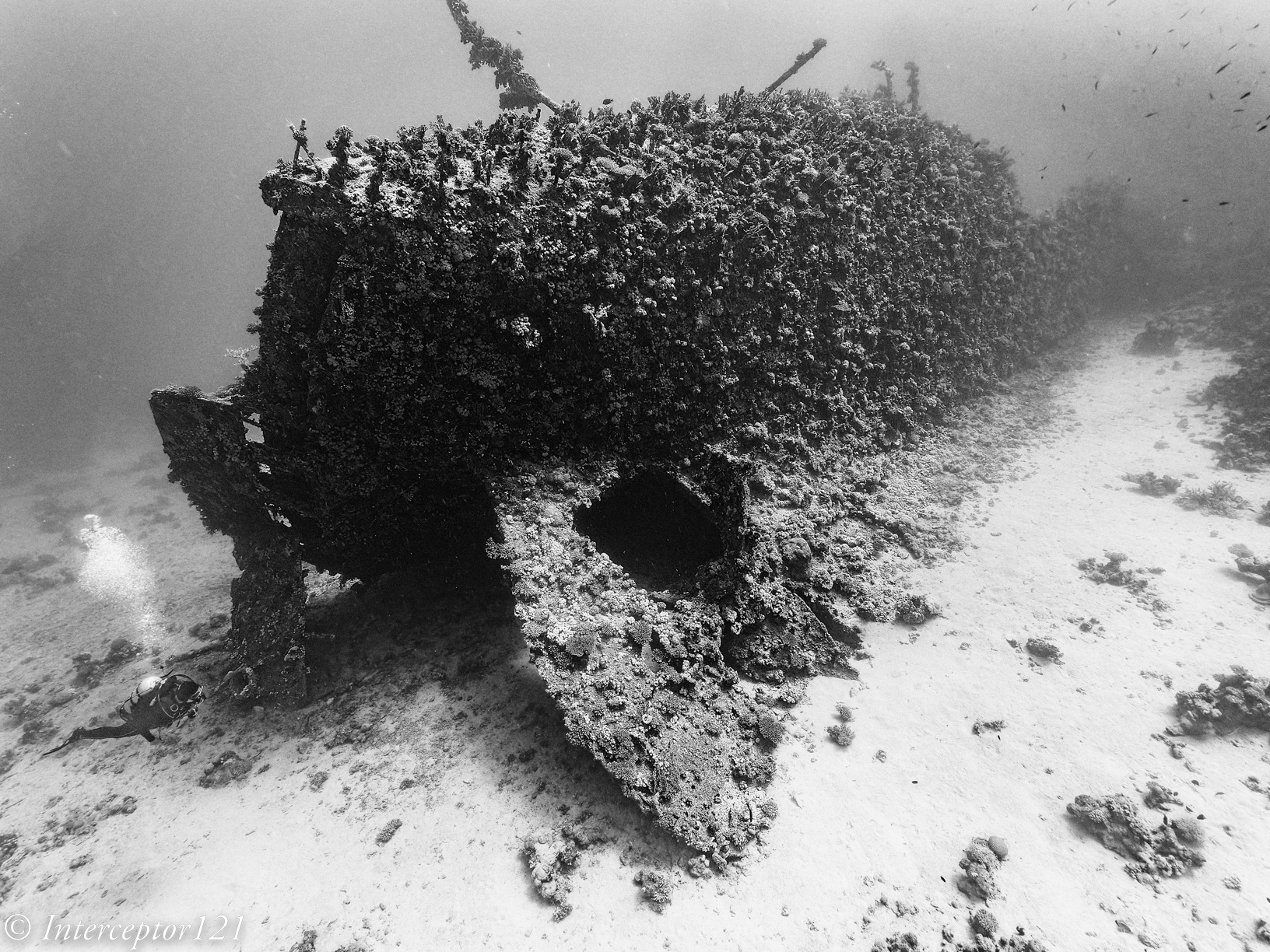
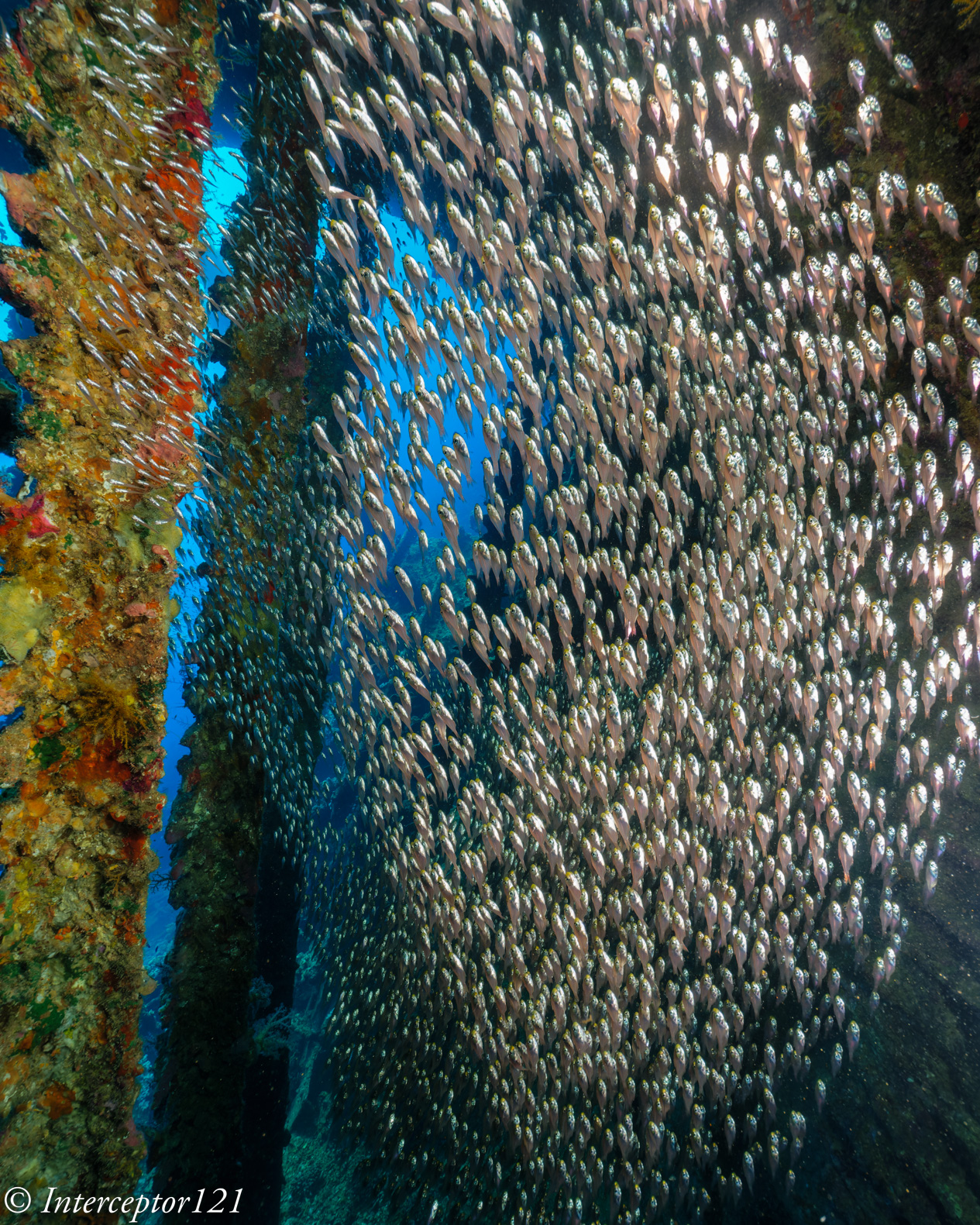
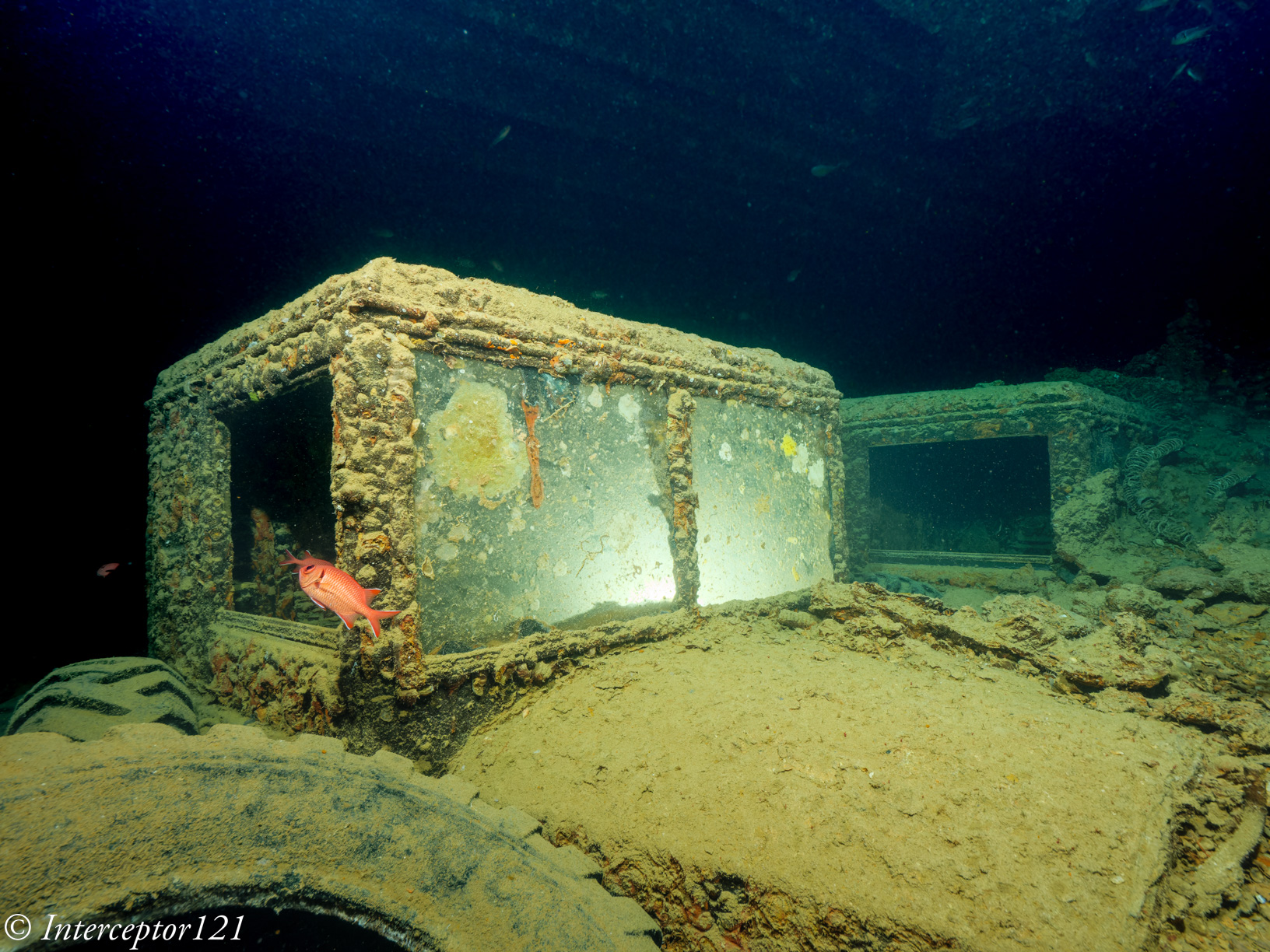
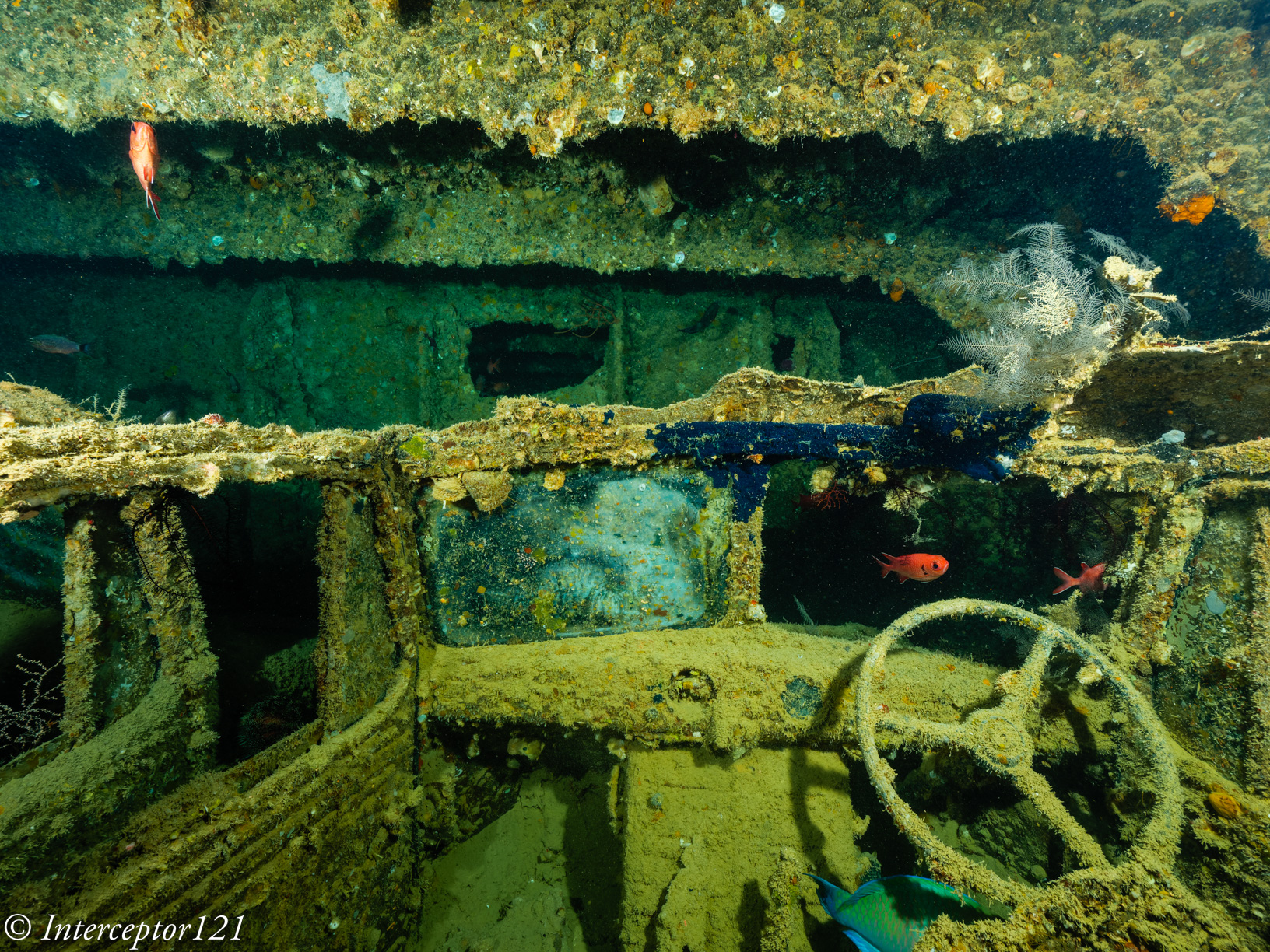
Two additional dives on the Thistlegorm and we were back to Ras Mohammed after the adrenalin an easy dive at the lighthouse followed by sunset trip on a sandbar. This time I tried to get some better shots of the Thistelgorm exterior while I would say inside there was generally less fish to make the shot interesting.
Bikes trailerTruckMotorbikeThe last Steering wheel truckHeadlightsPropellerMachine GunLocomotive
Day 5
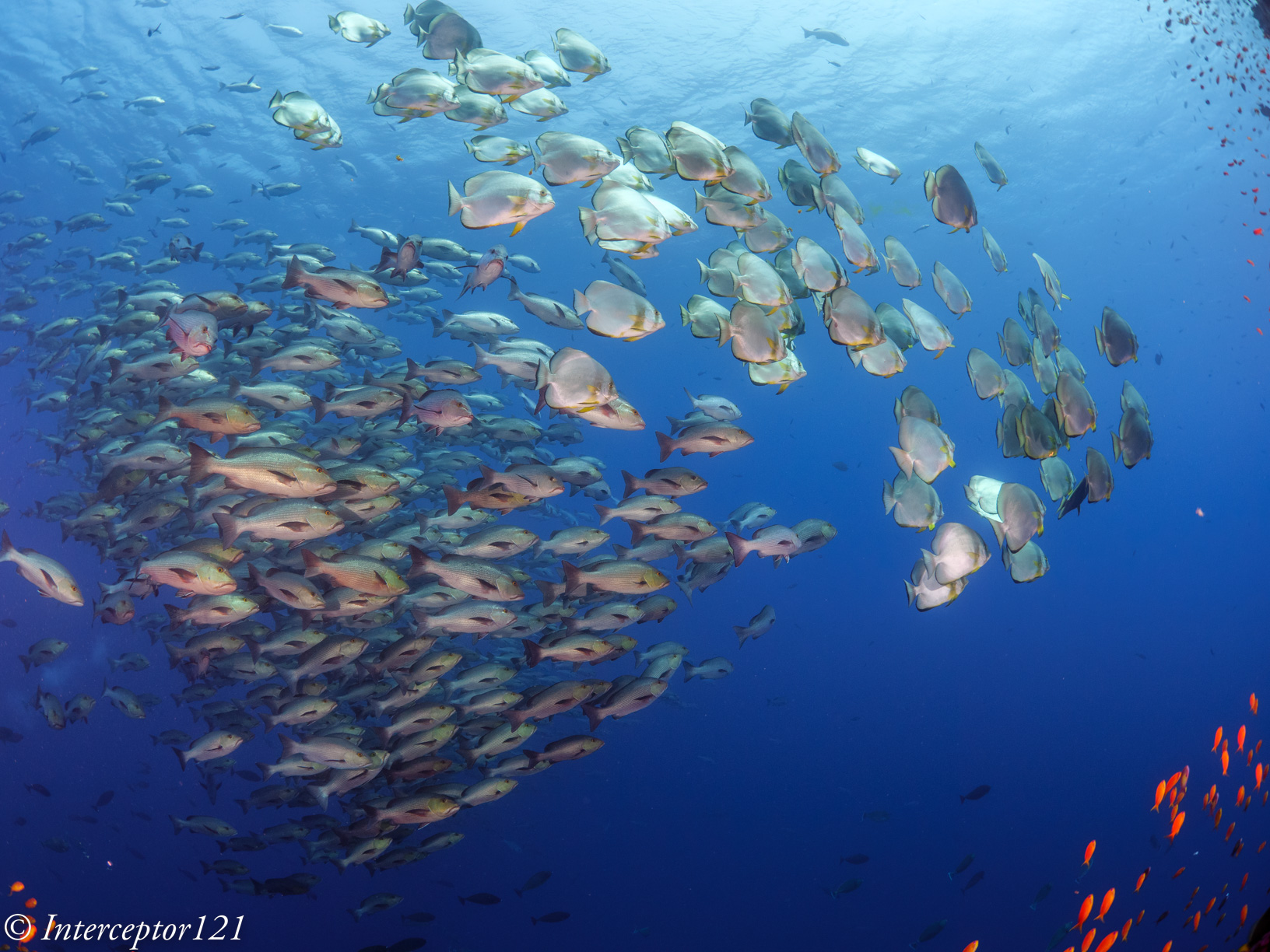
Two dives at Shark Reef the current was pumping. We missed the snappers on dive one but they were there in full force with the batfish on dive 2. The group however ran out of air very fast trying to get the shots. Last dive was at Ras Ghoslani to have a break and finally a session of split shot that was not very successful due to waves however I did produce a decent one with quite some fish.
Bommie of Jolanda
Head OnArrow headGreen Turtle take offVideographyLayers
Day 6
Usually the last day is a more restful however we had 3 dives and one sunset split session so actually a full day. Here dive one was focussed on sunburst but ended up also being dive two.
MushroomSwarming Hidden burstRed Red Sea FanBommie at Ras Umm Sid
Buddy divingRas Katy Tip
Conclusion
It was a great trip although I am not sure I took my best shots in all cases. The Thistlegorm was under par while the dives at Ras Mohammed and other sites other than Shark Reef were better than expected.
One thing that proved to be absolutely right was that the ability to influence the boat schedule and itinerary is essential. We were in the water always first, Egyptian boat have a tendency to get in the water very late for dive one and this means most of the following dives have the sun really high and not always the best conditions.
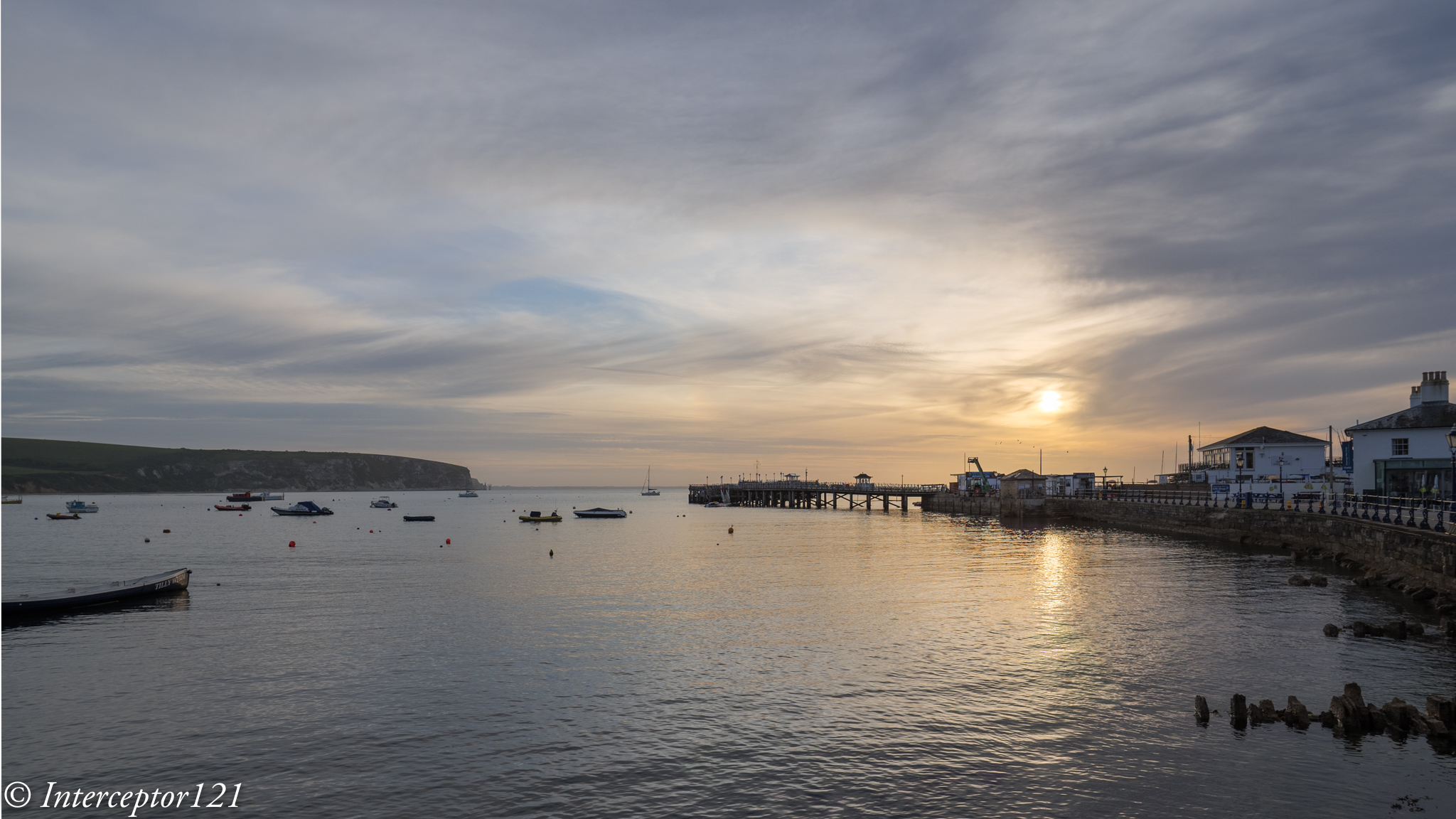
A few weeks ago I went diving in Swanage with BSOUP the British Society of Underwater Photographers that I have recently joined.
I was looking forward to some local diving so when I found out that they were organising a trip I managed to get on.
I drove there the night before and I was number two on the pier the next day.
It was a deceiving clear morning with perfect conditions on land.
I had two cameras one in the housing and one for land use so I took a few snaps.
Once parked on the pier I was informed by two friends that dive locally all the time that it was better to wait when the water level was a bit higher.
At that point it did look like a great day however there was a bit of wind.
I had my GH5M2 with the Panasonic 45mm macro that I acquired last year and has become my favourite macro lens.
I jumped in the water one of the first to find out the visibility was well maybe 1 meter? I could not see the LCD screen of the camera due to the suspended particles and had to use the viewfinder
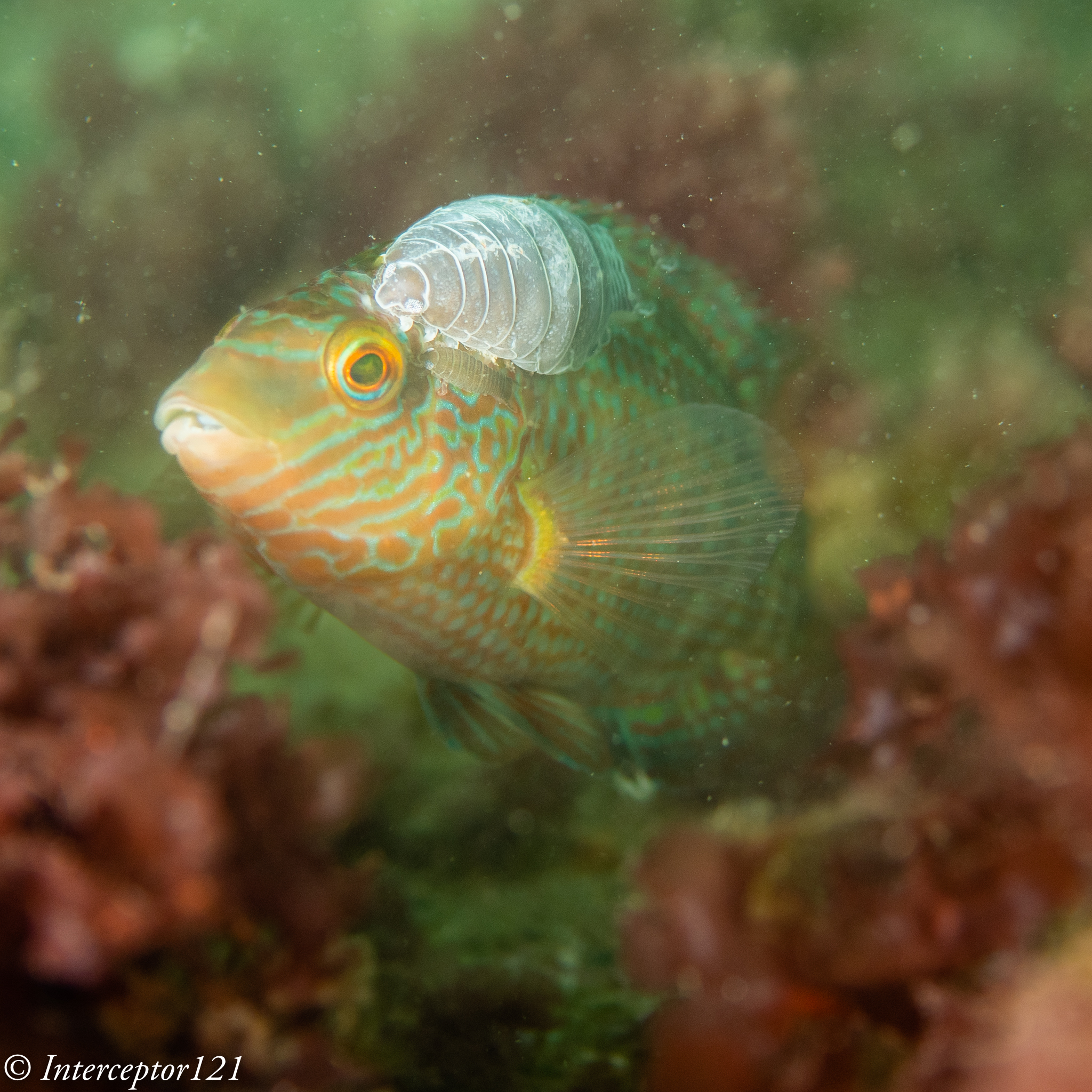
One of the first things I say was this corkwing wrasse with a massive parasite near its eye.
Unfortunately I did not have a snoot or strobes suited for the challenge so I spend the first dive training myself on how to get the least amount of back scatter. Mind you when there are particles you will have backscatter not matter what you do.
Static subjects are ideal for testing so I had a go at some really simple stuff.
And again some anemone the object was to get the cleanest possible shot.
When I was reasonably happy I moved to some more interesting subject I gave up on blennies as I knew everyone would have shot some and besides my strobes were not the best for the situation and I found a cooperating cuttlefish.
I can tell you that to get this clean shot it took me quite a while but on reflection despite being very low I could not even see a hint of the surface so bad the conditions so I decided to get really close.
I wanted to emulate a profile of a person or perhaps an elephant not sure but I took a number of shots waiting for the tentacles to be in the right position and this is my best shot for the day.
I would say it is quite creepy but after all I had something decent and when I presented the shot in the club review at the sailing club it got some good feedback.
Now with that in mind let’s have a look at some shots taken in clearer water this is from Sorrento Peninsula.
You can see that clearer water improves contrast and sharpness as you would expect however as the UK shot was very close the gap is not as big.
And this is a shot from last time I was in the red sea
This is super macro so again suspended particles are not as important.
However if we look at a mid-range shot similar to the whole cuttelfish the situation is very different.
Here we are in Italy.
And finally here in the red sea.
For as much as we may love our local dive site there is a degree of adaptation but also a restriction on the variety of shots we can take.
When I was working as resident dive instructor I remember the guidelines we were passed one was really funny and said:
“if the visibility is crap you don’t say that to the guests what you say is today we are going to focus on macro” then you make sure you choose a site where there is some.
I am looking forward to my boat in the Red Sea end of July remember if you follow me on instragram there may be some voucher codes to be used for discount.
If like me you have been trying to make the most of your local dive site you deserve to get yourself in clear water where you can actually see further away than your arm. Of course we do have some good days in England sometimes 5 even 8 meters but I tale Egypt and their 25+ meters any day of the week!
A closing thought on conditions and land photography, in fact even if visibility is not an issue most times unless you have fog, overcast days, excessively clear days do not make great land pictures either so we can say we are always on a quest chasing light and conditions.
The GH6 has the same USB power capabilities introduced in the GH5M2.
In this video I show you what I use with my cameras.
Initially with the GH5 I could only use a dummy battery kit and this will continue to work however it may have challenges with mechanical shutter or very high bitrate codecs of the GH6.
Therefore the recommended solution is a PD Power Bank
Pay attention to the checks you need to do as your power bank needs to deliver 9V 3A which usually means at least 45W better 65W
















































 Interceptor121 Photography & Video Workshops