Snell’s window is a phenomenon by which an underwater viewer sees everything above the surface through a cone of light of width of about 96 degrees [From Martin Edge: Underwater Photography].
During my last Gapapagos Trip there was a bit of an issue in terms of photography subjects, in essence most of them were fairly big like sharks, turtles, eagle rays and of course divers.
After a while shooting or trying to shoot those uncooperative models I had the idea to try and do different things such as silhouettes and Snell windows. You can also combine both as we did in this case.
So what do you need to shoot image of a Snell window:
1. A lens that is wide enough, you need a bit more than 96º field of view to take the whole window
2. Something interesting on the surface (if you have calm water you can see right through)
3. An interesting subject as silhouette to contrast the clear water if there are waves and you can’t easily see through.
A normal flat wet wide angle lens for our compact camera is not sufficient to capture the snell’s windows as in this example
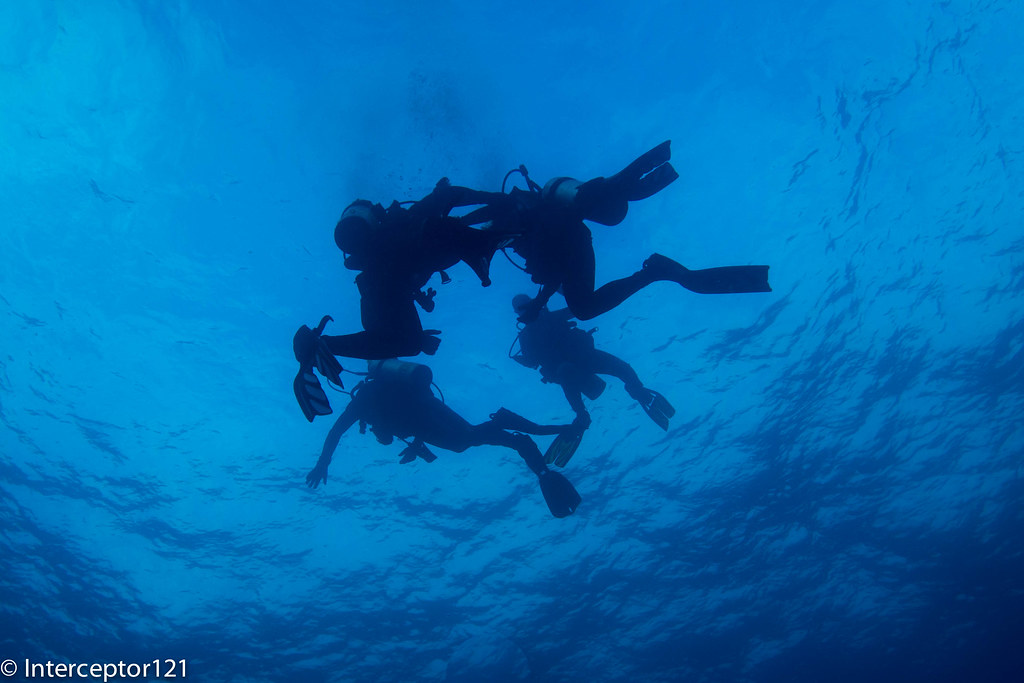
Divers at Safety Stop – taken with Inon UWL-H100 at wide end
Take into account that even with a fisheye lens on an SLR you can’t capture the Snell’s window on the vertical axis as the field of view will fall short a few degrees.
With a compact camera a semifisheye lens will capture the edges of the window if correctly aimed on the diagonal and horizontal dimensions and will fall short on the vertical.
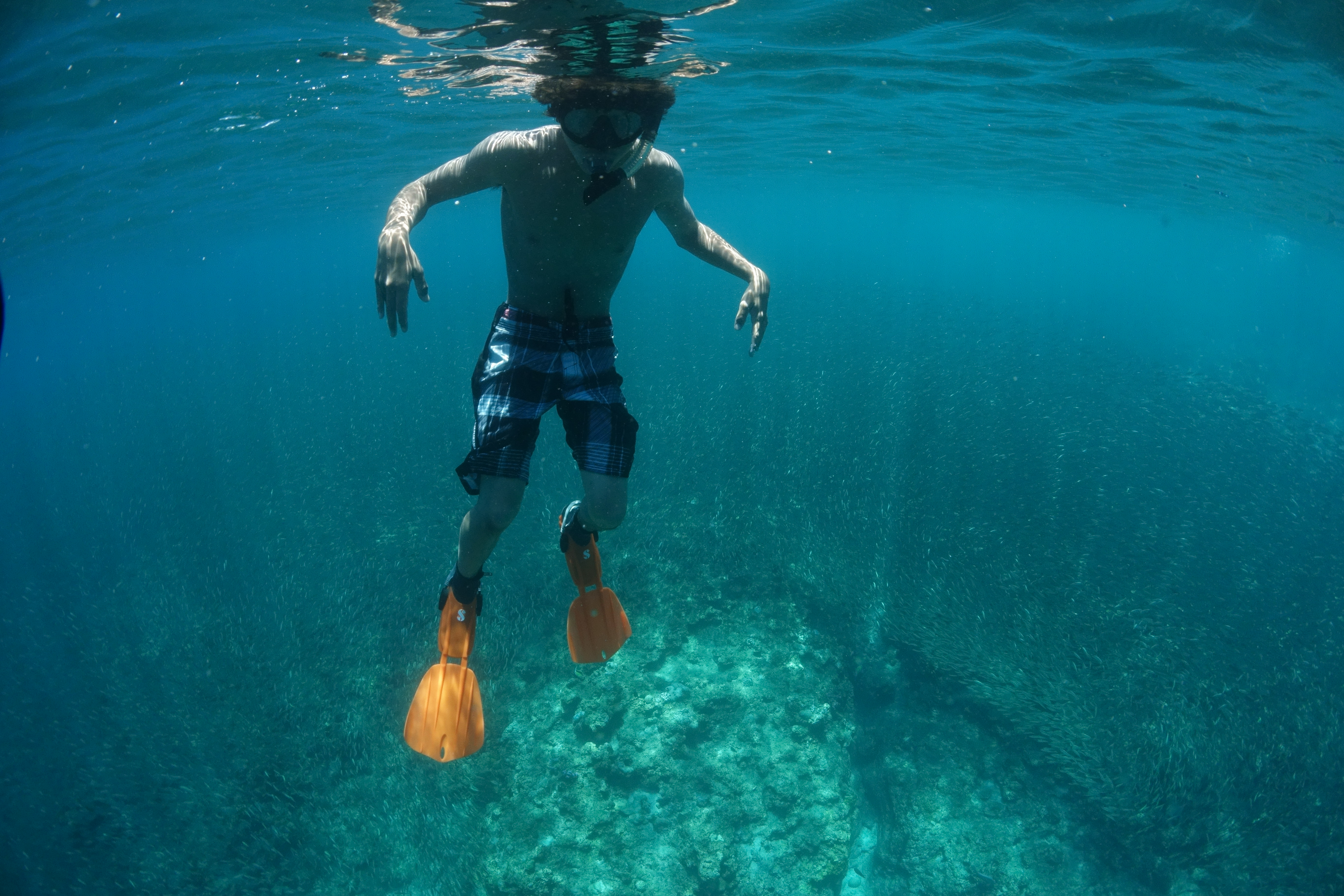
Snell window divers exiting the water or ascending – UWL-04 semi fisheye lens Canon S95
I am reporting some of the calculated field of view for the most popular lenses at present for compact at 3:2 image format
Wet Lens
Diag FOV
Hor Fov
Ver FOV
Flare/Ghost
UWL-04
151.95
123.22
79.85
Ghost Possible
UWL-100 28AD
149.01
120.97
78.48
No
UWL-28
160.56
129.75
83.81
Both
UWL-H100
157.85
127.71
82.58
No
All those lenses will take a good Snell’s window I have not tried the UWL-28 and I have some concerns this lens may flare as it usually does but I do not know for sure.
Both the Inon lenses produce sharp images with no defect.
In general small sensor cameras like the Canon S series will work fine with the fix/idas lenses and should produce good results also of normal shots through the water.
Using the UWL-04 or UWL-28 with large sensor cameras like the RX100 there could be a sharpness issue a larger apertures so make sure you close that at f/8 or smaller instead of using the shutter speed to balance exposure if you want to go through the water.
Snell’s windows are uncommon with compact camera shooters as they are considered an advanced subject but they can be taken. I will be taking more in a next trip to Egypt I hope for calm surface conditions so I can go through the surface with the shots. Failing that this is very easy to practice in a swimming pool.
During the London Dive Show I attended a talk from Martin where he covered a number of shooting situations and how to deal with them in terms of composition and settings.
There was a promotion for a two for one tuition day with him that my buddy was keen to take so few months later we made our way to Dorset for a day of underwater photography with Martin.
This will be my first day of shooting with the RX100 Mark II albeit in a pool with my new arms and lenses so I was looking forward to it.
We arrived in Poole the night before and got ready for an 8.30 start with Martin.
We started off with a review of some basic exposure concepts and then looked at competition winning pictures and trying to identify what makes a wow picture. It was extremely useful!
Afterwards we went through our trips pictures so he could see what needed improving. Then look at what was needed for the next trip.
With that in mind we set up to jump in the pool to take some pictures the objective was to improve my buddy close ups and portraits as apparently her wide angle is as good as it gets with the Canon S95 used see featured image on this post.
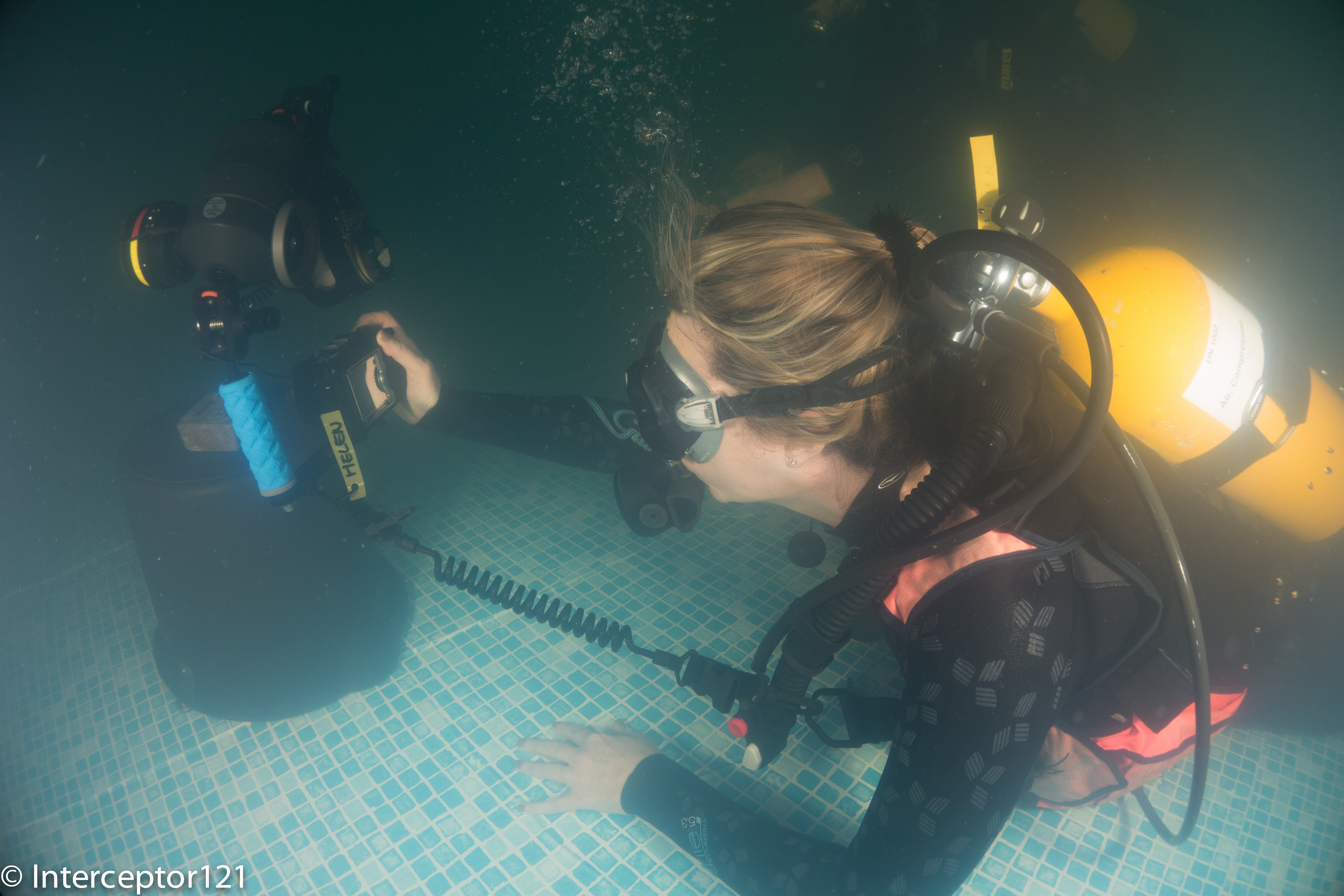
Pool conditions were low visibility and plenty of suspended particles as the pool is used for kids swimming lessons let me give you an idea!
Pool Conditions
The first task was to shoot a frog with a view of eliminating shadows in its mouth. Start with one strobe and finish off with two.
Frog at 28mm
The frog with the bare port gives you an idea of the size and the complexity of the task with one strobe. There are shadows in his mouth.
Frog at 50mm
I then shot a portrait at 50mm, the reason why you see shadows more on the left is because I set the strobe at different powers.
Frog single diopter
The magnification of the RX100 is little so I went on with a first Inon UCL-165 and full zoom at 100mm equivalent. Note that everything is pretty much sharp at f/11.
Frog Double Diopter
With two Inon UCL-165 focusing on the mouth will result in this and the eyes being in focus and the rest blurred because of lack of depth of field.
Octopus fisheye
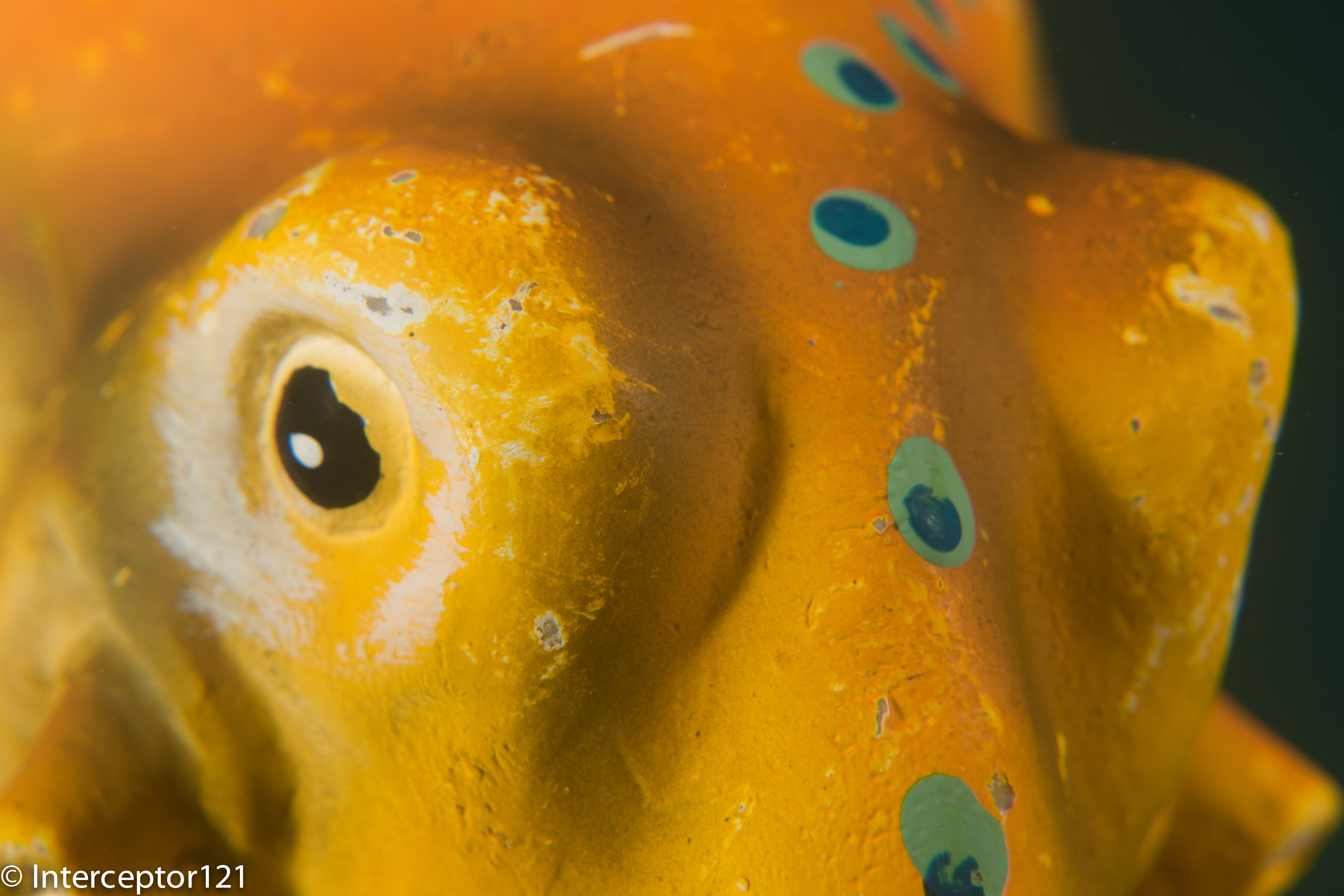
I then moved to an Octopus rich of textures. I took the first shot with my Inon UWL-100 28AD with dome.
Octopus at 28mm
The same octo at 28mm fills the frame much more of course.
Octopus at 50mm
The Octopus at 50mm looks even better. I have topped up the lighting on this one.
Octopus single diopter
I then took this guy with a single UCL-165 note the depth of field insufficient to keep the back of the head in focus, results though are exceptional.
Octopus double diopter
With two close up lenses we go back to the depth of field problem even at f/11.
I thought I had at that point nailed all focus and strobe issues, especially considering I shot with single auto focus, I did not bother using manual focus at all with exception of some double diopter shots.
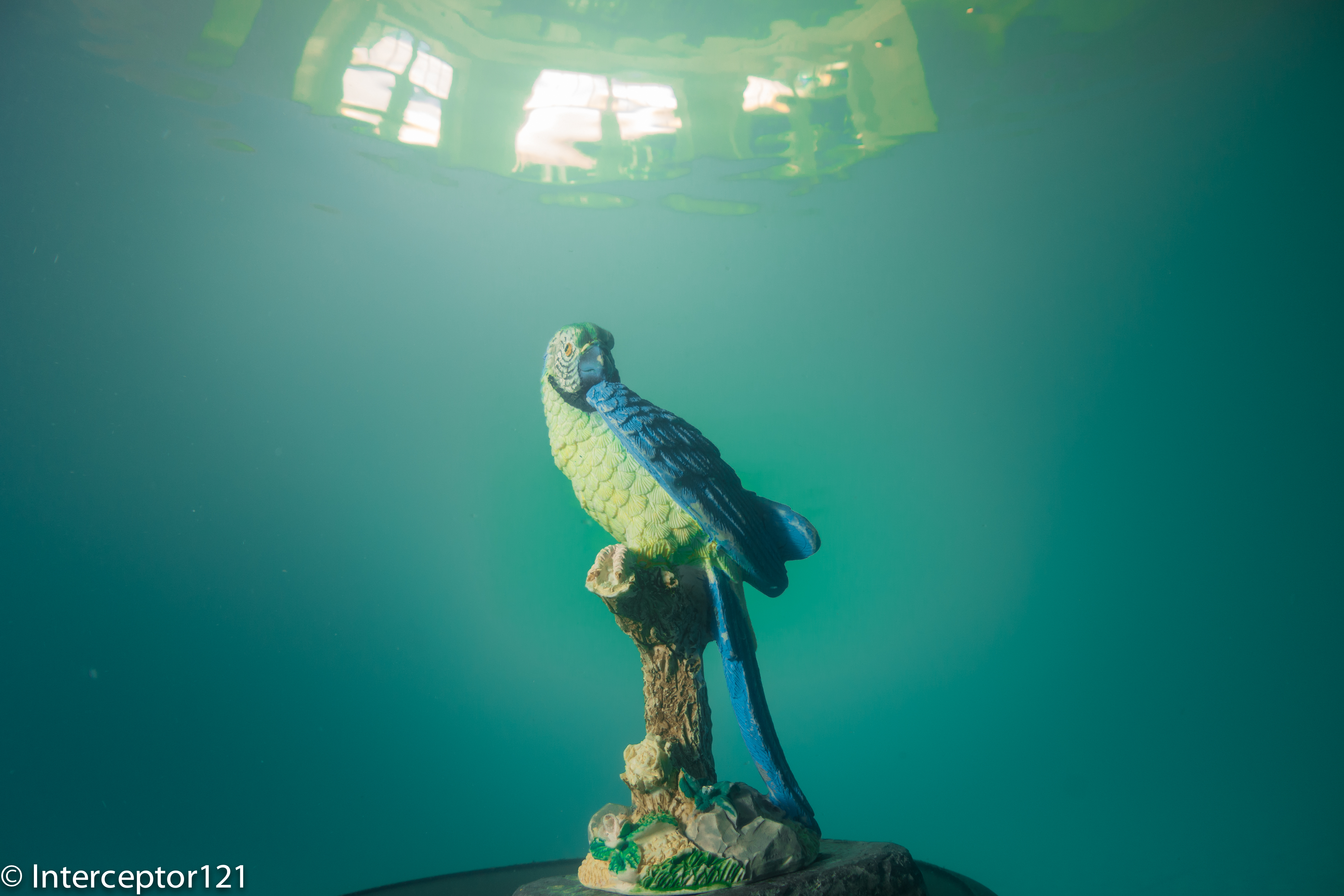
I then tried a few surface reflections with the fisheye this being the best.
Falcon Fisheye
You can see the outside of the pool and the windows on the top.
Family Fisheye
Afterwards made my own composition of statues for a fisheye shot that I think came out very well. The Z240 performed extremely well in both TTL and external auto as well as manual.
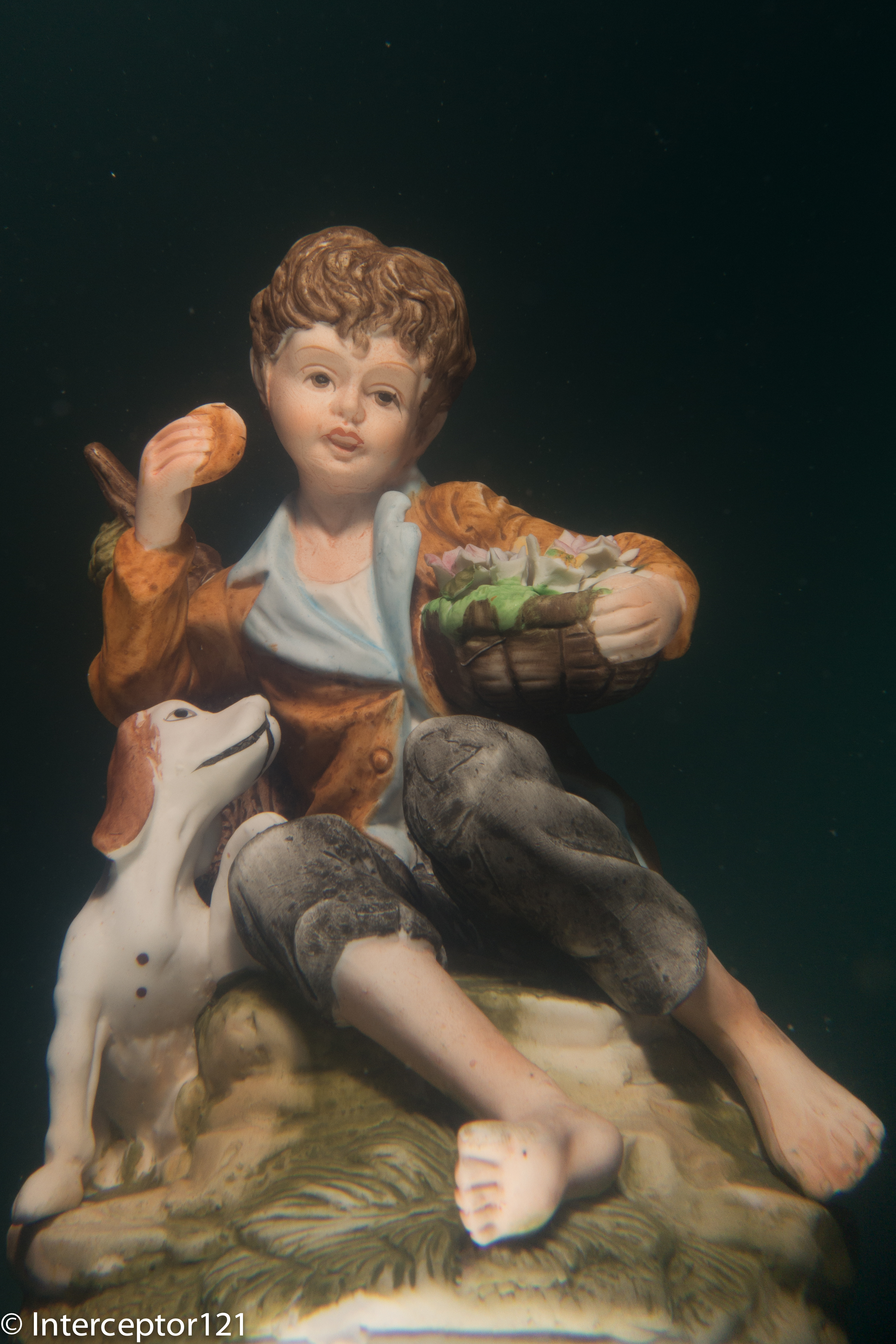
Child with dog
Martin asked me to have a go at the child with the dog as it is extremely difficult to lit up properly.
I went for an alternative strobe placement with light from the bottom as if it was in a gallery. He was impressed with the results.
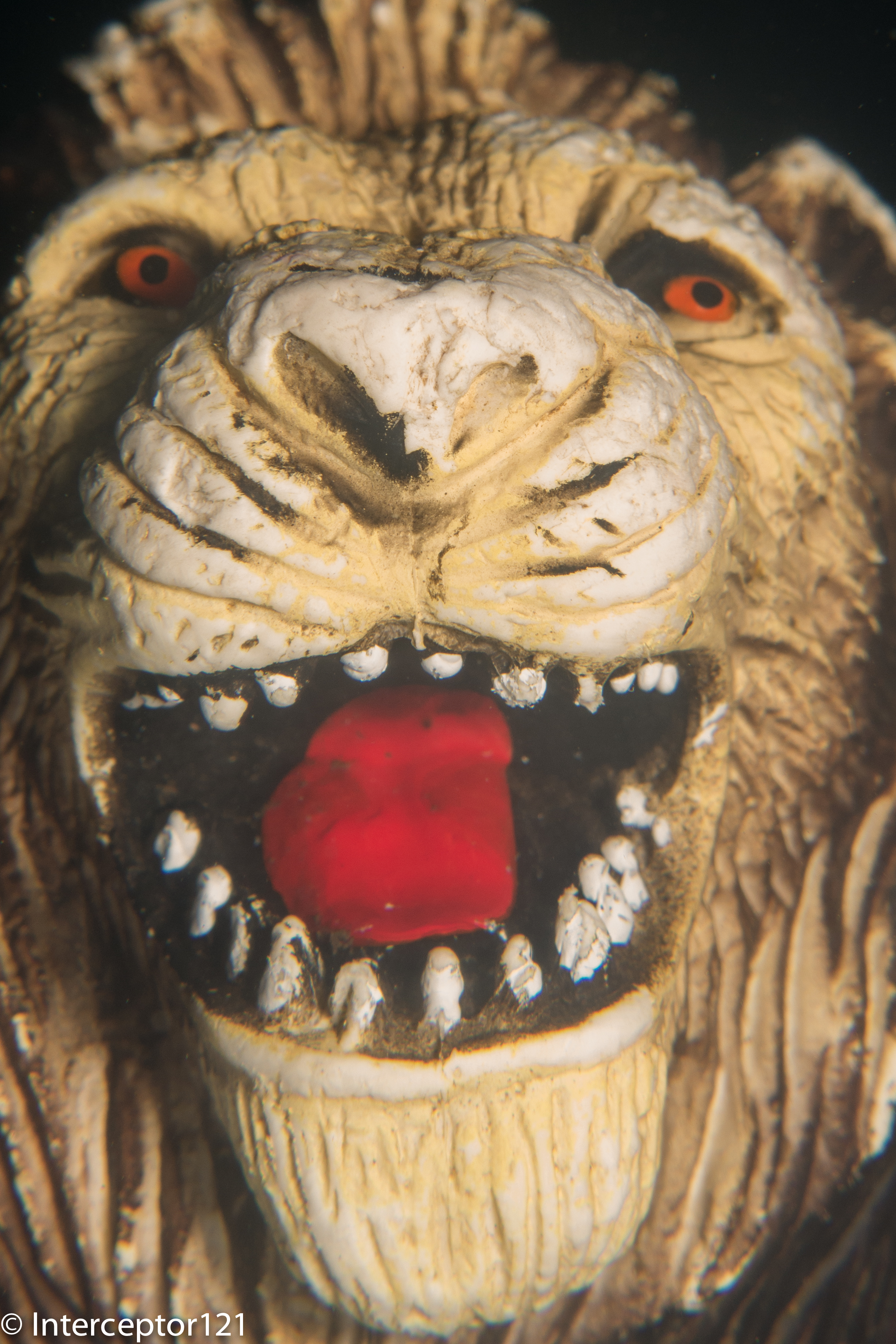
Lion Mouth Single Diopter
To finish off my last task was the tongue and eyes of a lion that I shot with a single UCL-165.
Overall a great day and I definitely recommend you the tuition day with Martin. He is a great person and extremely good at teaching I can see the benefits my buddy had right away.
Lessons learned on the RX100
There were a few things that I learned about my RX100 still rig mode that I want to share with you.
The autofocus is incredible. I even used this for macro. If the camera does not focus is because you don’t have enough depth of field and that is it.
Best macro performance is with a single diopter and also had a benefit of an increased working distance, this means the shots will need cropping for extremely small critters
Two diopters resulted in near bokeh with less than 1mm in focus and difficult to autofocus (though the LCD is great and I could see if things were in focus or not I think this is personal and I would recommend DMF to others)
Performance at wide angle with the UWL-100 28AD with dome is stellar
Inon float arms (I used two 6″ segments) were perfect with lens holders on it.
Inon Z240 twin set with one in TTL and the second in external auto delivered creative lighting without headaches, remember to buy the AUTO diffuser that does not come with the strobe
Strobes in manual allowed for even more creativity and the level of precision compared to sea and sea was staggering
Despite pool conditions the RX100 focused well in low light and much better than the Canon S95 that was returning focus error on the same exposures. I will not bother having a focus light with this camera and only have a single sola on night dives
That’s all for now any question just drop a comment
Recently I have started building my RX100 Mark II photo rig and as part of this I had to choose a wet fisheye lens.
For video I do not like the barrel distortion of a fisheye lens, and on top of that you can’t attach a push on filter to a dome so for me those are two big no when it comes to the RX100 and its white balance error woes.
For still instead I shoot only RAW never white balance in the water and a fisheye lens is required so that I can have human size strobe arms when shooting close focus wide angle at distances between 0 and 16”.
I will focus my discussion on the Nauticam housing starting off with a 67mm thread and go from there.
Currently there are 3 options on the market for the RX100 and come from 3 difference manufacturers. I will go through each one briefly and then we will look more in detail at the two I consider best.
The first lens is the FIX UWL-28M52R, this lens is the smallest of all and was originally design to nicely complement the form factor of a Canon S100 in a fix housing, hence the 52mm thread. The lens has a magnification factor of 0.41x and a diameter of 126mm including the hood, the lens is actually much smaller at around 90mm.
Fix has introduced this lens in 2011 as a replacement of the previous UWL-04 model for two reasons, the first is to have a smaller lens as the UWL-04 was a too big in comparison of the housing, second probably cost though this was never declared. However other people tests and plenty of in water images show that this lens is actually worse than its predecessor. It is also smaller making split over-under shots more difficult.
When Fix withdraw the UWL-04 the manufacturer of the lens continued the production and finally put it back on the market under the i-divesite brand. This lens is the same as the Fix except the label.
Both lenses the old and new fix are pretty much a copy of the old Inon UFL-165, both made of 4 glass elements and an acrylic dome with hard anti scratch coating.
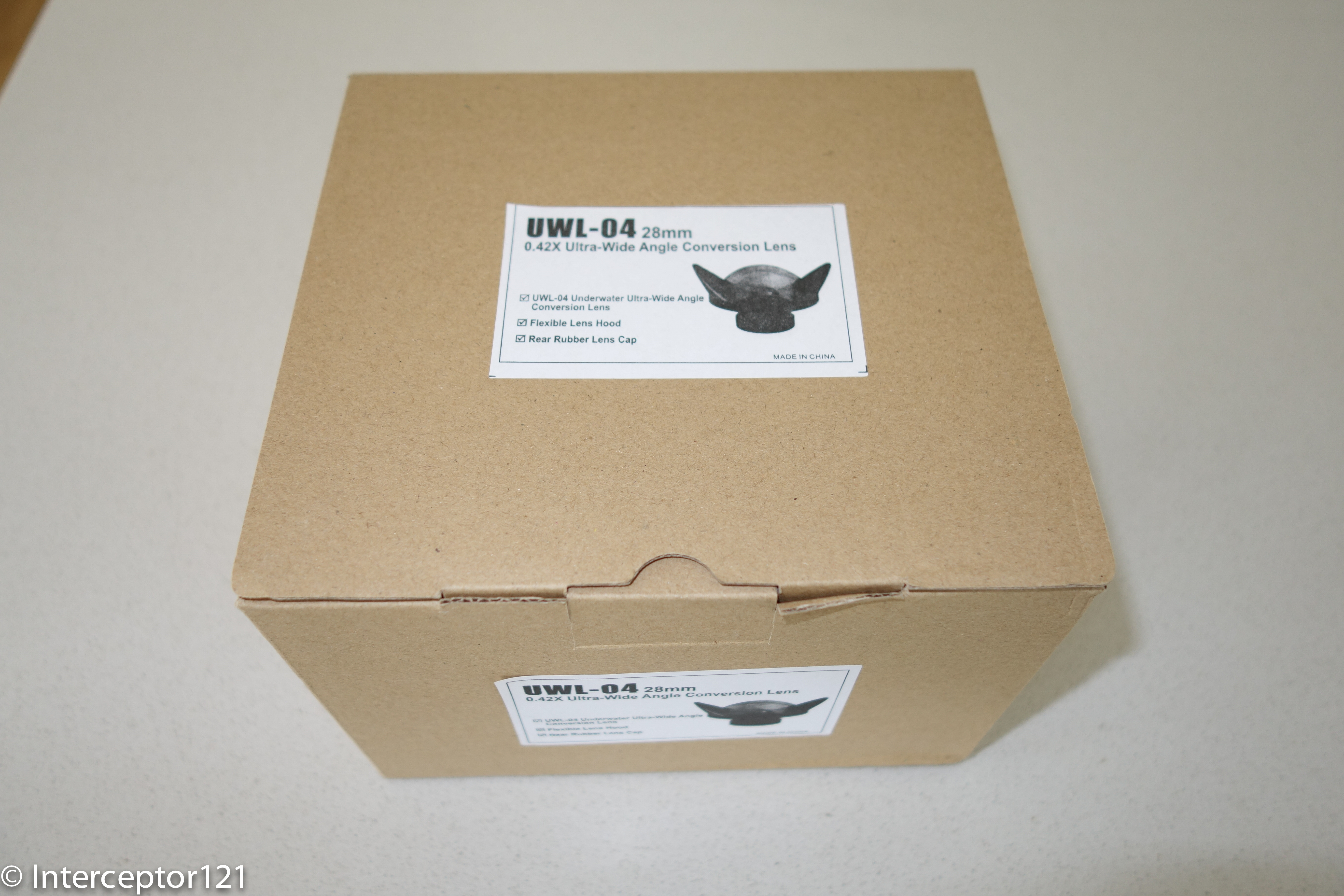
Here is a set of shots for the UWL-04 and the various parts in the box.
UWL-04 BoxUWL-04 package contentsUWL-04 Hood CoverUWL-04 with ringUWL-04 back lens
The last lens on the market is the Inon UWL-H100 with dome. This lens is available with an M67 mount and with an LD bayonet mount. Due to the size and weight of those lenses in water (100 to 500 grams weight and diameter between 125 and 152 mm) a bayonet mount is my preferred choice.
The Inon lens is actually made entirely of glass, the dome is the biggest at 115mm for the lens with an overall diameter of 132mm. This lens is the more suitable to split over under shot and promises a better contrast and less flare than the other lenses with plastic domes. Inon had some concerns about plastic domes and flare following the performance issue of their UFL165 so went for 100% glass for all next generation lenses.
Vignetting with RX100
In certain conditions all those lenses actually have some vignette in water. Despite what you read on shop websites if you look at real pictures there is a bit of that.
The Fix and Idas lenses have an issue with the lateral hood, the shots look clear of vignette on land but in water the magnification of the hood petals makes them show in the picture, we are talking a minimum crop required around 1% and usually on one side. The Inon UWL-H100 has a different issue and it gives in specific situations a tiny bit of vignette in the corners, around 2% of the image needs to be cropped. Both lenses will not vignette when image stabilization is deactivated, the image stabilizer tends to aggravate the issue so if you are obsessed switch it off and try to be steady shooting at speeds of 1/125th of a second or faster. For example on the amount of vignette see the following
UWL-04 note the vignette upper left centerUWL-28M52R again vignette on the left upper sideUWL-H100 vignette in left corners
I would like to thank Alex Tattersall, Tamas Plotek and Troy Williams for those in water pictures.
Inon UWL-100 28AD
Inon has another lens that is suitable for the RX100 and is the UWL-100 28AD a lens originally introduced in 2005. This lens has a smaller rear element than the UWL-H100 and it is not suited to many cameras with a very large lens aperture. The RX100 however works fine with this lens and contrary to the newer UWL-H100 this lens does not vignette in water or on land. The reason is that the de-magnification of this lens is less than the newer lens 0.63x vs 0.6x. This is the lens I have chosen for my RX100 Mark II and I will compare it here with the UWL-04 I have recently bought for my Canon S95. There are no substantial differences between the UWL-100 28AD and the UWL-H100 in terms of optical quality.
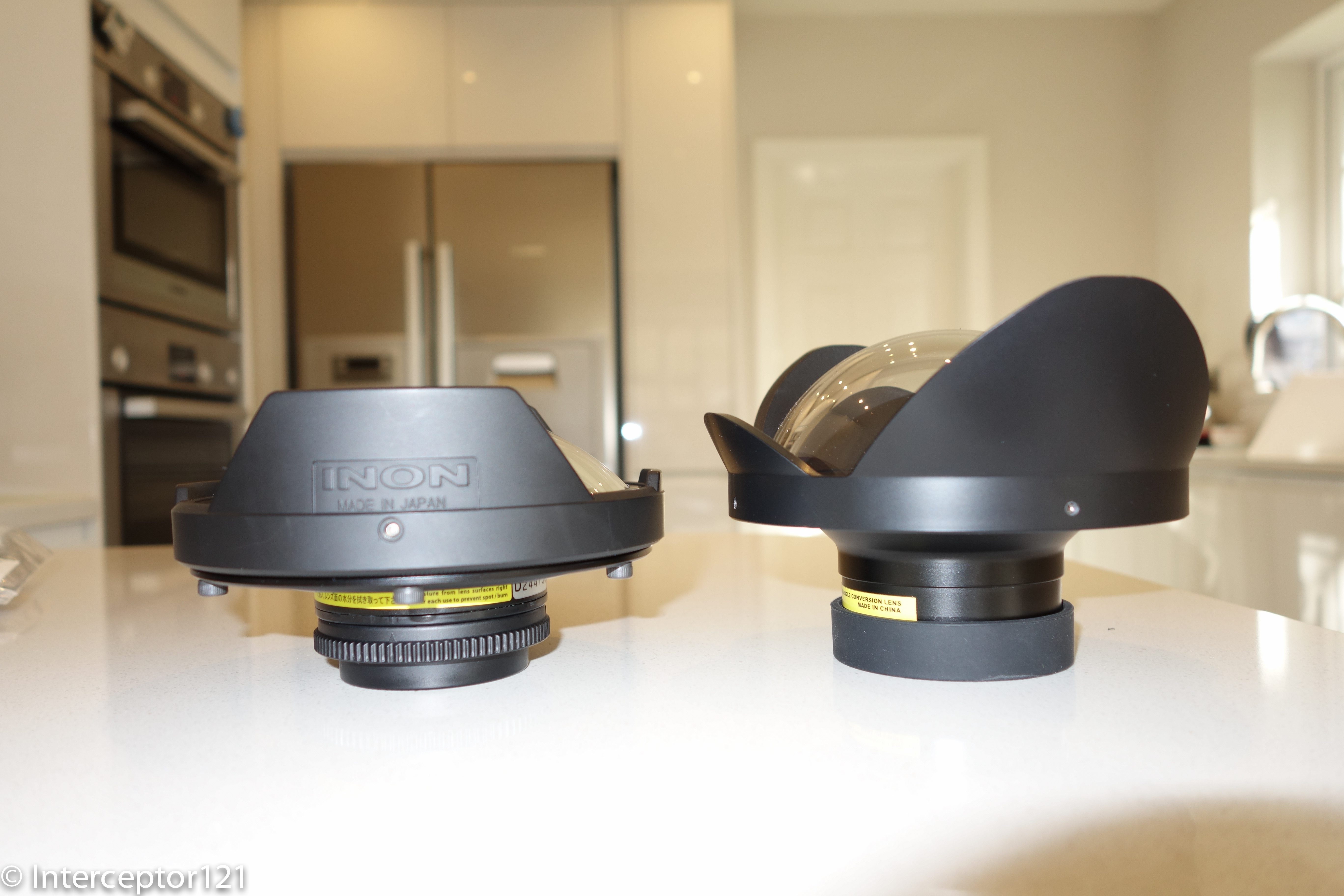
Here are few pictures to compare the lenses, take into account that whilst the weight on land is comparable, once in water the Inon lens is heavier at 400 grams versus 160 of the UWL-04.
UWL-04 UWL-100UWL-04 UWL-100 profile
Image Quality
There is no need to take the lenses in water to compare image quality generally things get worse in water not better so it is sufficient to take a shot on land and see how that goes to have a relative comparison between two lenses. In this example the cameras are on a table exactly in the same position when the shots are taken and use the same settings of ISO, aperture and shutter speed.
The first impression is that the UWL-04 is a tad wider but more rectilinear, the Inon lens has definitely more barrel distortion and is more a fisheye than the UWL-04 is. Looking at mid upper frame you can see that at diagonal level the UWL-100 28AD is actually wider than the UWL-04 that remains wider horizontally. This means looking at the specs can be misleading and results depend on the camera lens combination.
So how do these lenses compare when it comes to corner sharpness and flare?
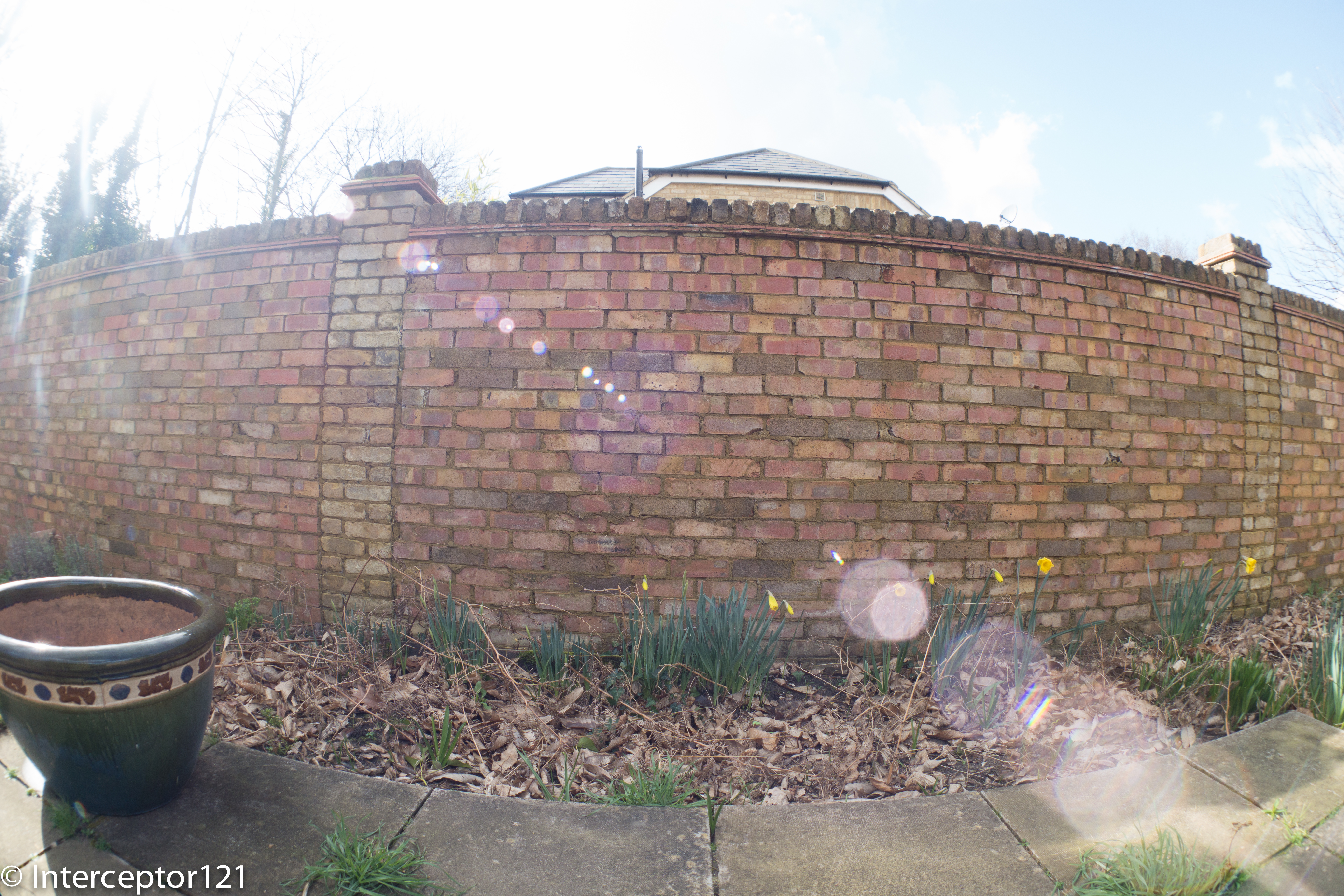
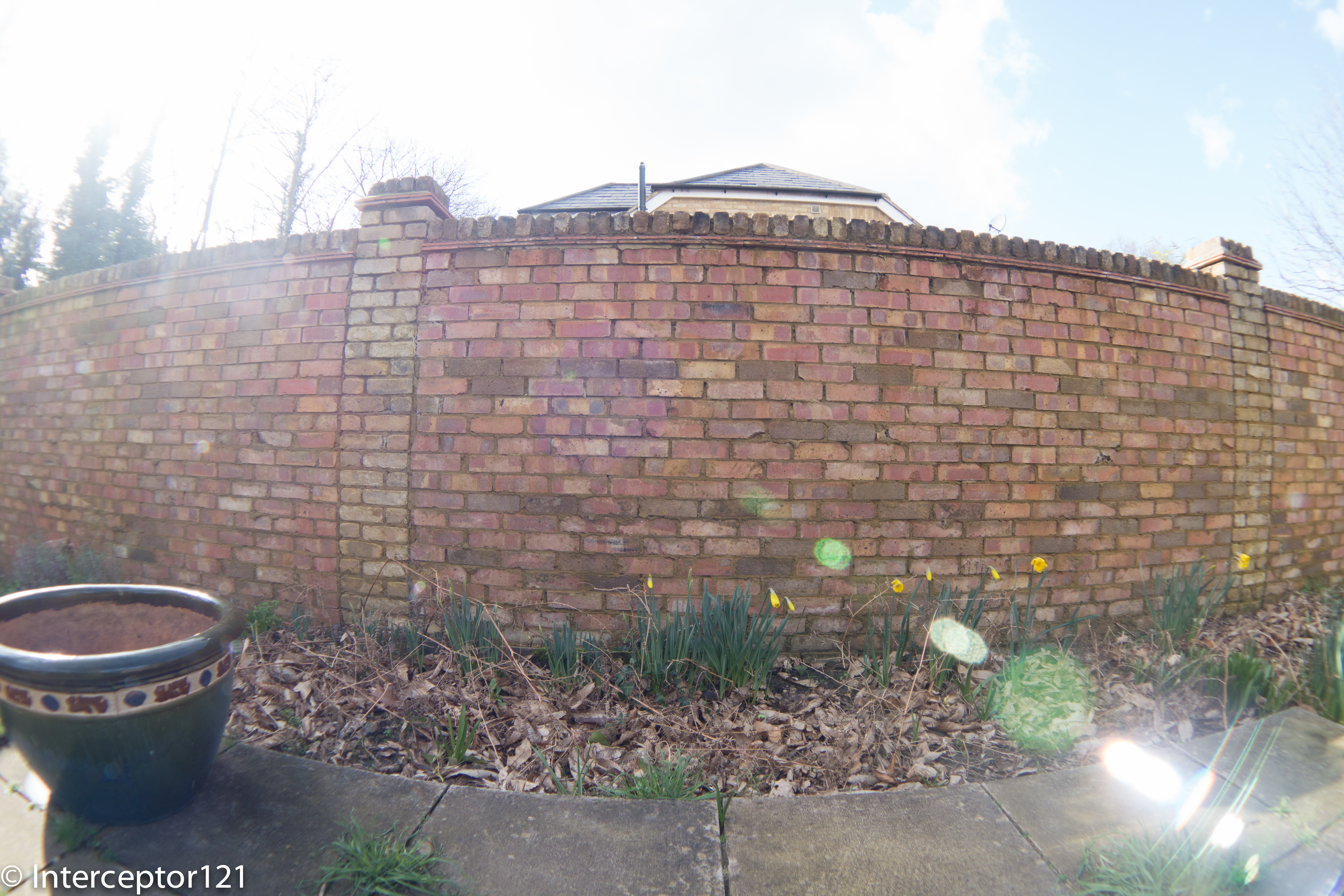
This is a shot with the UWL-100 in very harsh conditions with sun-rays hitting the lens directly on the dome, you can clearly see the ghosting that comes from it.
UWL-100 Sunlight
This is the same shot in the same place taken with the UWL-04 you immediate notice that the ghosting has a green color. This is most likely due to lack of anti-reflection coating inside the dome and to the color of the inner lens mount.
UWL-04 Sunlight
Looking at the image the picture taken with the Inon has a clearer ghosting but then is sharp in the rest of the image, the UWL-04 image has flare around it with comparable less contrast as we move from the center to the corners.
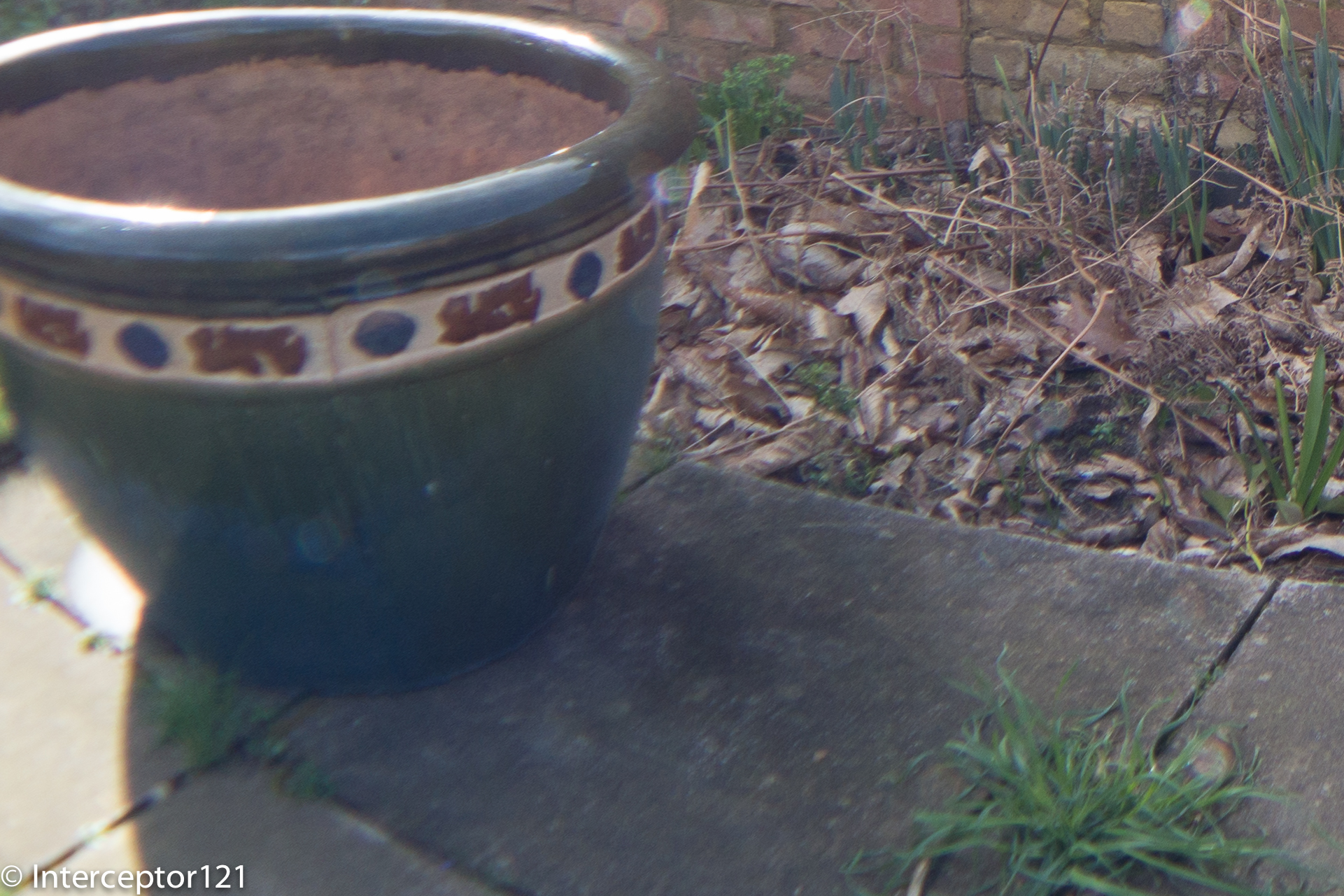
The other two images are a crop in the corner, you can see that despite the high level of distortion you can still distinguish some detail of the small grass bush in the Inon image, the UWL-04 instead is softer and the bush is basically a uniform green shape with no detail at all.
UWL-100 CropUWL-04 Crop
Update 28 Feb I have taken some shots with the UWL-H100 and the UFL165AD here are the overviews
Inon UWl-H100
The UWL-H100 is actually wider than the UWL-04 with the Sony RX100 despite the advertised 144.5 degrees versus 165 of the UWL-04. Has the same level of detail of the UWL-100 28AD
Inon UFL-165 AD
The UFL165AD flare issue is obvious in this shot both lower corners are compromised, this confirms why the UWL-04 is the best option for the Canon S series in terms of flare or vignette.
Looking at the UWL-H100 crop you can see the vignette more apparent in the upper corner and the image sharpness, it is possible that with an M67 mount there is no vignette with a Nauticam housing in most conditions, with LD mount you need to turn image stabiliser off or crop. Considering this is the widest lens it is not a big issue. Once cropped the UWL-H100 gives still the widest field of view but someone maybe be annoyed by this. Zooming in results in the same field of view of the UWL-10- 28AD
Ergonomics
The Inon lens presents the benefit of a bayonet mount, although the lens is heavy it can be removed in water quite easily, the UWL-04 has some issues whereby the adapter ring would unscrew instead of the lens, this can be avoided fixing the adapter on the lens but then there is no lens cap that would fit the larger M67 screw in the box so you need to buy one yourself, generally the size of the petals make this lens impossible to handle in water and is more like diving with a dome port. It has to be noted though that you can zoom through with both lenses so still continue and take portrait shots and close ups. Obviously for real close or macro you do need to take the lens off which with the UWL-04 you can basically forget.
Cost
The UWL-04 costs $460 in US as shown here with dome cover and step down ring, and £362 in UK. The Inon UWL-100 28AD with dome costs $907.80 including an M67-ADF adapter in US and £775 in UK. All in all the Inon is around near to double the price of the UWL-04. The UWL-H100 is even more expensive at $970 for the M67 version and $942 for the LD bayonet, you then need to add $160 for an adapter for a total of $1,102 that is a lot of money another reason for the 28AD version.
Conclusion
The Inon is the best lens for the RX100 and there is no doubt, however it costs more than double the UWL-04 not everybody will be able to afford it. The UWL-04 is a somewhat basic lens that lacks sophistication and is essentially not removable in water but comes at a great price. In terms of field of view the lenses are very similar with the Inon lenses having more fisheye distortion and a wider diagonal field of view. The UWL-04 is more rectilinear and as consequence has less field of view diagonally. Only one lens has zero vignette at the wide end and this is the UWL-100 28AD with dome.
In Water Shots
I don’t have shots in water yet pending my next trip but two galleries that give an idea are here:
The second shooter has got rid of the UWL-04 to buy an Inon as not happy with corner sharpness!
My perspective is if I look at the pictures I can barely tell the difference however looking close the Inon lens is sharper at one f/stop less, the UWL-04 requires stopping at f/8 or smaller, you can happily shoot f/5.6 with the Inon which means you need less light and less strobe power.











 Interceptor121 Photography & Video Workshops