Tag Archives: Underwater Video

The end of advanced compact cameras for underwater photography

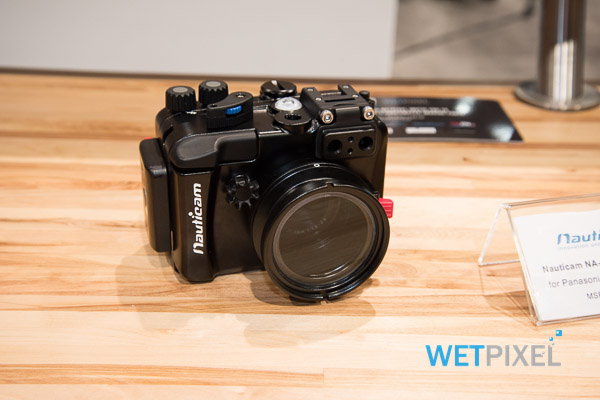
With the arrival of the new Nauticam N50 port system for advanced compacts I believe we say goodbye to using a large sensor compact underwater.

We already saw some signs when Sony released the RX100 Mark III with a 24-70mm equivalent lens, this effectively killed any use of the camera for macro. The new Panasonic LX100 has a similar problem with a 24-75mm lens but on top it has the new N50 port system in the nauticam housing or a severely limited functionality in the Ikelite version. It is obvious that the Panasonic LX100 will have similar sever limitations for macro but also with only 10 Megapixels really not be a strong competitor.

The last kid on the block is the Canon G7X, this camera looks very similar to the Sony RX100 Mark II and has a 24-100 zoom range that on land is very useful with an aperture of f/2.8 at tele end that is really interesting for land use. However this camera in the Nauticam version has the same port system N50.

So why has Nauticam introduced this? Both the Canon G7X and the Panasonic LX100 have fairly long lenses in terms of physical size and the zoom mechanism is such that the lens is retracted at wide end. This means that there is quite a gap between the lens and the port and wet lenses in those conditions have issues of both corner softness and chromatic aberrations. So Nauticam has introduced a short port with zoom blocked so that wet lenses can be used.

Effectively this is like diving with a fixed 18mm lens on your camera behind a dome with no zoom capability, taking the wet lens off results in horrible pincushion distortion so not really appealing.

Pincushion Distortion at 24mm with flat port

The dome port does not allow the use of the full zoom at least without a diopter, so this is of limited use too for video.

Cost wise the new housing with the port system are around $1,200 in the US with additional $350 for the dome and $180 for the flat wide port. We are approaching the low end of Micro 4/3 Nauticam housing prices and are more expensive than Olympus OEM options but without the same flexibility and quality in terms of lenses.

It is clear that the Sony RX100 Mark I and II will remain one of a kind and this is the reason why they remain popular few years after launch.
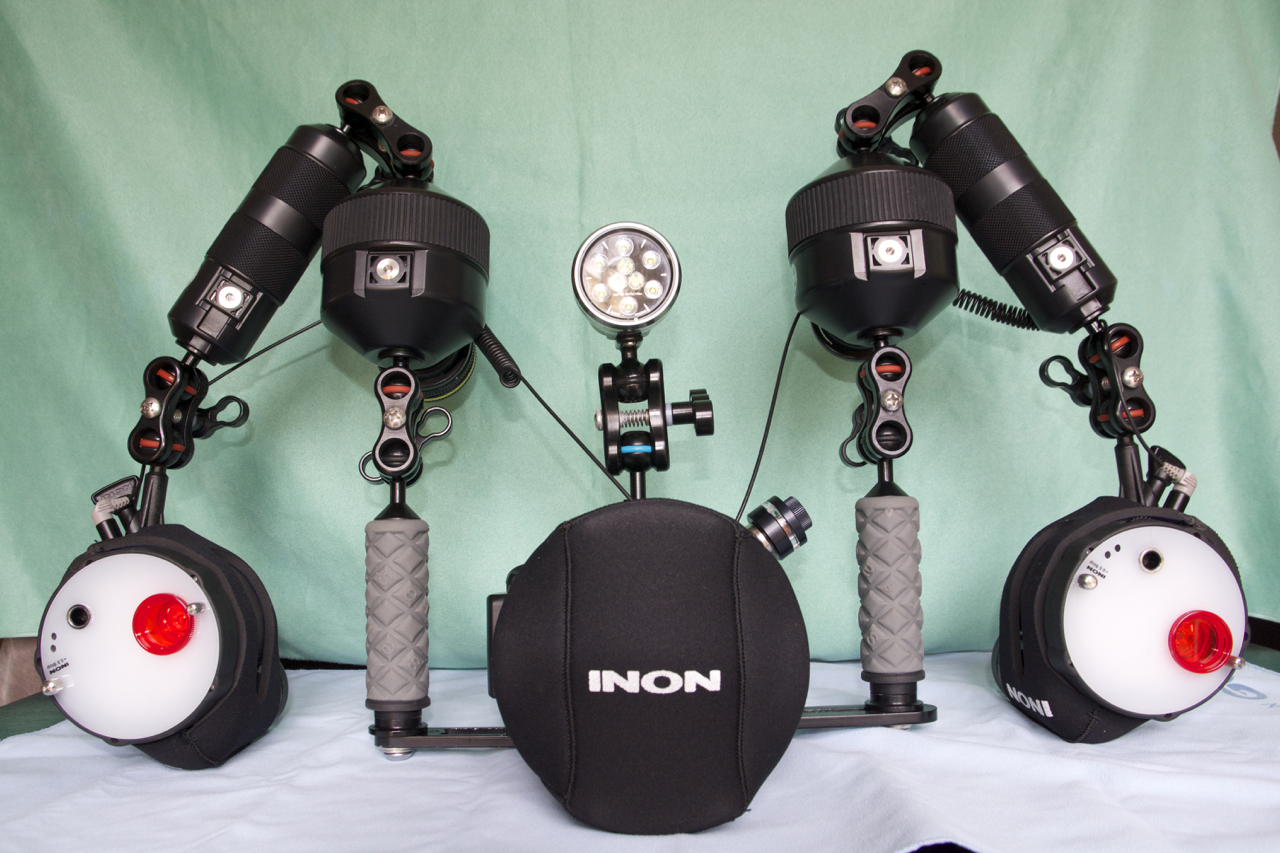
Sony RX100 Mark II Rig June 2014 Front


Nauticam NA-LX100 Pricing Confirmed

It is official now the prices of the NA-LX100 are confirmed

in US $1,200 for the housing with flat port, $180 for the wide short port and $350 for the 3.5″ acrylic dome.

In UK £920 for the housing and flat port, £150 for the wide short port and most likely £290 for the dome.

Which means we can now update the GH4 comparisons for 4K

Super Wide

Panasonic LX100  $899 NA-LX100 $1,200 with Short Port $180 and Wet lens Inon UWL-H100 $522

Panasonic GH4 with 7-14mm and 6″ dome $2750 housing and port only plus camera and lens $2,399

The max field of view of the two options is almost the same however you can’t zoom the LX100 due to the zoom lock on the housing.

LX100 $2,801

GH4 $5,149

Price Difference $2,348

Mid range

Panasonic LX100 $899 housing $1,200  3.5″ dome circa $350

Panasonic GH4 with 12-35mm and 6″ dome $2750 housing and port Camera and Lens $2,399

The LX100 is wider in 4K at 26-81mm vs 28-81mm of the GH4

LX100 $2,449

GH4 $5,149

Price Difference $2,700

Close Up

Panasonic LX100 with NA-LX100 rectangular port $2,099

Panasonic GH4 with 14-42 and 35 macro port $1,815 housing and port $2,680

The GH4 will have more magnification due to the longer focal length with the same diopter.

LX100 $2,099

GH4 $4,495

Price Difference $2,396

The gap is still significant even with the price increase ranging between $2348 and $2700.

I still have some concerns on the 3.5″ acrylic dome for the LX100 as I am not sure about focus distance. If this port works with the full zoom it is definitely the most appealing for video but we will need to check this out.


Nauticam NA-LX100 Released

On Christmas day Nauticam has released the NA-LX100 housing for the Panasonic DMC-LX100. It is priced at ¥168,000 which is 50,000 more expensive than the last NA-RX100 III.

If this translates correctly in $ and UK prices it means $1,399 plus tax or £895 including VAT for UK.

Here is the original link in Japanese on the fisheye homepage

http://www.fisheye-jp.com/products/compact/na_lx100.html

NA-LX100 with flat rectangular port
NA-LX100 Rear View


Prices for the short port for wet lenses and the dome port have not yet been announced but we know that the dome can use the camera at full zoom and that the short port. The US price of the flip diopter for the rectangular port is known and is $220.

Which means we can now update the GH4 comparisons for 4K

Super Wide

Panasonic LX100  $899 NA-LX100 with Short Port and Wet lens $2,000 circa

Panasonic GH4 with 7-14mm and 6″ dome $2750 housing and port only plus camera and lens $2,399

The max field of view of the two options is almost the same however you can’t zoom the LX100 due to the zoom lock on the housing.

LX100 $2,899

GH4 $5,149

Price Difference $2,250

Mid range

Panasonic LX100 $899 with 3.5″ dome circa $1,699

Panasonic GH4 with 12-35mm and 6″ dome $2750 housing and port Camera and Lens $2,399

The LX100 is wider in 4K at 26-81mm vs 28-81mm of the GH4

LX100 $2,599

GH4 $5,149

Price Difference $2,550

Close Up

Panasonic LX100 with NA-LX100 rectangular port $2,299

Panasonic GH4 with 14-42 and 35 macro port $1,815 housing and port $2,680

The GH4 will have more magnification due to the longer focal length with the same diopter.

LX100 $2,299

GH4 $4,495

Price Difference $2,195

The gap is still significant even with the price increase ranging between $2200 and $2500.

There is still an option to use the GH4 with wet lenses although this has only been tried with diopters to date it is technically possible to use a wet wide angle lens.


Panasonic DMC-LX100 Nauticam 4K Underwater video becomes affordable

This week I have been in contact with Nauticam that have given me some final details with regards to the NA-LX100 housing that will be released in the next weeks and is already available for pre-order in Hong Kong.

The housing is confirmed to have a changeable port system the default is the rectangular flat port as in the image below.

When shooting 4K the Panasonic LX100 focal length is 26-81mm which means that in water the default port will give a range of 35-108mm due to water magnification. This is however negated by the increased working distance so don’t get too excited about macro.

Panasonic LX100 Flat Port

There will be a flip diopter for the rectangular port as a separate accessory. Due to the limited zoom of the LX100 a strong diopter with power of at least +10 in water is required for macro.

The other option displayed was a mini dome port.

Nauticam LX100 Mini Dome Port

Nauticam has confirmed that this dome is 3.5″ wide and unfortunately there is no provision currently for a flip diopter for this port.

The 3.5″ acrylic port is probably the most versatile option for the Panasonic LX100 and I am a bit puzzled of why the flat port is offered as a default. The mini dome seems perfect for all round reef use when there are no really small critters and medium size fish.


Nauticam has also a super wide option that utilizes a short port with a 67mm thread. This takes the Inon UWL-H100 from what we have heard and also a new lens Nauticam has designed.

The zoom will be  locked so the lens will stay at 24mm limited to circa 50mm which means with the wet lens this is a 16-32mm wide lens in water, I am not sure however that zoom in will be a possibility with the Inon lens but will be possible with the Nauticam lens as far as I understand.

Nauticam LX100 Wide wet lens

So what is the strategy for Nauticam and this housing?

It is quite clear for me that the Panasonic LX100 has the same 4K capabilities of the GH4 the same IPB codec and processor. It falls short of cinema options but costs half of the GH4 body.

So for your perusal those are the equivalent options

Super Wide

Panasonic LX100  $899 NA-LX100 with Short Port and Wet lens $1,700 circa

Panasonic GH4 with 7-14mm and 6″ dome $2750 housing and port only plus camera and lens $2,399

The max field of view of the two options is almost the same however you can’t zoom the LX100 due to the zoom lock on the housing.

LX100 $2,599

GH4 $5,149

Price Difference $2,550

Mid range

Panasonic LX100 $899 with 3.5″ dome circa $1,300

Panasonic GH4 with 12-35mm and 6″ dome $2750 housing and port Camera and Lens $2,399

The LX100 is wider in 4K at 26-81mm vs 28-81mm of the GH4

LX100 $2,200

GH4 $5,149

Price Difference $2,950

Close Up

Panasonic LX100 with rectangular port $2,000

Panasonic GH4 with 14-42 and 35 macro port $1,815 housing and port $2,540

The GH4 will have more magnification due to the longer focal length with the same diopter.

LX100 $2,000

GH4 $4,355

Price Difference $2,355

So the performance may be better but the price difference is very high.

The total cost of the Panasonic GH4 plus lenses housing and port is around $6,640 but the LX100 stops at a much more modest $2,400 without the wet wide angle lens. This still does not include flip diopters adapters and lens worth another $800+ but gives an idea that the total will be around $3,200 for the whole set.

You can get a complete 4K underwater video rig around $4,500-4,700 including tray, video lights and all the rest which few years ago would have been unthinkable.

Panasonic DMC-LX100 More Info and Reviews

Like the LX7 the LX100 has a multi aspect sensor. This means that the diagonal field of view does not change in the various aspect ratios.

The camera is a micro 4:3 so the sensor size is half of a full frame sensor at 18×13.5 mm. However only part of this is used by the camera more specifically 13.7×10.3mm are actually used in the same aspect ratio.

Resolution 4112×3088 in 4″3 format

When the aspect ratio changes to 16:9 although the diagonal field of view remains the same the horizontal pixel count increases

Pixel count at 16:9 Aspect Ratio

Now we have 4480 horizontal pixels and 2520 vertical so the horizontal field of view is wider than in the 4:3 or 3:2 aspect ratios.

This means that at normal 1080p the camera will perform like a normal 3:2 sensor at 22.9mm. All of this to say that the LX100 like the LX7 are wider in movie mode than the Sony RX100 Mark III despite the lens is declared at 24mm in both cases as when we go to 16:9 the Sony crops the sensor and goes to 25mm whilst the Panasonic cameras stay at 24mm. So even at 4K 16:9 the LX100 will be marginally worse than the RX100 Mark III at 26mm vs 25mm. Note that the crop is 2.56x at 4:3, 2.47x at 3:2 and 2.38x at 16:9.

We don’t have details about wet lenses yet but for the solution with a dome like the Ikelite housing or the Nauticam mini dome we are talking about a maximum field of view of 79.52º at 4K which is acceptable for most cases.

The challenge like with the Sony RX100 Mark III is at telephoto end were 81mm in 4K is quite little. Panasonic has however the option of the iZoom that was pretty useful with the LX7 and that crops down to a ‘normal’ 1920×1080 which promises to be pretty good with a 2x digital zoom with scaling.

In DxoMark sensor test the LX100 scored the same of the RX100 Mark II and III with a minimal improvement in low ISO.

Which in shorts leaves to the conclusion that unless you need 4K the Panasonic LX100 is not going to be your wonderful underwater camera however if you can process the 100 mbps IPB files that the camera produces, the result when scaled down to 1080p has got so much more quality compared to other 1080p cameras.

The lack of the ND filter compared to the previous LX7 is a miss, but Panasonic though that at f/16 there are anyway the 3 stops so performance will not suffer, we disagree with that as surely diffraction will be substantial at f/16 and we rather have less depth of field near the surface than more.

Let’s face it, the LX100 is half the cost of the GH4 if you use the nauticam housing and this is before the GH4 has added lenses and ports, the GH4 will give you richer color and probably 2/3 step ISO improvement and much more if you use an external recorder but the LX100 is the 4K camera for the consumer and we are looking forward to a full operational housing from Nauticam, Recsea or any other!


Panasonic DMC-LX100 Ikelite Housing

The American manufacturer is the first to reach the market with a polycarbonate housing for the Panasonic LX100.

Specifications

  • 200 ft (60m) depth rating
  • Controls for all camera functions except Diopter Adjustment Dial, Aspect Selector Switch, Front Control Ring, and Focus Selector Switch
  • Ikelite 5-pin bulkhead with TTL circuitry
  • Near neutral buoyancy in fresh water
  • Weight 4.7 lb (2.1 kg)
  • Dimensions 7 x 6 x 6 in (18 x 15 x 15 cm) including projections
  • 3.9-inch (99 mm) diameter glass lens port

The first thing that we notice is that not all controls are accessible, is this going to be an issue?

Diopter Adjustment Dial – this is normally set fixed

Aspect Selector Switch – this does not change during the dive

Front Control Ring – this controls manual focus and is important

Focus Selector Switch – this switches between macro and normal focus mode an is important if you don’t use a close up lens

As the LX100 with a 24mm lens is not going to be really a photographer dream Ikelite could have spared an expensive TTL converter but I requested confirmation from the manufacturer and they said only a TTL version is planned – not good for us!

Ikelite LX100 Front View

The housing looks a bit bulky as usual but considering that for video we access a limited set of controls this is not going to be a major problem except maybe the rear metal buttons.

Rear View
Rear View

Probably the best feature of this housing are the accessories.

The housing comes with a large 3.9″ flat round port that per-se is not good for much, however you can add the WD-4 Dome and the macro M67 adapter to improve matters. The WD-4 dome is a glass removable dome that is sharp and will restore the lens field of view and allow for some zooming, the macro adapter allows to mount M67 close up lenses as a push on.

Probably the feature that will miss the most is the focus mode switch as the rest can work quite nicely with focus lock.

Cost wide the housing is $750 with the WD-4 and the Macro adapter this totals at $1115 plus taxes.

The nauticam housing is rumored to be $1,100 without ports so this ikelite housing could be competitive and we like the port system a lot for simplicity even if the choices are a bit limited as all in all this is good enough for video if combined with a selection of diopters. The lack of the focus mode switch could create some challenges in portrait work with the bare port but a series of mid range close up lenses can fix the issue.

Panasonic DMC-LX100 Housing and More

So the LX100 gets the highest score for a compact camera on dpreview with a staggering 85%

Full details are here

http://www.dpreview.com/reviews/panasonic-lumix-dmc-lx100

Of particular interest are the video grab comparisons

http://www.dpreview.com/reviews/panasonic-lumix-dmc-lx100/8

In my opinion the 4K mode of the LX100 is as good as the GH4 there are however fewer options and control and rolling shutter seems to be an issue with the LX100.

Nevertheless the 4K video mode blows the Sony RX100 series away in any version so I guess for land use the Panasonic DMC-LX100 truly is the camera to beat.

I have been waiting patiently for housing and now is confirmed that Nauticam will come up with a housing in early 2015. Wetpixel has a special on Dema on their news section and this has images of the LX100 housing prototype.

http://wetpixel.com/articles/wetpixel-coverage-dema-2014/P1

The housing has a changeable port system similar to a micro 4/3 and 3 ports were shown at Dema

Panasonic LX100 Flat Port

The rectangular flat port is very similar to the Recsea housing for the Canon G series.

Many people get very excited to read that the LX100 has a minimum focussing distance of 3 cm at wide end but this is as such not so exciting as it seems. Due to the wide field of view of 84º diagonal this means that the area captured at the minimum distance is somewhere in the region of 1:1.25 reproduction ratio. So this is not real life macro. This compares to the much smaller area of the older LX7 that had a 1.25:1 and as such offered super macro out of the box (though nobody would shoot macro at wide end or be 1 cm away from the subject).

Which means that the LX100 will need diopters with this flat port to achieve macro and more specifically a close up lens with power in water of 10 to achieve macro. This corresponds to the Subsee 10 or the Inon UCL100 or the Nauticam SMC.

The flat port is nothing to get very excited as in water the camera will behave as a 32-100mm equivalent lens camera and a field of view of only 68º.

The other option displayed was a mini dome port.

Nauticam LX100 Mini Dome Port

This looks around a 4″ dome, if this is the case the camera will not only maintain the land focal length 24-75mm but also potentially be compatible with a flip diopter as the one used with the micro 4/3.

This is a hope more than a guess, Nauticam please ensure you can apply a flip diopter to the dome port as that would be the best all round option for this housing. As previously noted 24mm is wide enough for reef scenes and with a +10 diopter, and possibly an additional +5 or +6 this becomes a great solution for underwater video. At 4K the focal length changes to 26-81mm which is still acceptable.

24mm is not enough for wreck dives or whale sharks so here it comes the wide option.

Nauticam LX100 Wide wet lens

I am not sure if this port will work at all with the zoom but it is declared to offer 110º and therefore a 0.63x magnification.

Nauticam has declared that standard wet lenses do not work with the LX100 and hence they have come up with this specific port system.

Looking at the G7X housing this seems to be just a special adapter with a set of wet lenses more than real ports

Nauticam G7X Housing

Anyway we will have to wait but my favorite option would be the mini dome especially if the flip diopter holder for 4″ dome can be used.

If this is not the case I would have a major problem with this housing as the lens out of the box is not good enough to be used as is. I am slightly confused also by that weird rectangular port considering that 32mm is not wide enough for anything I can’t comprehend the reason for its existence.

We will have to wait and see. I have contacted Nauticam asking if the dome can have a flip diopter holder. Will keep you posted

Final Note: the Panasonic LX100 is not an option for stills as the RX100 Mark III, a 24-75mm lens is not good enough and the lack of fisheye options combined with the short zoom is definitely a no go.

Right now for stills I would still consider the Sony RX100 Mark II as the winner until we get confirmation of that lenses can the Canon G7X use.

Panasonic DMC-LX100 Youtube 4K selection

Still no confirmation that there will be housing I am compiled some of my favourite 4K videos

This is a breathtaking clips from Benjamin Todd

Another test here

There have been some rumours that the 4K mode is not a full sensor read however considering that the resolution is 4480×2520 (11M) in 16:9 and 4K is 3840×2160 this gives a crop of 1.16x there are not enough pixels to do a half line scan but the resulting angle of view seems to indicate 28mm focal length not the 26mm advertised that would give a 1.08x crop. The multi aspect sensor of the LX100 could explain why the field of view relationship changes but a 1.08x scaling seems very strange and difficult to implement. Probably something in the internal logic between sensor and lenses makes this work to have more details we need to compare the 4K still shots captured by the camera with the grabs from the video clip. Nothing on the manual seems to suggest any difference between the two so my guess this is a full sensor read.

Finger crossed that Nauticam and Ikelite produce a housing for this camera soon


Panasonic DMC-LX100 First Impressions

I have been fairly busy with work and actually there have not been many things to look at on the digital compact market until Photokina.

Possibly the most interesting news is the release of the Panasonic DMC-LX100 which is coming in the UK stores on the 20th of October at £699 list price the same of the Sony RX100 Mark III.

Looks like the Panasonic will beat the RX100 Mark III quite easily on the video compartment due to the ability to shoot 4K the few samples I have seen compared to the GH4 show that with a normal lens the two cameras give pretty much the same result

Moreover the fact that the LX100 has a 12.8 Megapixels sensor with constant diagonal field of view means that at 16:9 for video the resolution for stills is 11 Megapixels and the crop to get to 8 Megapixels of 4K is minimum.

In fact the camera reports a 26-81mm focal length equivalent in movie mode at all resolutions in video. This is different from the Panasonic GH4 where the 4K crop includes considerable reduction of the field of view.

This has a positive and a negative implication, the positive is of course the field of view at wide, the negative is that the zoom of only 81mm means little magnification in macro.

The LX100 has a close focusing distance of 30 cm and this means to achieve 1:1 you need at least 9 diopters so an achromatic lens like the subsee 10 or the Inon UCL-100 is what is required, this means a working distance around 3″ from the back of the lens which really means 2″ from the front a bit close similar issue of the RX100 Mark III

However with 4K there is a lot of resolution to play with and looking at the manual it seems iZoom is available in all modes so maybe even a weaker diopter and a bit of iZoom produce good results. Most likely with a camera like this one a Subsee 5 with iZoom is more useable than a 10 diopter but this needs to be confirmed.

Some people will think why bother with all of this as maybe there will not even be a housing, well some sources tell me that my favorite housing manufacturer will in fact produce a unit for the DMC-LX100

I have not handled the camera so I do not know how the zoom works, the lens seems somewhat similar to the LX7 and therefore could work with the Inon UWL-H100 but this needs to be confirmed.

Reading the instruction manual the only disappointment is the lack of an ND filter, Panasonic has put a 43mm thread on this camera lens, surely more flexible than the electronic ND filter however this was quite a good feature underwater.

Also Auto ISO work in manual so you can leave your desired shutter speed and even aperture for your subject and rely on the camera large sensor to do the rest. The LX7 worked quite well even at f/1.4 so I am not sure this will really be needed however with a base ISO of 200 and a micro 4:3 sensor this camera could work just fine at f/4 pretty much at any depth we shall see

So it is only a matter of waiting to see what the housing will allow or not.

For all the still fans out there, this camera is going to be disappointing for macro worse than the RX100 Mark III my recommended set up remains the Sony RX100 Mark II for wide and close and decent macro, super macro is out of range with a 1″ sensor but this is another story.

If you want to understand why check this graph from dpreview

Video Feature Sony RX100 Mark II in Malta

Following from my previous post I managed to get together a clip out of the 5 dives I did

The first day was somewhat plagued by visibility a bit lower than the norm for the location but the second day was fabulous

For this trip I brought with me the Inon UWL-H100 and the red push on filter from deep roof H20 and the Inon UCL-330 as I was expecting medium size fish and nothing really small

Here is the outcome

I am quite happy how things turned out so let me share the settings with you

First I shot most of the footage in 25p AVCHD mode only some small sections are shot at 50p and actually I did not need to slow down any of the material.

For the wide shots I used steady shot in normal mode and shutter priority at 1/50th. With the filter on I had auto white balance with tint correction G2 A1. I noticed that the camera was giving red tint in some situation and so added a bit of green back. The Amber correction instead is for the RX100 itself the camera does not have vibrant yellow and is a bit blue.

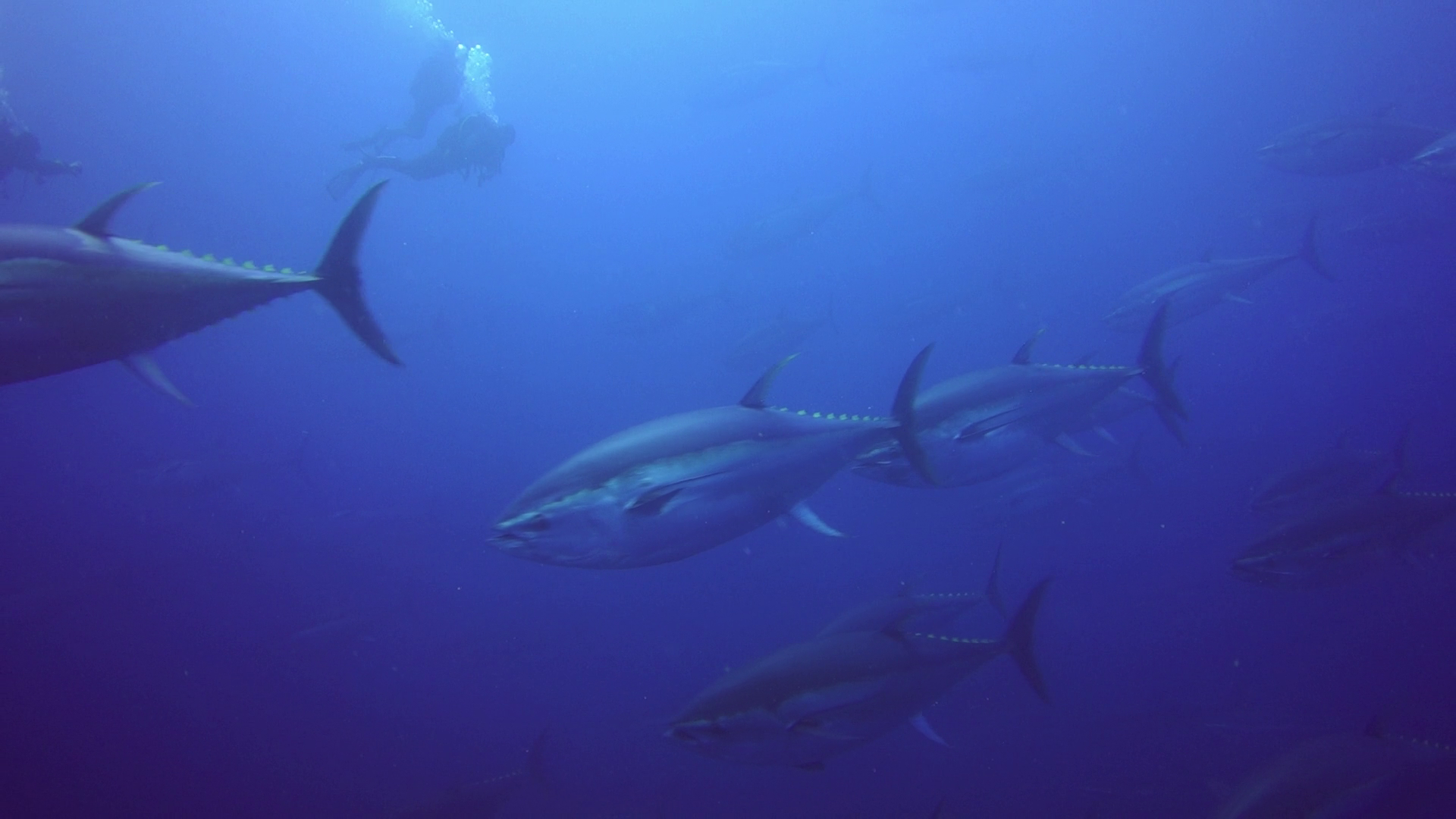
Tunas
Tunas – AWB with filter

For the first time I use creative mode changing the standard contrast to -3 in order to prevent crushing of blacks.

Exposure was set all along to -1/3 and metering to multi area with AUTO ISO limited 160-800.

I think the results are so good that in fact I have performed no colour correction to any shots in ambient light.

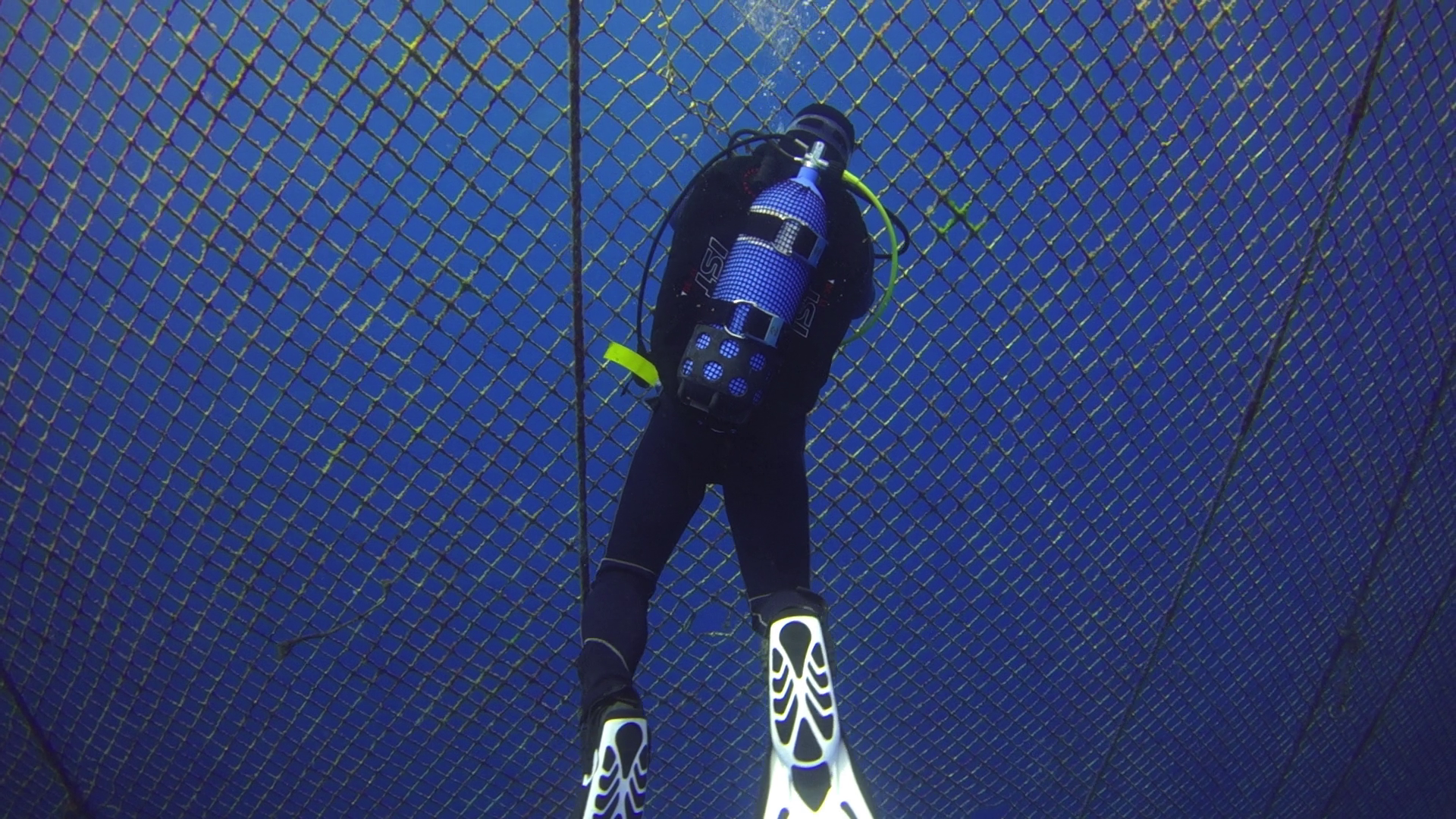
Opening the tuna farm
Opening the tuna farm – AWB with filter

For shots with lights I set up first colour temperature to 6500K and A1 to match the lights but then in some of the far shots this resulted a bit cold so I adjusted very slightly in post the temperature.

Seahorse
Seahorse – AWB UCL330

Only 40″ are adjusted in the whole video in essence is as shot and the editing took me half hour.

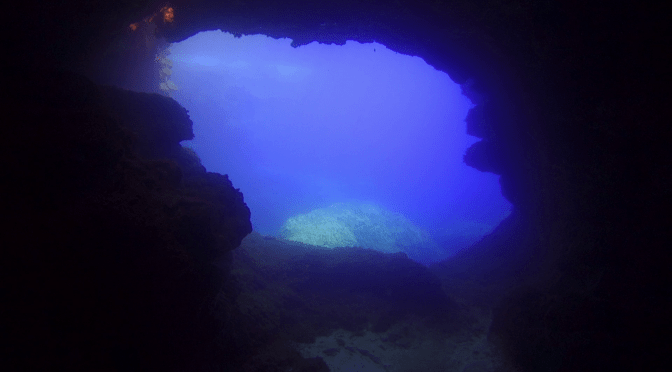
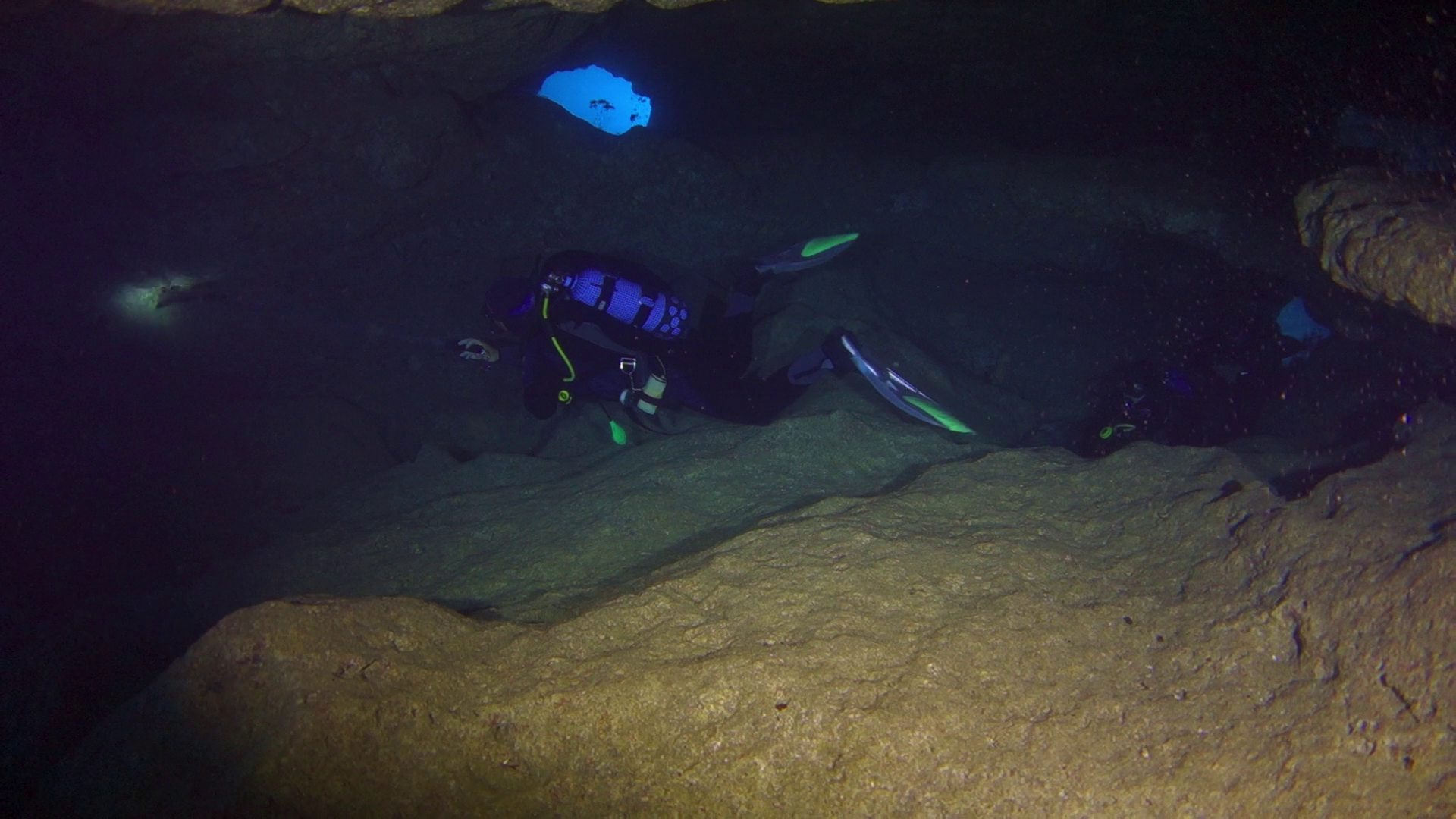
In cave
In cave –  AWB no filter

I did a bit of analysis and the camera was operating for most at ISO200 with aperture around f/3.5 – f/4.0 which is really the sweet spot of the lens.

I did have some challenges using the UCL330 for some nudibranches  that really required a stronger lens so they look a bit small, there was also surge so I had to fight with focus problems but all in all very happy.

Nudibranch
Nudibranch – AWB UCL330

The longer working distance of the UCL330 (20-30 cm or 8″ to 1′) proved challenging on walls as you are too far to hang on to anything or use a stick. I will bear this in mind in the future.

For the close up shots I used steady shot active.

I also wanted to say that a few times the camera did manage to white balance properly however the results were not exciting and frankly not worth the hassle. Using the filter is just so much better with the auto white balance.