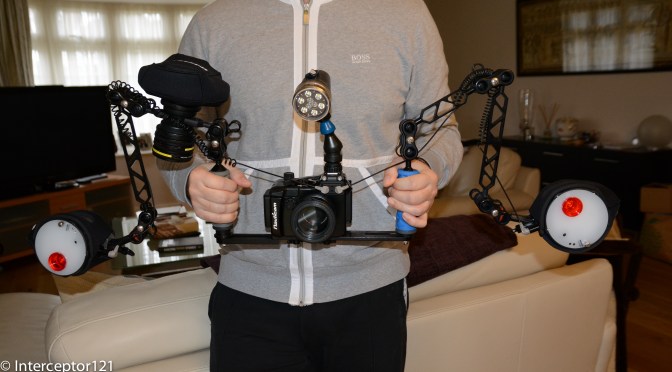
So the time has come to talk about photography more in depth. I have actually given up stills in favor of video since a few years as I find video gets me closer to behaviors than stills do, I guess am just not patient enough to capture behaviors on still as that involves waiting!
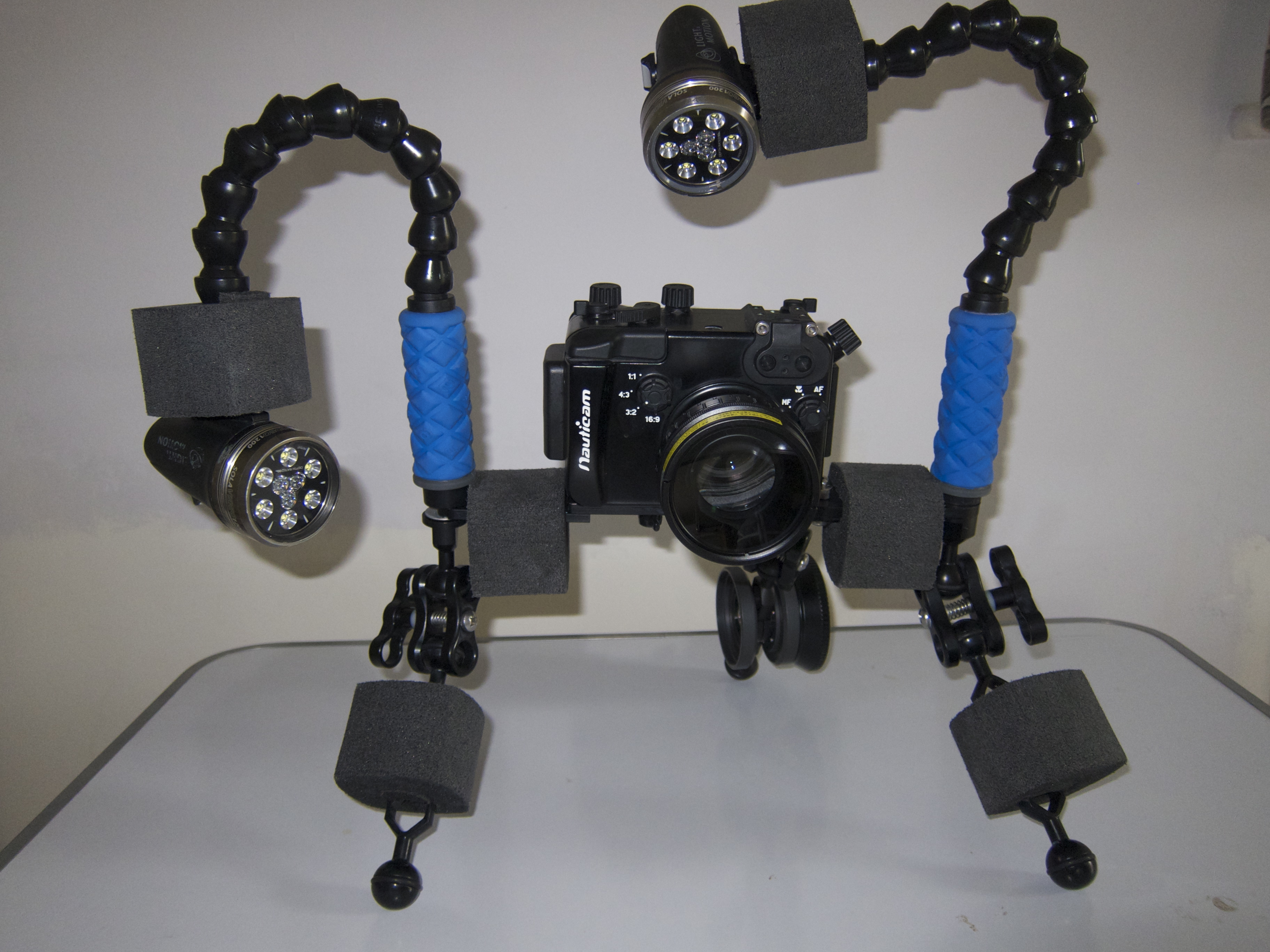
Anyway this is the rig as it is today without the floats.
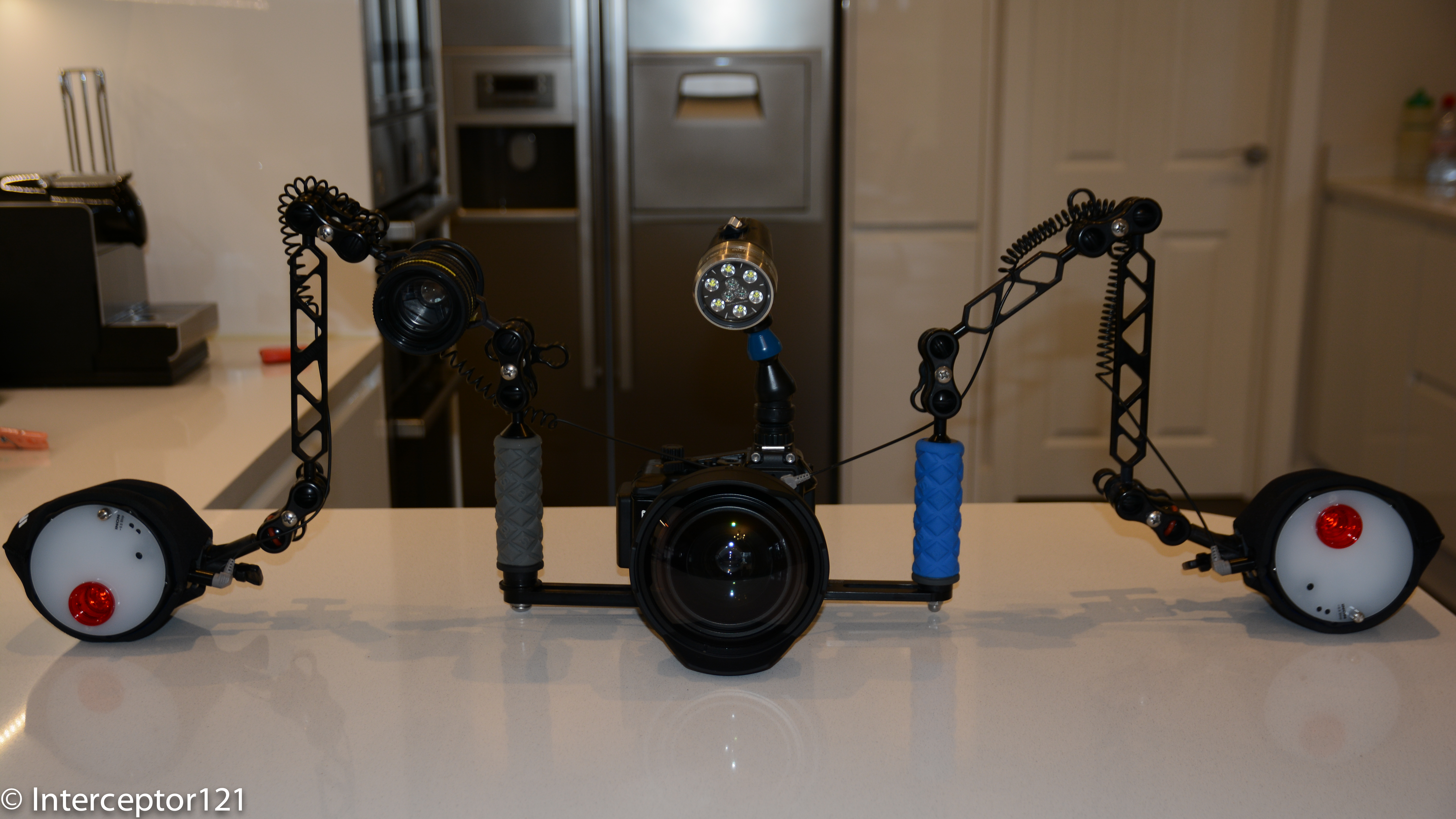
The RX100 is a demanding compact for the very same reason why it is the best compact the huge sensor it sports. If you come from shooting a canon or panasonic or even Olympus on a 1/1.7″ sensor you find the RX100 to be very unforgiving. In essence you can’t really just point and shoot you need to put some more thinking into your shots.
The rig that I have put together for stills has the same meticulous attention to detail than my video rig has, you would say OCD probably but here it is.
So let’s start with the housing, Nauticam just makes the best most ergonomic housing for the RX100 period. There is nothing you can think of improving about this housing. Even if the bulkhead connector is useless you can actually put a vacuum valve on it to put it to full use.
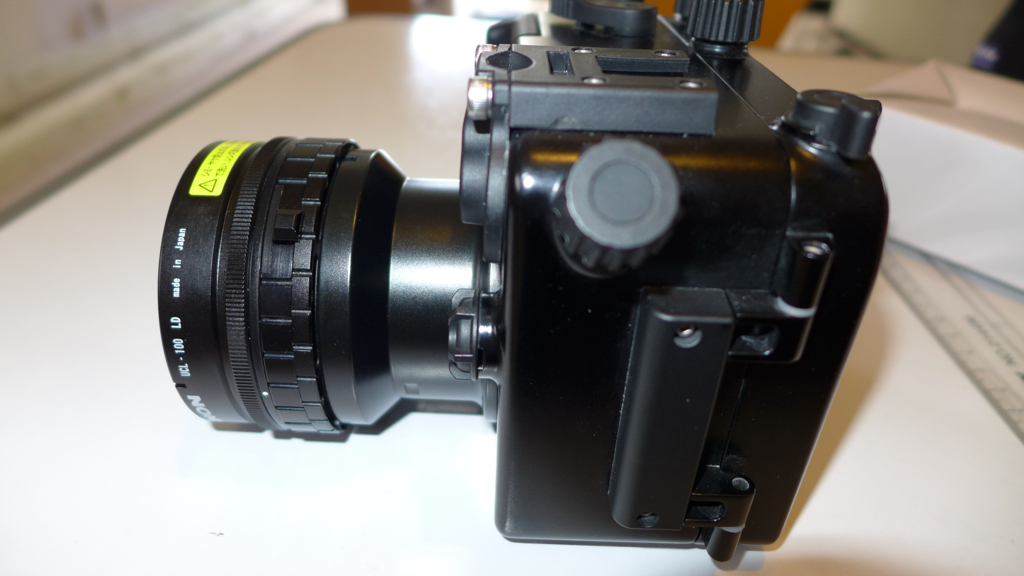
Nauticam do offer an M67 thread native on all their compact housings but I find this tedious to say the least. The beauty of a compact is that you can shoot wide and macro on the same dive, the M67 thread in essence negates this as it makes virtually impossible to change lenses on a dive. This is the reason why I went for the Inon 28AD mount for my rig using an inexpensive 10 bar adapter priced at $20 or £15.
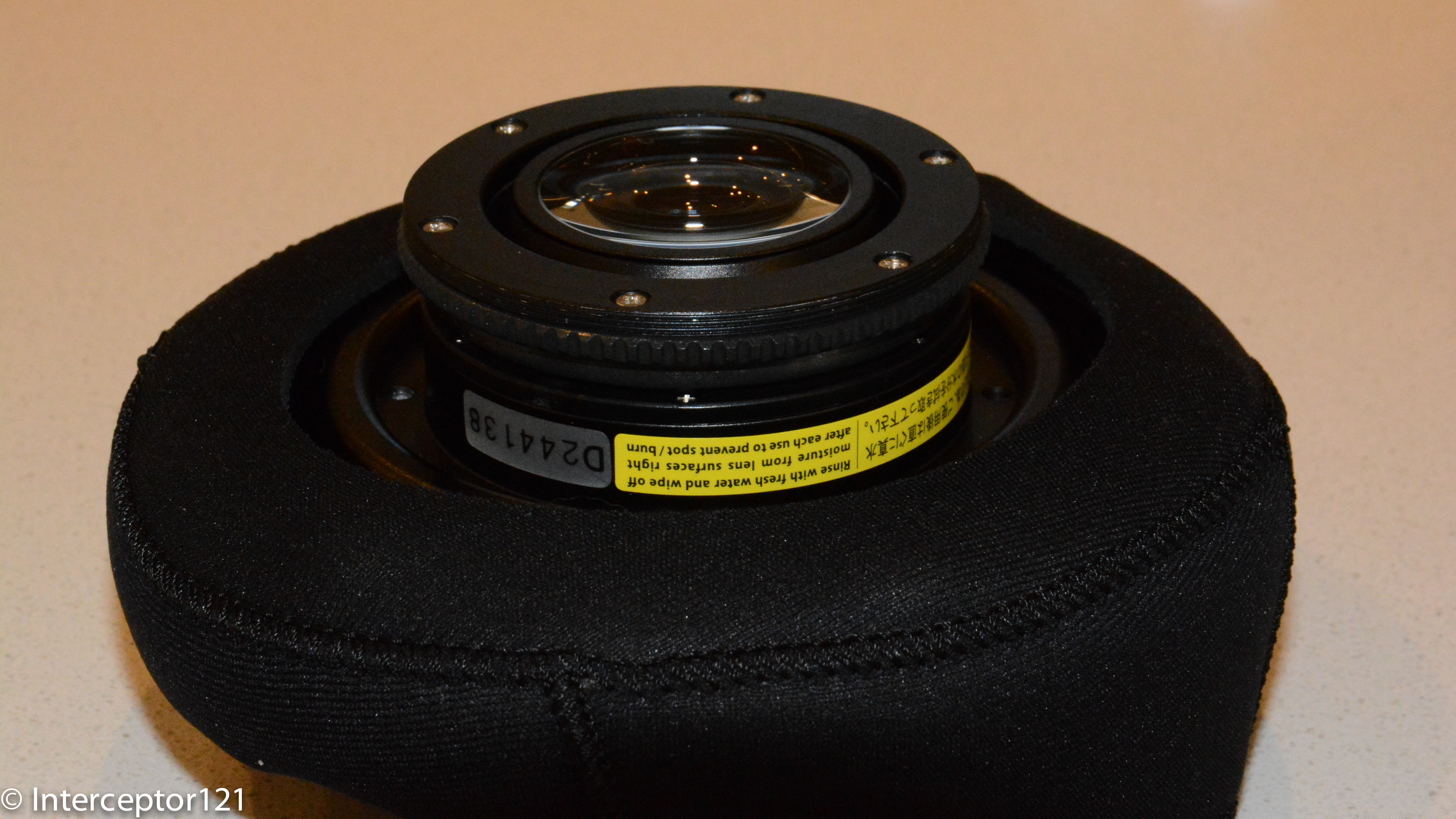
Once you connect the Inon UWL-100 28AD the lens is very close to the housing to the point of nearly touching the port. This means you get no vignette with this lens with the added dome, and actually a larger field of view in water than you get with the UWL-H100. Why is that? The UWL-100 28AD has less magnification so it does not vignette even on land, once you add the dome you get almost the same field of view in water around 150º. The lens is just a tad lighter than the UWL-H100 with an in water weight of 400 grams.
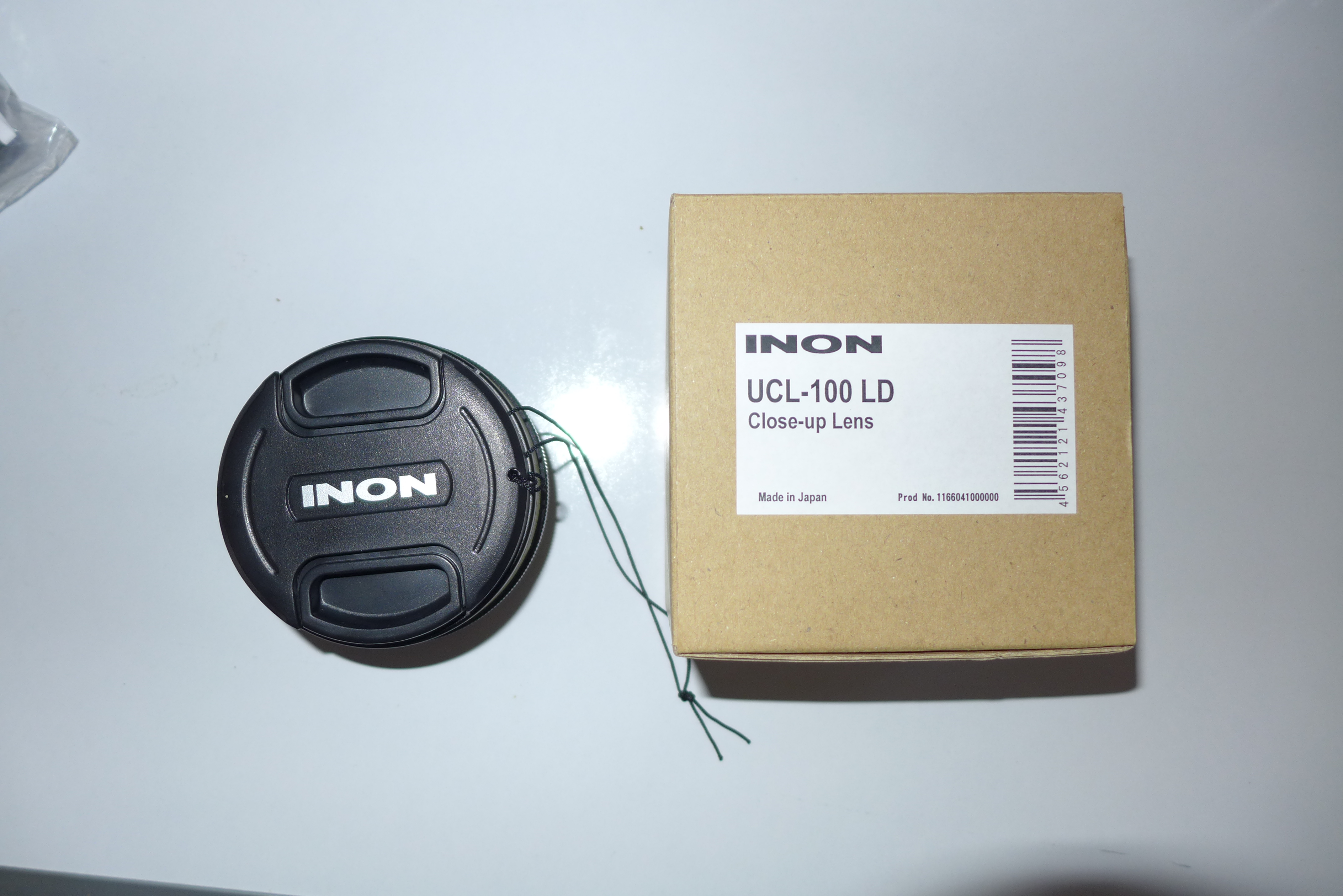
The choice of the 28AD mount means you can only use the UCL-165AD close up lenses, that if attached would crash into the glass, you need therefore a 28AD->AD adapter from Inon.
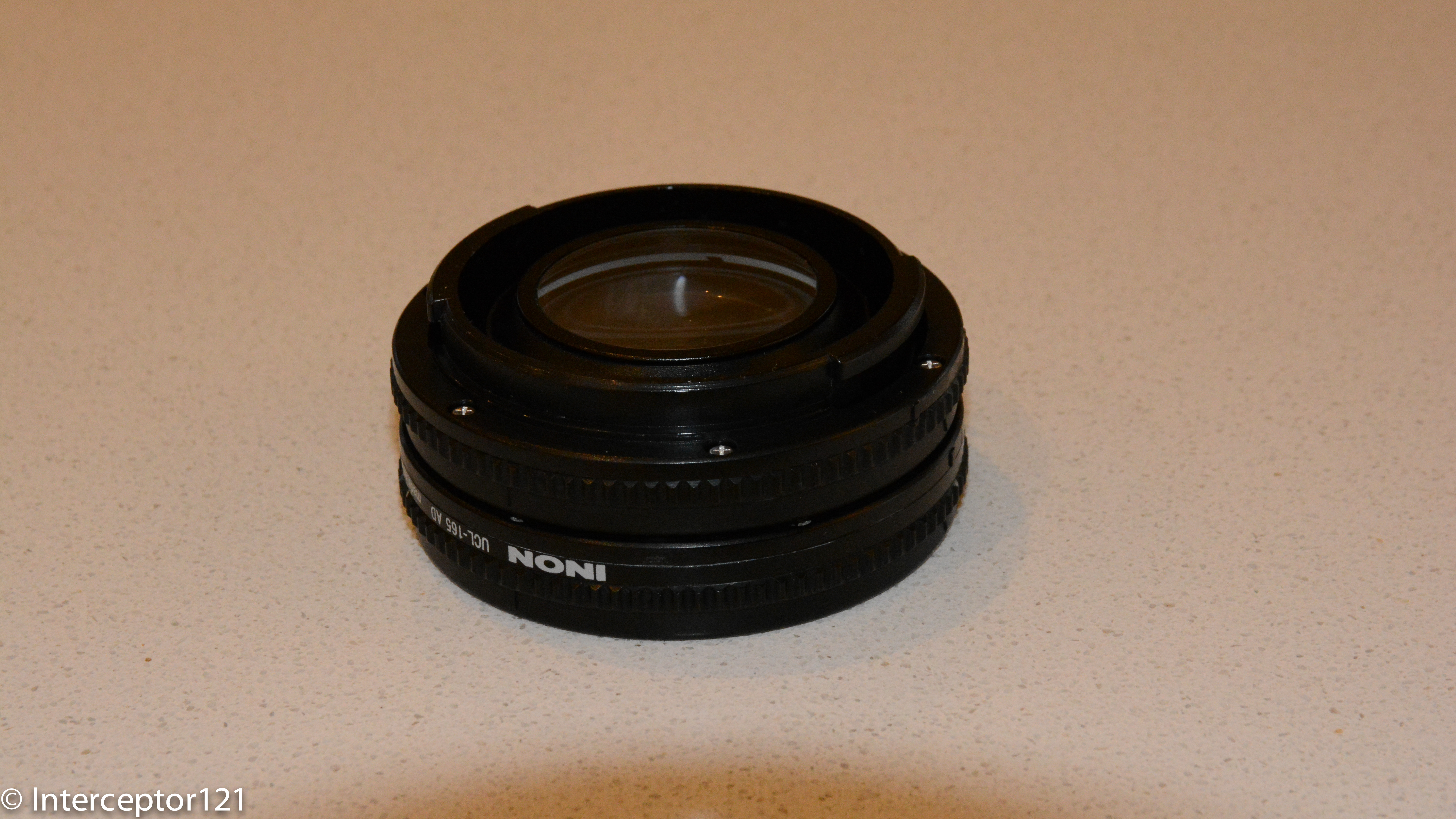
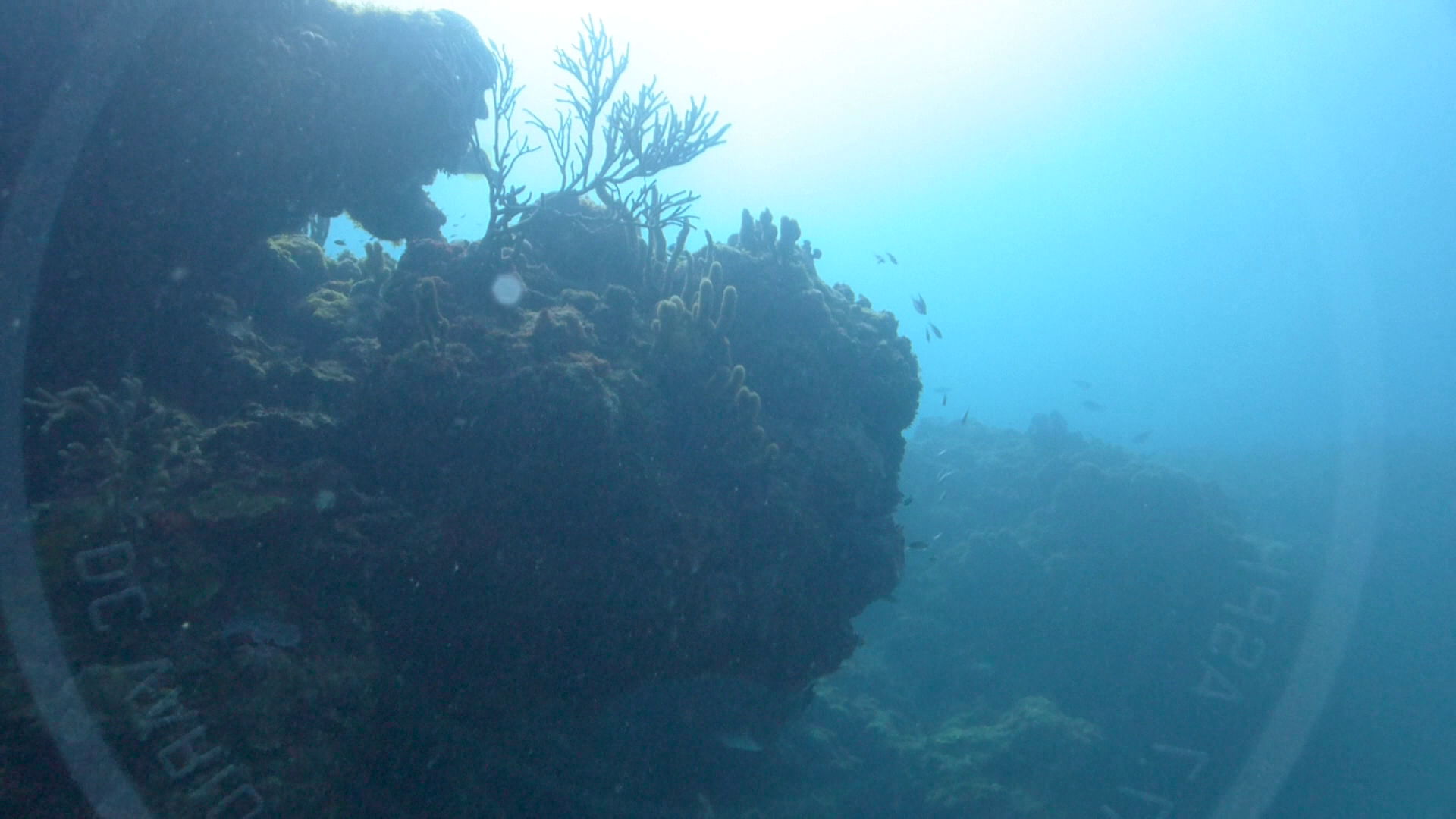
You do get vignette until 50mm however this is not an issue as you shoot those lenses at the tele-end.
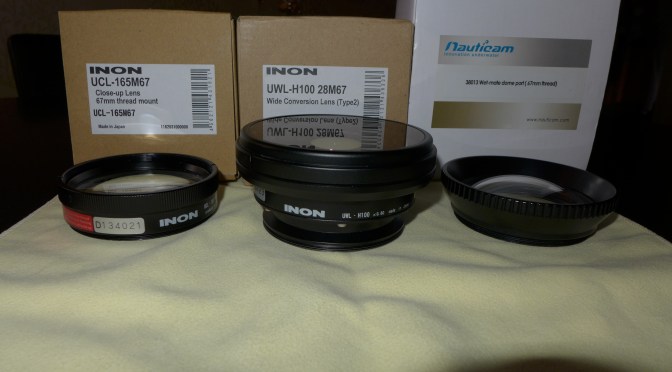
This is the whole lens set with the two adapters.

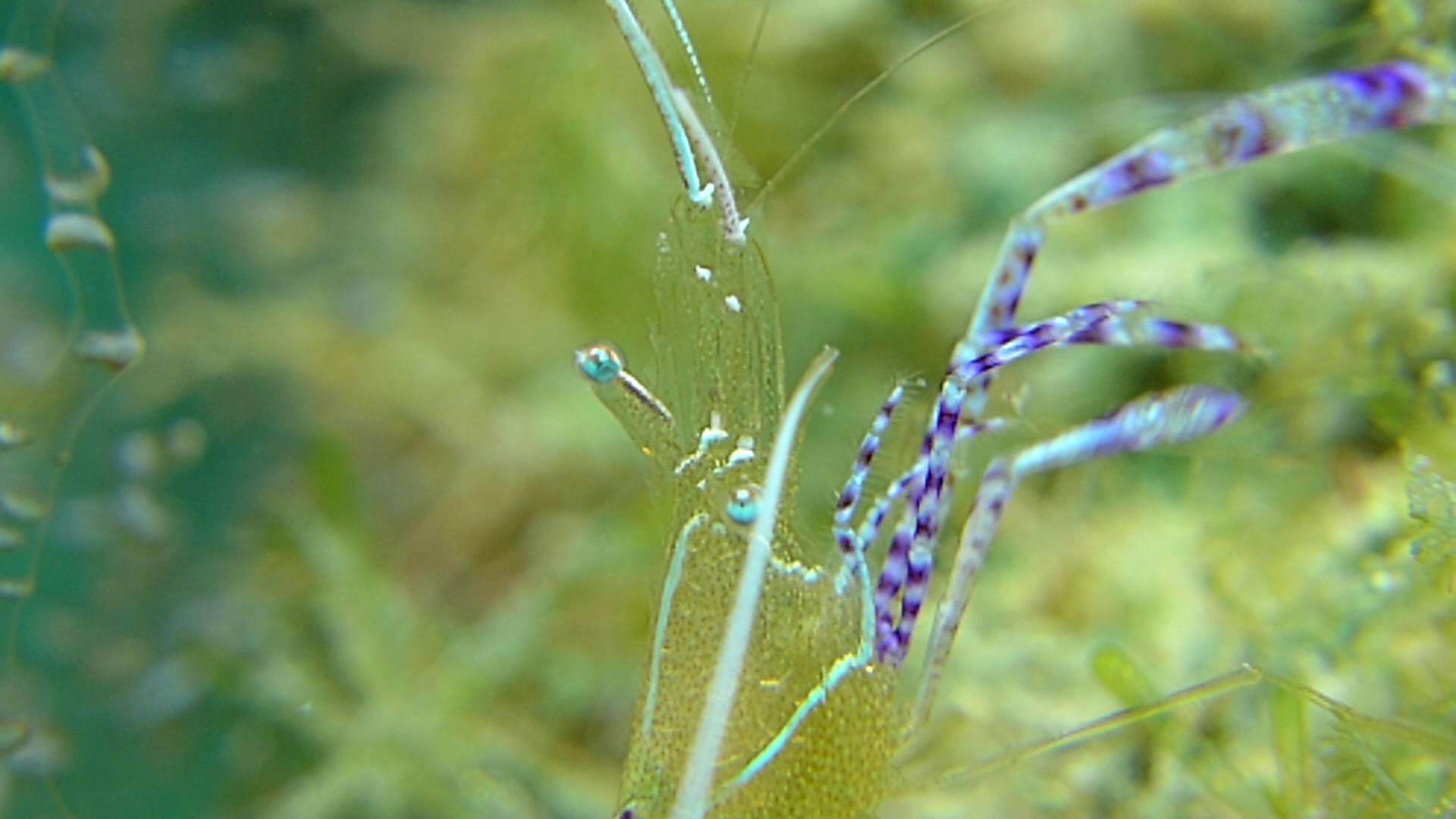
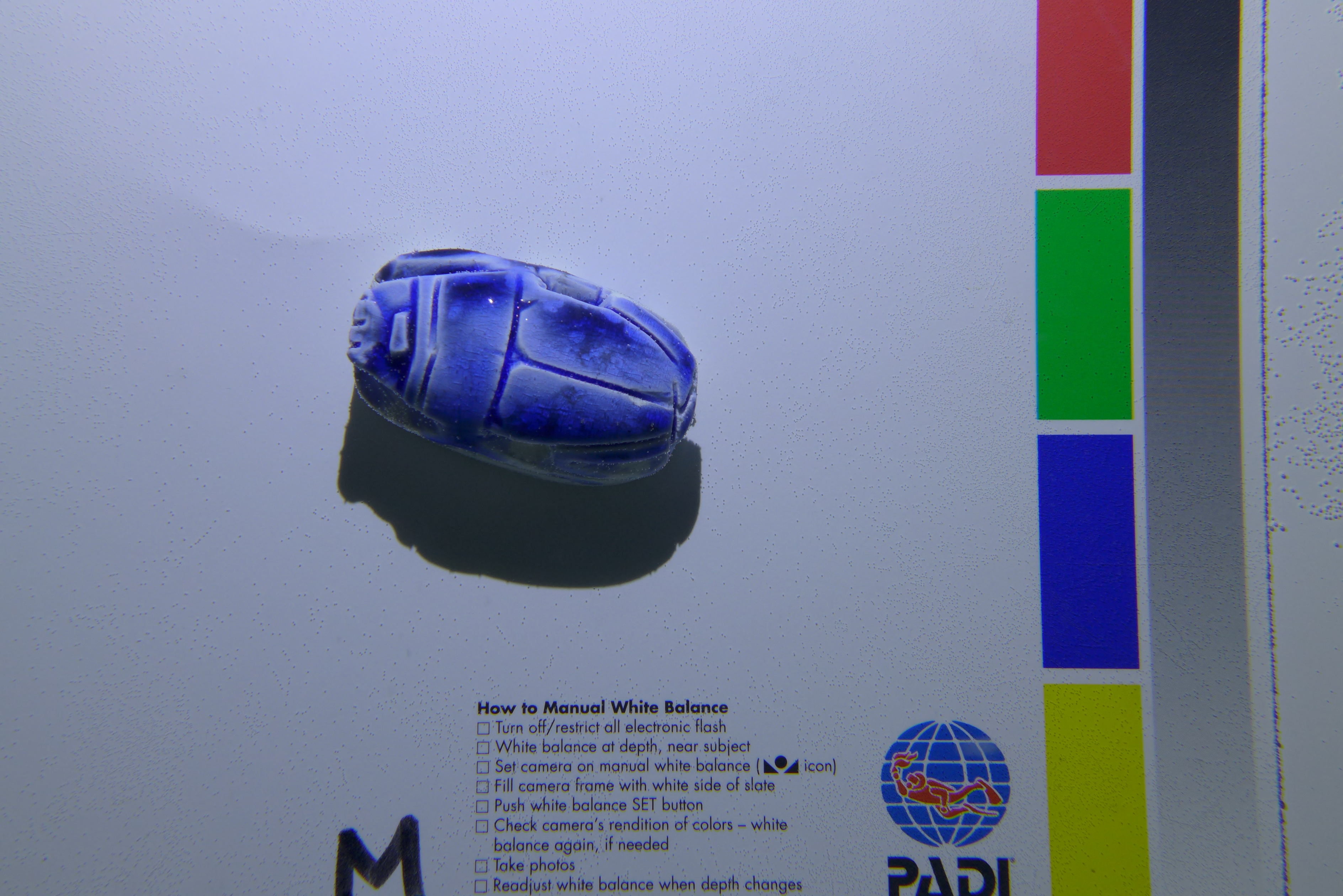
As discussed in other posts the two stacked diopters give you super macro, they are also light with 35 grams each in water. The small amount of fringing they give can be eliminated in lightroom with a single click.

The wide angle lens sports a 115mm optical glass dome with inner anti-reflection coating. If you are into observing fine detail you will notice that the dome is not actually a full semicircle but flatter, if you add the special coating this means no flare and increased contrast. If you wonder why shots taken with Inon dome lenses are sharper is because only 1% of the incoming light is reflected, against 3% of an acrylic dome, the glass dome due to the coating don’t flare, plastic ones do as simple as that.

Now let’s move on to the strobes a twin Inon Z240 set. I have been a sea and sea user for years until I managed to damage my YS-01 and got no assistance at all from S&S since then I decided to go elsewhere.
What I love about the Z240 is the variety of controls to manage shadows, the sharp aiming light with a red filter good for the most skittish critters. Contrary to what many people think I aim directly at the subject in macro as the distance is short and backscatter is not an issue so no point aiming the strobes away for me.
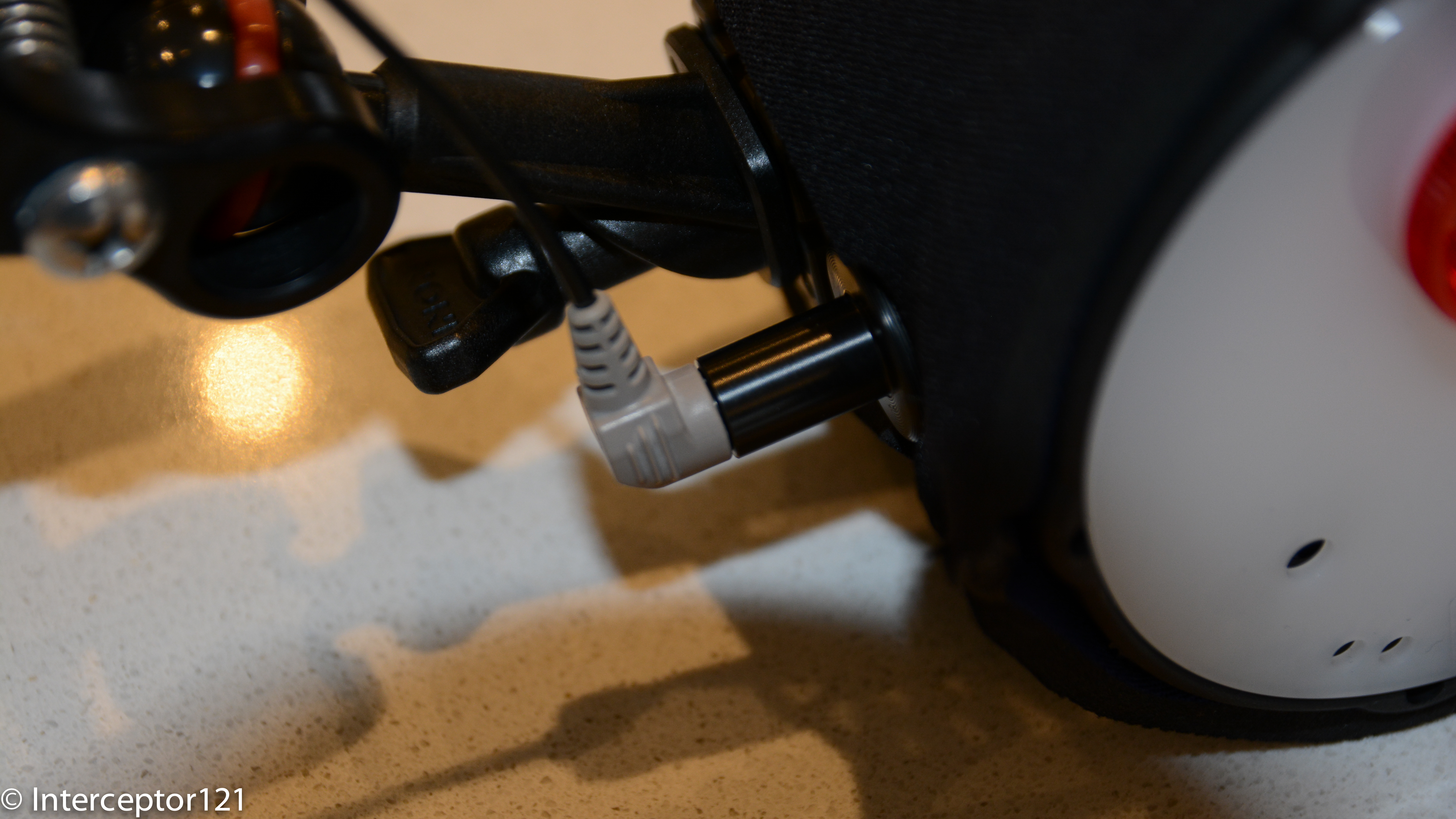
I happened to have a pair of Sea and Sea optical L cable that served me well and had no will to change, FIT produces this cost effective adapter that goes on your Z240 and makes it compatible, I just love it.
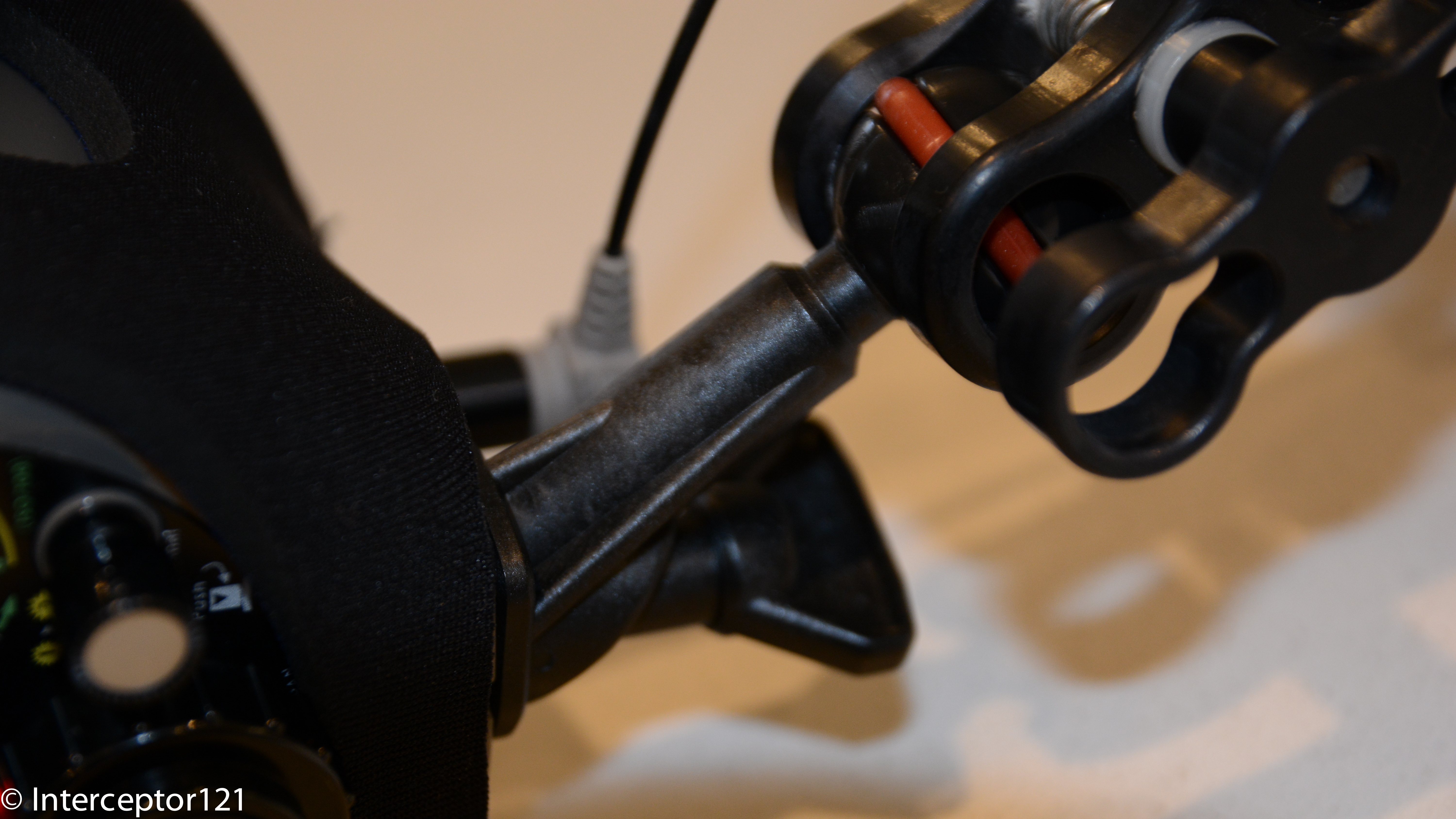
I believe Inon Z MV strobe head adapter has no equal in ergonomics but for some reason a part that is $20 in Japan sells at over $40 in US and £30 in UK so is not that popular. My second choice would be the Nauticam strobe adapter that has got the small feet needed to correctly lock on the strobe head.
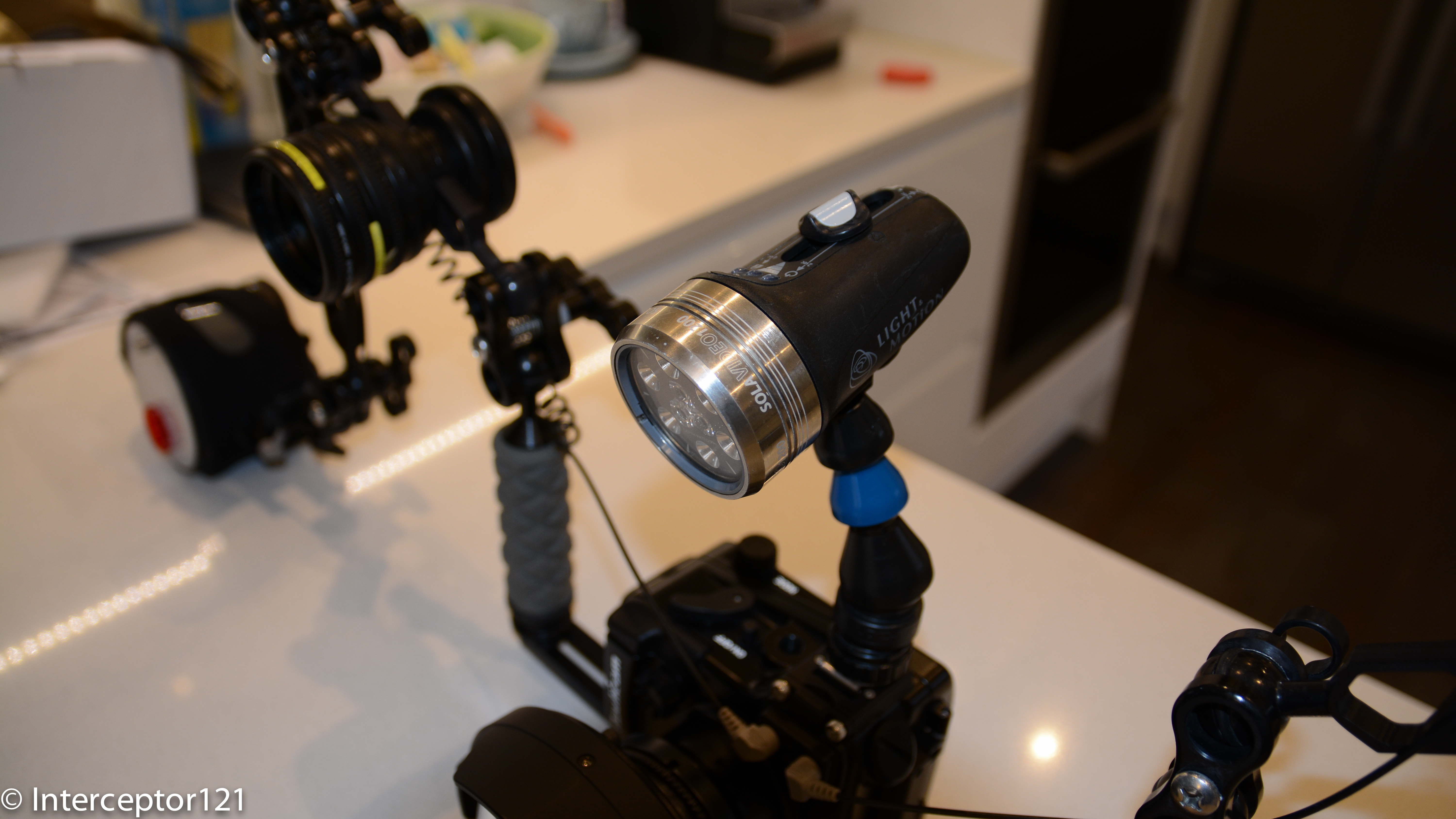
With the Z240 doing wonders as aiming light there is no real room for a focus light however I have a set of Sola Video 1200 and what I like is that you can use them as dive light. I have connected them with a locline cold shoe, this will soon change to a ball mount, as the cold shoe is on the left side. Probably I will get a Sola Dive 800 so I can leave my two trays set for video and stills on the boat.

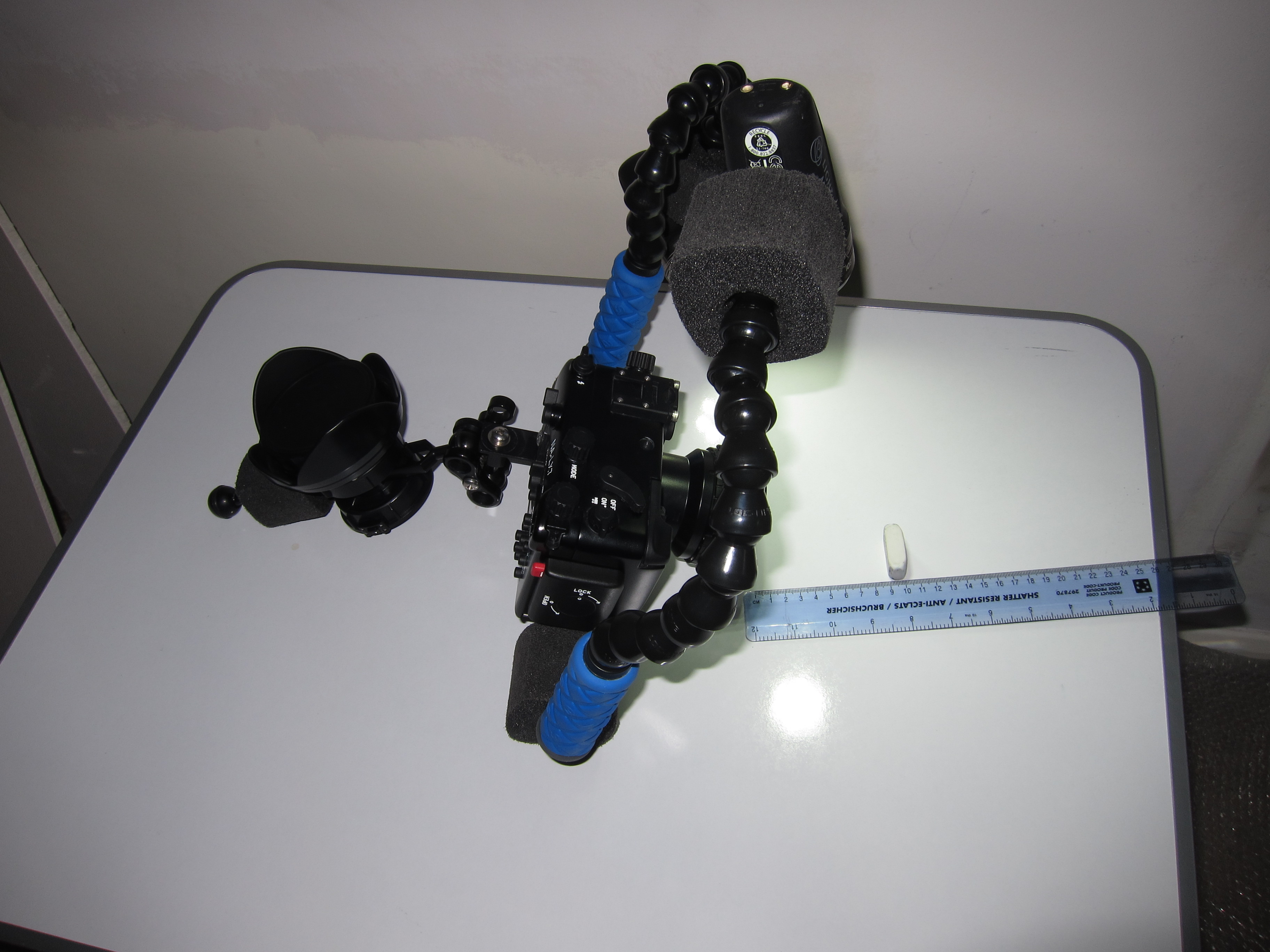
Looking at the tray I use ultralight, it simple and sturdy and allows me to center the port in the middle of the tray.
The most attentive will see that the two handles have different colors.
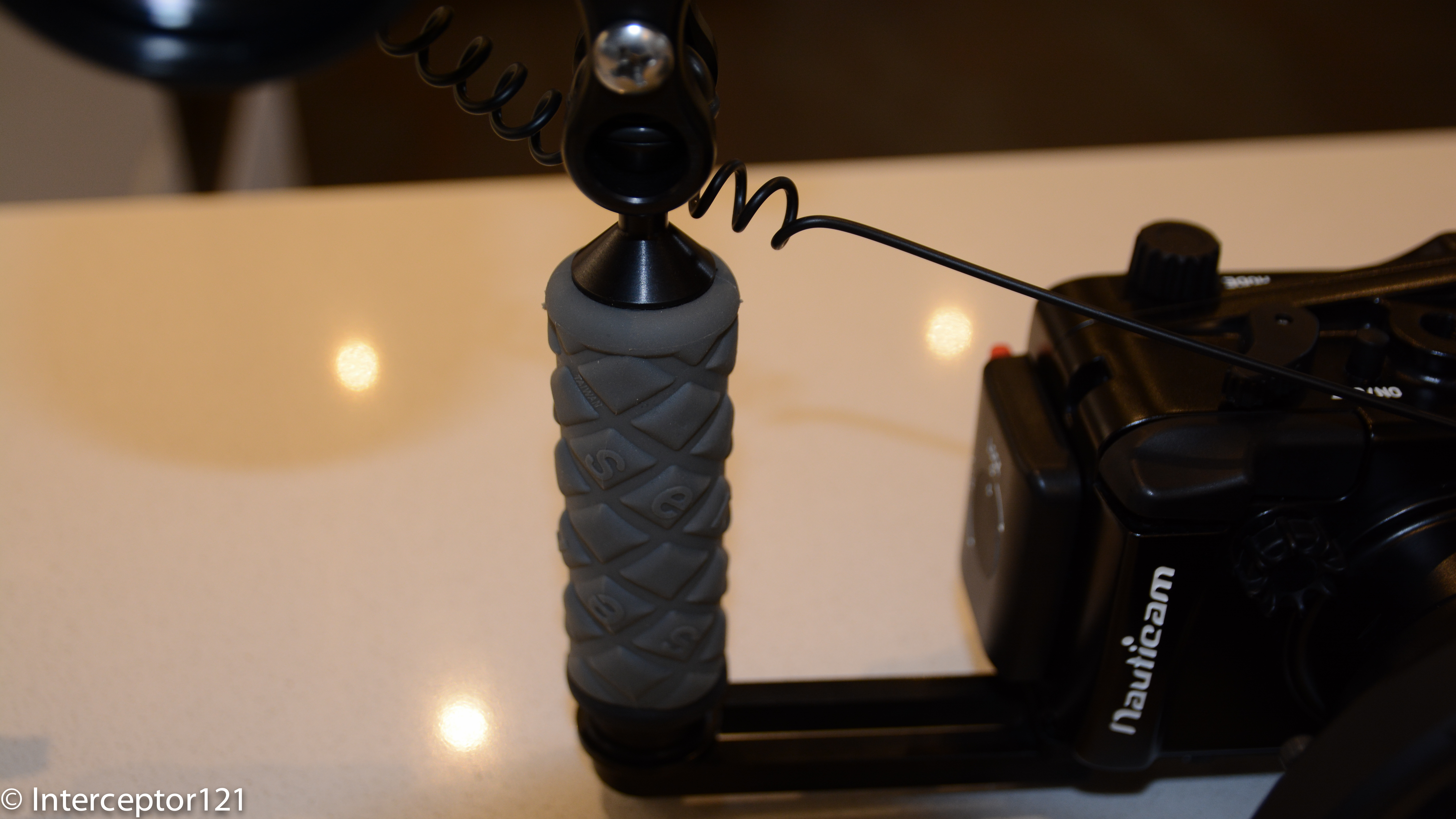
Why is that? Firstly I want to place the handles at maximum distance, second by placing two different handle I can ensure the ball is at the same height, this would not be true if I was using the same handle on both sides. I use a TR-DM with a TR-DUPL long extension to make the tray 30cm or 12″.
So this is what it looks like, there will be floats on it, I estimate I need 8 floats to make the rig neutral with the lenses off. I am planning to place 3 on each 8″ arm segment and two on the tray however I might change this to 2 on each arm and a bespoke float on the tray bottom. I will run some test to see what works best.
So that’s all folks surely there will be questions and I look forward to answer them.
Just want to remind you that if you are in the market for a compact still or video rig I provide a personal shopper service for £30 or $45 that provides an end to end service on your budget where all you have to do is to call the shop to pay. Of course we would discuss any observations about the set up before this gets finalized, but am sure better to spend a little amount instead of making expensive mistakes!
UPDATE 9 June 2014 I have made some more changes to the rig the current version (never say final) is here
















 Interceptor121 Photography & Video Workshops